
Filter
550
Text search:
tobacco
epidemic
Featured
43
175
Language
Document type
338
113
49
21
12
7
4
3
2
1
Countries
44
27
19
18
17
16
16
15
15
14
14
13
12
11
11
10
10
10
9
9
9
8
7
6
6
6
6
6
4
4
4
4
3
3
3
3
3
3
2
2
2
2
2
2
2
2
2
1
1
1
1
1
1
1
1
1
1
1
1
1
1
1
1
1
1
1
1
1
1
1
1
1
1
1
1
1
Authors & Publishers
Publication Years
Category
268
77
37
10
6
5
Toolboxes
59
56
47
25
19
18
10
9
8
7
6
4
3
2
2
1
1
1
1
1
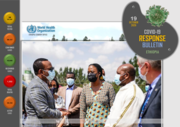
Summary of the Ethopian country office of WHO on COVID-19 activities.

As a lower-middle-income country (LMIC), South Africa (SA) bears
the burden of maternal and neonatal mortality similar to other sub-
Saharan African countries. According to the Saving Mothers Report
2017/19, there has been a progressive and sustained reduction
in institutional maternal mortality
...
In 2015, 5.9 million children under age five died (1). The major causes of child deaths globally are pneumonia, prematurity, intrapartum-related complications, neonatal sepsis, congenital anomalies, diarrhoea, injuries and malaria (2). Most of these diseases and conditions are at least partially cau
...

Available in English, French and Spanish
Despite its rich culture, great economic potential, high level of education and last but not least its sheer size – it is the largest state whose borders lie entirely within Europe and is 1.7 times the size of the Federal Republic of Germany – Ukraine seems far away in perception and awareness.
...
This document sets out, therefore, to explain the socioeconomic value of investing in the fight against NTDs and highlights priorities for global investment attention. Our work was guided by the need not only for
additional funding and funders but also for the need to understand the current funding
...
Schools are generally the most popular setting for drug-use-
prevention programmes, and are used both by governmental and
non-governmental agencies. This may be for many reasons: ease of
obtaining funding for school drug-use-prevention programmes, the
captive audience, and the popular perception
...

Rebuilding Liberia’s health system is crucial for improving the country’s overall health outcomes. This annual report highlights key achievements, challenges,and lessons learned in implementing programmes of technical cooperation with the Government of Liberia from January to December 2022. T
...
A lot has happened this year. While we continued to tackle the COVID-19 pandemic, we were hit by disease outbreaks and
humanitarian crises. Yet, despite these challenges, we marched on, resolute in resolving critical health systems issues to increase
access to quality healthcare services. To furth
...
This publication articulates the WHO Botswana Country Office’s focus and investment needs for the biennium 2022–2023, building on achievements, networks, and partnerships fostered in 2020-2021.
As the leading health authority within the United Nations system in Botswana, the WHO Country Offi
...
The majority of developing countries will fail to achieve their targets for Universal Health Coverage (UHC)1 and the health- and poverty-related Sustainable Development Goals (SDGs) unless they take urgent steps to strengthen their health financing. Just over a decade out from the SDG deadline of 20
...

The development of this draft Proposed programme budget 2022–2023 comes at a unique moment for WHO. The world is in the grip of the coronavirus disease (COVID-19) pandemic and faces health, social and economic consequences on an unprecedented scale. Although it is not known when the COVID-19 pande
...
In 2015 around 15 million people living with HIV were receiving antiretroviral treatment (ART) in sub–Saharan Africa. Sustained provision of ART, though both prudent and necessary, creates substantial long–term fiscal obligations for countries affected by HIV/ AIDS. As donor assistance for healt
...
The document "Management of Type 2 Diabetes Mellitus" provides comprehensive guidelines for the diagnosis, prevention, and treatment of type 2 diabetes in adults. It emphasizes the importance of individualized glycemic targets, lifestyle interventions like diet and exercise, and the use of medicatio
...
There is paucity of data on the burden and specific drivers operative in the pathogenesis of chronic obstructive pulmonary disease (COPD) in the African setting and populations. Lack of awareness and inadequate knowledge on the aetio-pathogenesis of the disease together with inadequate capacity for
...
Aerosol pollutants are known to raise the risk of development of non-communicable respiratory diseases (NCRDs) such as asthma, chronic bronchitis, chronic obstructive pulmonary disease, and allergic rhinitis. Sub-Saharan Africa’s rapid pace of urbanization, economic expansion, and population growt
...
This report reviews the current situation in relation to national capacity to address NCDs and the progress made at country level over the past decade. It highlights that, while progress is being made, there is still much work to be done to create the infrastructure, policies, surveillance and healt
...
Guidelines for the Prevention of Cardiovascular Disease in Women in Indonesia
Regional Tuberculosis Program, Pan American Health Organization (PAHO/WHO)
This report explores the reasons why global health is critical to medicine and what this means for medical education. It argues that an understanding of global health is important for all students and practicing doctors, rather than being an ‘add-on’ or ‘option’ for specialization.
