
Filter
3058
Text search:
social
stress
Featured
316
616
Language
2711
258
115
69
57
40
35
25
10
9
8
8
7
6
6
5
4
4
4
4
3
3
3
3
3
3
3
3
3
2
2
2
2
2
2
2
2
2
2
2
2
2
2
1
1
1
1
1
1
1
1
1
1
Document type
1693
546
326
207
83
83
48
34
14
13
8
2
1
Countries
135
118
66
62
61
57
53
48
44
42
40
38
35
35
34
33
32
32
30
25
23
22
22
21
20
20
20
20
20
19
16
16
15
15
15
15
15
14
14
13
13
13
12
12
12
11
10
10
10
10
10
10
9
9
8
8
7
7
7
7
6
6
6
6
5
5
5
5
5
5
5
5
5
5
4
4
4
4
4
4
3
3
3
3
3
3
3
3
3
2
2
2
2
2
2
2
2
2
2
2
2
1
1
1
1
1
1
1
1
1
1
1
1
1
1
1
1
1
1
1
1
1
1
1
1
1
1
1
1
1
1
1
1
1
1
1
1
Authors & Publishers
289
155
128
90
73
72
71
70
44
34
26
25
25
23
21
18
17
17
17
16
16
16
16
15
13
13
12
11
11
11
11
10
10
10
10
10
10
10
10
9
9
9
9
9
9
9
9
9
8
8
8
8
8
8
8
7
7
7
7
7
7
7
7
7
6
6
6
6
6
6
6
6
6
6
6
6
6
6
6
5
5
5
5
5
5
5
5
5
5
5
4
4
4
4
4
4
4
4
4
4
4
4
4
4
4
4
4
4
4
4
4
4
4
4
4
4
4
4
4
4
4
4
4
4
4
3
3
3
3
3
3
3
3
3
3
3
3
3
3
3
3
3
3
3
3
3
3
3
3
3
3
3
3
3
3
3
3
3
3
3
3
3
3
3
3
3
3
3
3
3
3
3
3
3
3
3
3
3
3
3
3
3
3
3
3
3
3
3
3
3
3
3
3
3
3
3
3
3
3
3
3
3
3
2
2
2
2
2
2
2
2
2
2
2
2
2
2
2
2
2
2
2
2
2
2
2
2
2
2
2
2
2
2
2
2
2
2
2
2
2
2
2
2
2
2
2
2
2
2
2
2
2
2
2
2
2
2
2
2
2
2
2
2
2
2
2
2
2
2
2
2
2
2
2
2
2
2
2
2
2
2
2
2
2
2
2
2
2
2
2
2
2
2
2
2
2
2
2
2
2
2
2
2
2
2
2
2
2
2
2
2
2
2
2
2
2
2
2
2
2
2
2
2
2
2
2
2
2
2
2
2
2
2
2
2
2
2
2
2
2
2
2
2
2
2
2
2
2
2
2
2
2
2
2
2
2
2
2
2
2
2
2
2
2
2
2
2
2
2
2
2
2
2
2
2
2
2
2
2
2
2
2
2
2
2
2
2
2
2
2
2
2
2
2
2
2
2
2
2
2
2
2
2
2
2
2
2
2
2
2
2
2
2
2
2
2
2
2
2
2
2
2
2
2
2
2
2
2
2
2
2
2
2
2
2
2
2
2
2
2
2
2
2
2
2
2
2
2
2
2
2
2
2
2
2
2
2
2
2
2
2
2
2
2
2
2
2
2
2
2
2
1
1
1
1
1
1
1
1
1
1
1
1
1
1
1
1
1
1
1
1
1
1
1
1
1
1
1
1
1
1
1
1
1
1
1
1
1
1
1
1
1
1
1
1
1
1
1
1
1
1
1
1
1
1
1
1
1
1
1
1
1
1
1
1
1
1
1
1
1
1
1
1
1
1
1
1
1
1
1
1
1
1
1
1
1
1
1
1
1
1
1
1
1
1
1
1
1
1
1
1
1
1
1
1
1
1
1
1
1
1
1
1
1
1
1
1
1
1
1
1
1
1
1
1
1
1
1
1
1
1
1
1
1
1
1
1
1
1
1
1
1
1
1
1
1
1
1
1
1
1
1
1
1
1
1
1
1
1
1
1
1
1
1
1
1
1
1
1
1
1
1
1
1
1
1
1
1
1
1
1
1
1
1
1
1
1
1
1
1
1
1
1
1
1
1
1
1
1
1
1
1
1
1
1
1
1
1
1
1
1
1
1
1
1
1
1
1
1
1
1
1
1
1
1
1
1
1
1
1
1
1
1
1
1
1
1
1
1
1
1
1
1
1
1
1
1
1
1
1
1
1
1
1
1
1
1
1
1
1
1
1
1
1
1
1
1
1
1
1
1
1
1
1
1
1
1
1
1
1
1
1
1
1
1
1
1
1
1
1
1
1
1
1
1
1
1
1
1
1
1
1
1
1
1
1
1
1
1
1
1
1
1
1
1
1
1
1
1
1
1
1
1
1
1
1
1
1
1
1
1
1
1
1
1
1
1
1
1
1
1
1
1
1
1
1
1
1
1
1
1
1
1
1
1
1
1
1
1
1
1
1
1
1
1
1
1
1
1
1
1
1
1
1
1
1
1
1
1
1
1
1
1
1
1
1
1
1
1
1
1
1
1
1
1
1
1
1
1
1
1
1
1
1
1
1
1
1
1
1
1
1
1
1
1
1
1
1
1
1
1
1
1
1
1
1
1
1
1
1
1
1
1
1
1
1
1
1
1
1
1
1
1
1
1
1
1
1
1
1
1
1
1
1
1
1
1
1
1
1
1
1
1
1
1
1
1
1
1
1
1
1
1
1
1
1
1
1
1
1
1
1
1
1
1
1
1
1
1
1
1
1
1
1
1
1
1
1
1
1
1
1
1
1
1
1
1
1
1
1
1
1
1
1
1
1
1
1
1
1
1
1
1
1
1
1
1
1
1
1
1
1
1
1
1
1
1
1
1
1
1
1
1
1
1
1
1
1
1
1
1
1
1
1
1
1
1
1
1
1
1
1
1
1
1
1
1
1
1
1
1
1
1
1
1
1
1
1
1
1
1
1
1
1
1
1
1
1
1
1
1
1
1
1
1
1
1
1
1
1
1
1
1
1
1
1
1
1
1
1
1
1
1
1
1
1
1
1
1
1
1
1
1
1
1
1
1
1
1
1
1
1
1
1
1
1
1
1
1
1
1
1
1
1
1
1
1
1
1
1
1
1
1
1
1
1
1
1
1
1
1
1
1
1
1
1
1
1
1
1
1
1
1
1
1
1
1
1
1
1
1
1
1
1
1
1
1
1
1
1
1
1
1
1
1
1
1
1
1
1
1
1
1
1
1
1
1
1
1
1
1
1
1
1
1
1
1
1
1
1
1
1
1
1
1
1
1
1
1
1
1
1
1
1
1
1
1
1
1
1
1
1
1
1
1
1
1
1
1
1
1
1
1
1
1
1
1
1
1
1
1
1
1
1
1
1
1
1
1
1
1
1
1
1
1
1
1
1
1
1
1
1
1
1
1
1
1
1
1
1
1
1
1
1
1
1
1
1
1
1
1
1
1
1
1
1
1
1
1
1
1
1
1
1
1
1
1
1
1
1
1
1
1
1
1
1
1
1
1
1
1
1
1
1
1
1
1
1
1
1
1
1
1
1
1
1
1
1
1
1
1
1
1
1
1
1
1
1
1
1
1
1
1
1
1
1
1
1
1
1
1
1
1
1
1
1
1
1
1
1
1
1
1
1
1
1
1
1
1
1
1
1
1
1
1
1
1
1
1
1
1
1
1
1
1
1
1
1
1
1
1
1
1
1
1
1
1
1
1
1
1
1
1
1
1
1
1
1
1
1
1
1
1
1
1
1
1
1
1
1
1
1
1
1
1
1
1
1
1
1
1
1
1
1
1
1
1
1
1
1
1
1
1
1
1
1
1
1
1
1
1
1
1
1
1
1
1
1
1
1
1
1
1
1
1
1
1
1
1
1
1
1
1
1
1
1
1
1
1
1
1
1
1
1
1
1
1
1
1
1
1
1
1
1
1
1
1
1
1
1
1
1
1
1
1
1
1
1
1
1
1
1
1
1
1
1
1
1
1
1
1
1
1
1
1
1
1
1
1
1
1
1
1
1
1
1
1
1
1
1
1
1
1
1
1
1
1
1
1
1
1
1
1
1
1
1
1
1
1
1
1
1
1
1
1
1
1
1
1
1
1
1
1
1
1
1
1
1
1
1
1
1
1
1
1
1
1
1
1
1
1
1
1
1
1
1
1
1
1
1
1
1
1
1
1
1
1
1
1
1
1
1
1
1
1
1
1
1
1
1
1
1
1
1
1
1
1
1
1
1
1
1
1
1
1
1
1
1
1
1
1
1
1
1
1
1
1
1
1
1
1
1
1
1
1
1
1
1
1
1
1
1
1
1
1
1
1
1
1
1
1
1
1
1
1
1
1
1
1
1
1
1
1
1
1
1
1
1
1
1
1
1
1
1
1
1
1
1
1
1
1
1
1
1
1
1
1
1
1
1
1
1
1
1
1
1
1
1
1
1
1
1
1
1
1
1
1
1
1
1
1
1
1
1
1
1
1
1
1
1
1
1
1
1
1
1
1
1
1
1
1
1
1
1
1
1
1
1
1
1
1
1
1
1
1
1
1
1
1
1
1
1
1
1
1
1
1
1
1
1
1
1
1
1
1
1
1
1
1
1
1
1
1
1
1
1
1
1
1
1
1
1
1
1
1
1
1
1
1
1
1
1
1
1
1
1
1
1
1
1
1
1
1
1
1
1
1
1
1
1
1
1
1
1
1
1
1
1
1
1
1
1
1
1
1
1
1
1
1
1
1
1
1
1
1
1
1
1
1
1
1
1
1
1
1
1
1
1
1
1
1
1
1
1
1
1
1
1
1
1
1
1
1
1
1
1
1
1
1
1
1
1
1
1
1
1
1
1
1
1
1
1
1
1
1
1
1
1
1
1
1
1
1
1
1
1
1
1
1
1
1
1
1
1
1
1
1
1
1
1
1
1
1
1
1
1
1
1
1
1
1
1
1
1
1
1
1
1
1
1
1
1
1
1
1
1
1
1
1
1
1
1
1
1
1
1
1
1
1
1
1
1
1
1
1
1
1
1
1
1
1
1
1
1
1
1
1
1
1
1
1
1
1
1
1
1
1
1
1
1
1
1
1
1
1
1
1
1
1
1
1
1
1
1
1
1
1
1
1
1
1
1
1
1
1
1
1
1
1
1
1
1
1
1
1
1
1
1
1
1
1
1
1
1
1
1
1
1
1
1
1
1
1
1
1
1
1
1
1
1
1
1
1
1
1
1
1
1
1
1
1
1
1
1
1
1
1
1
1
1
1
1
1
1
1
1
1
1
1
1
1
1
1
1
1
1
1
1
1
1
1
1
1
1
1
1
1
1
1
1
1
1
1
1
1
1
1
1
1
1
1
1
1
1
1
1
1
1
1
1
1
1
1
1
1
1
1
1
1
1
1
1
1
1
1
1
1
1
1
1
1
1
1
1
1
1
1
1
1
1
1
1
1
1
1
1
1
1
1
1
1
1
1
1
1
1
1
1
1
1
1
1
1
1
1
1
1
1
1
1
1
1
1
1
1
1
1
1
1
1
1
1
1
1
1
1
1
1
1
1
1
1
1
1
1
1
1
1
1
1
1
1
1
1
1
1
1
1
1
1
1
1
1
1
1
1
1
1
1
1
1
1
1
1
1
1
1
1
1
1
1
1
1
1
1
1
1
1
1
1
1
1
1
1
1
1
1
1
1
1
1
1
1
1
1
1
1
1
1
1
1
1
1
1
1
1
1
1
1
1
1
1
1
1
1
1
1
1
1
1
1
1
1
1
1
1
1
1
1
1
1
1
1
1
1
1
1
1
1
1
1
1
1
1
1
1
1
1
1
1
1
1
1
1
1
1
1
1
1
1
1
1
1
1
1
1
1
1
1
1
1
1
1
1
1
1
1
1
1
1
1
1
1
1
1
1
1
1
1
1
1
1
1
1
1
1
1
1
1
1
1
1
1
1
1
1
1
1
1
1
1
1
1
1
1
1
1
1
1
1
1
1
1
1
1
1
1
1
1
1
1
1
1
1
1
1
1
1
1
1
1
1
1
1
1
1
1
1
1
1
1
1
1
1
1
1
1
1
1
1
1
1
1
1
1
1
1
1
1
1
1
1
1
1
1
1
1
1
1
1
1
1
1
1
1
1
1
1
1
1
1
1
1
1
1
1
1
1
1
1
1
1
1
1
1
1
1
1
1
1
1
1
1
1
1
1
1
1
1
1
1
1
1
1
1
1
1
1
1
1
1
1
1
1
1
1
1
1
1
1
1
1
1
1
1
1
1
1
1
1
1
1
1
1
1
1
1
1
1
1
1
1
1
1
1
1
1
1
1
1
1
1
1
1
1
1
1
1
1
1
1
1
1
1
1
1
1
1
1
1
1
1
1
1
1
1
1
1
1
1
1
1
1
1
1
1
1
1
1
1
1
1
1
1
1
1
1
1
1
1
1
1
1
1
1
1
1
1
1
1
1
1
1
1
1
1
1
1
1
1
1
1
1
1
1
1
1
1
1
1
1
1
1
1
1
1
1
1
1
1
1
1
1
1
1
1
1
1
1
1
1
1
1
1
1
1
1
1
1
1
1
1
1
1
1
1
1
1
1
1
1
1
1
1
1
1
1
1
1
1
1
1
1
1
1
1
1
1
1
1
1
1
1
1
1
1
1
1
1
1
1
1
1
1
1
1
1
1
1
1
1
1
1
1
1
1
1
1
1
1
1
1
1
1
1
1
1
1
1
1
1
1
1
1
1
1
1
1
1
1
1
1
1
1
1
1
1
1
1
1
1
1
1
1
1
1
1
1
1
1
1
1
1
1
1
1
1
1
1
1
1
1
1
1
1
1
1
1
1
1
1
1
1
1
1
1
1
1
1
1
1
1
1
1
1
1
1
1
1
1
1
1
1
1
1
1
1
1
1
1
1
1
1
1
1
1
1
1
1
1
1
1
1
1
1
1
1
1
1
1
1
1
1
1
1
1
1
1
1
1
1
1
1
1
1
1
1
1
1
1
1
Publication Years
925
1796
328
8
1
Category
884
200
158
134
104
97
7
3
3
2
Toolboxes
650
357
196
143
142
140
116
113
71
69
60
49
48
42
28
21
20
19
16
11
10
6
5
2
2
The document is primarily meant to inform mental health and psychosocial support (MHPSS) staff, such as: psychologists, psychosocial counsellors, social workers, psychiatrists, psychiatric nurses, and others who are involved providing individual or
...
group counselling, psychotherapy and/or psychiatric treatment for Syrians
more
This resource is the third in a series of online guides for promoting positive mental health across the lifespan. This resource provides health and social service providers (“practitioners”) with current evidence-based approaches in the applicat
...
ion of mental health promotion concepts and principles for refugees. It is intended to support practitioners, caregivers and others in incorporating best practice approaches to mental health promotion initiatives or programs directed toward refugees.
more
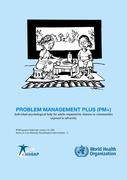
Problem Management Plus (PM+)
recommended
Individual psychological help for adults impaired by distress in communities exposed to adversity.
The manual describes a scalable psychological intervention called Problem Management Plus (PM+) for adults impaired by distress in communities who are exposed to adversity. Aspects of Cognitive Behavi
...
oural Therapy (CBT) have been changed to make them feasible in communities that do not have many specialists. To ensure maximum use, the intervention is developed in such a way that it can help people with depression, anxiety and stress, whether or not exposure to adversity has caused these problems. It can be applied to improve aspects of mental health and psychosocial well-being no matter how severe people’s problems are.
more
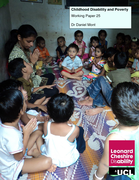
As the Convention of the Rights of Children recognizes, children are human beings with a distinct set of rights, and not the passive objects of care and charity. They deserve to be full participants in society, and to live lives free of poverty. But for children, living in poverty is particularly im
...
pactful. The foundations for life are built in childhood. In the early part of our lives, our bodies and brains develop their capacities to function and interact with the world. We learn the social skills we need to fit into society, and acquire the human capital necessary to earn a living, support a family, and to fully take part in the life of our community Poverty can stunt this development. So can the onset of a disability. As the World Report on Disability (WHO/World Bank 2011) points out, people with disabilities are all too often excluded from the economic and social lives of their community. And the interaction between disability and poverty has the potential to develop a vicious circle that can greatly limit life opportunities.
Working Paper Series: No. 25
more
A Decision Makers Guide: Medical Planning and Response for a Nuclear Detonation
U.S. Department of Health & Human Services
(2017)
C1
Successful detonation of an improvised nuclear device (IND) would be a catastrophic event, causing an unprecedented number of injuries and lives lost, as well as economic, political, and social disruption. However, an effective medical response and
...
an infrastructure prepared to protect itself from fallout could save tens of thousands of lives. Since 2001, all levels of government, academic institutions, and professional organizations have done significant work to enhance our ability to prepare for and respond to a nuclear detonation. The following manual is intended to simplify and translate the necessary protective actions and medical response modalities in order to make them more accessible and easier to translate into practice. The approach of this manual is to provide a common baseline application for various allied response disciplines (to include senior operational responders, emergency managers, public health advisors, and municipal, State, and Federal executives and elected officials). This manual will enhance mutual understanding of the basics of nuclear response.
more

2018 monitoring report: current status and strategic priorities
The report sets out the status of women’s, children’s and adolescents’ health, and on health systems and social and environmental determinants. Regional dashboards on 16 key ... indicators highlight where progress is being made or lagging. There is progress overall, but not at the level required to achieve the 2030 goals. There are some areas where progress has stalled or is reversing, namely neonatal mortality, gender inequalities and health in humanitarian settings. more
The report sets out the status of women’s, children’s and adolescents’ health, and on health systems and social and environmental determinants. Regional dashboards on 16 key ... indicators highlight where progress is being made or lagging. There is progress overall, but not at the level required to achieve the 2030 goals. There are some areas where progress has stalled or is reversing, namely neonatal mortality, gender inequalities and health in humanitarian settings. more
The National Institute for Transforming India (NITI) Aayog has developed the Composite Water Management Index (CWMI) to enable effective water management in Indian states in the face of extreme water stress. The Index and this associated report are
...
expected to: (1) establish a clear baseline and benchmark for state-level performance on key water indicators; (2) uncover and explain how states have progressed on water issues over time, including identifying high-performers and under-performers, thereby inculcating a culture of constructive competition among states; and, (3) identify areas for deeper engagement and investment on the part of the states. Eventually, NITI Aayog plans to develop the index into a composite, national-level data management platform for all water resources in India.
more

The target audience for this guideline is primarily for health care providers nurses, doctors, social workers and other people involved in HIV response in Rwanda so that they are capable of offering quality care services to patients over a long time
...
. The new National Guidelines for Prevention and Management of HIV and STIs are articulated in accordance to treat all HIV+ patients regardless of CD4 count and a new service delivery model to support its implementation.
more

The articles in this compendium elaborate on some of the ideas shared at the symposium. Together, they provide a broad view of the dynamic interactions among physical, sexual and brain development that take place during adolescence. They highlight some of the risks to optimal development – includi
...
ng toxic stress, which can interfere with the formation of brain connections, and other vulnerabilities unique to the onset of puberty and independence. They also point to the opportunities for developing interventions that can build on earlier investments in child development – consolidating gains and even offsetting the effects of deficits and traumas experienced earlier in childhood.
more
The prevalence of chronic non-communicable diseases such as diabetes, cardiovascular diseases and cancers has been on the increase in Kenya in the recent past. This has been occasioned by changes in social and demogr
...
aphic situation in the country. The life expectancy in the country is improving, while the country is developing at a rapid pace. This has resulted in people living more years and at the time adopting lifestyles that have negative impacts on their health. This increase in diabetes and other non-communicable diseases has given rise to a double burden of communicable and non-communicable diseases in Kenya
more

Humanitarian emergencies and crises (Humanitarian emergencies and crises) are large-scale events that may result in the breakdown of health care systems and society, forced displacement, death, and physical, psychological, social and spiritual suffe
...
ring on a massive scale. Current responses to Humanitarian emergencies and crises rightfully focus on saving lives, but for both ethical and medical reasons, the prevention and relief of pain, as well as other physical and psychological symptoms, social and spiritual distress, also are imperative. Therefore, palliative care, should be integrated into responses to Humanitarian emergencies and crises. The principles of humanitarianism and impartiality require that all patients receive care and should never be abandoned for any reason, even if they are dying. Thus, there is significant overlap in the principles and mission of palliative care and humanitarianism: relief of suffering; respect for the dignity of all people; support for basic needs; and accompaniment during the most difficult of times
more
This publication includes quotes from various respondents interviewed in Tripoli, Akkar and Beirut. We focused on three main questions: How are the relations between refugees and Lebanese? How are refugees faring in the job market? Which concrete initiatives have already demonstrated positive impact
...
in terms of increasing their financial and/or social well-being? The combination of those factors are key to understanding refugees’ livelihoods and coping strategies and reflect on what more can be done by local and international actors to increase social stability in Lebanon on a temporary basis, pending durable solutions.
more

Traditionally, understanding of the psychiatric and psychological effects of trauma have been developed from studies with adults and then applied to trauma-exposed children with some modifications. While this is an important step to understanding the sequelae of trauma in children and adolescents, t
...
he adverse developmental effects of traumatic exposures on the rapidly evolving neurological, physical, social and psychological capacities of children calls for a developmentally sensitive framework for understanding, assessing and treating trauma-exposed children.
ournal of Child and Adolescent Mental Health 2013: 1-14
more
Background: Indian adolescents are presumably exposed to a range of potentially traumatizing and negative life events. However, the knowledge on this area is relatively sparse. The present study aims to investigate the prevalence of exposure to potentially traumatizing and negative life events and t
...
he occurrence of Posttraumatic Stress Disorder (PTSD) among a specific sample of Indian adolescents.
Open Journal of Epidemiology, 2013, 3, 12-19 OJEpihttp://dx.doi.org/10.4236/ojepi.2013.31003
more

A Capstone Project submitted in partial fulfillment of the requirements for the Master of Science Degree in Counselor Education at Winona State University | This article reviews the use of Art Therapy to treat children who suffer from Posttraumatic Stress
...
Disorder. It explores the clinical need for addressing trauma, including PTSD, and then reviews the effects of trauma on the brain, and how Art Therapy affects the brain. It also identifies mental health characteristics and needs for children diagnosed with PTSD.
more
The community based programme aims to address the psychosocial needs of children and youth through helping to rebuild peaceful child- and youth-friendly communities through the use of cultural, creative, recreational, sportive and social activities.
...
Within War Child, the community-based approach is relatively new and Sierra Leone was the first self-implementing War Child Programme Area (WPA) applying this approach.
more
This guide covers: Treatment That Works; Myths About Treatment; Success Stories; Resources | Do you or a loved one have PTSD? There is no need to suffer. Treatment works. If you have PTSD—posttraumatic stress disorder — you don’t have to suff
...
er. There are good treatments that can help. This booklet describes therapies and medications that are proven to help people with PTSD.
You’ll hear from experts about what treatment is like, and how it can help you. Don’t let PTSD get in the way of your enjoyment of life, hurt your relationships, or cause problems for you at
work or school. PTSD treatment works.
more
Practice Parameter on Disaster Preparedness
Pfefferbaum, B., Shaw, J.A. & American Academy of Child and Adolescent Psychiatry (AACAP) Committee on Quality Issues (CQI)
American Academy of Child and Adolescent Psychiatry (AACAP)
(2013)
CC
AACAP OFFICIAL ACTION | This Practice Parameter identifies best approaches to the assessment and management of children and adolescents across all phases of a disaster. Delivered within a disaster system of care, many interventions are appropriate for implementation in the weeks and months after a d
...
isaster. These include psychological first aid, family outreach, psychoeducation, social support, screening, and anxiety reduction techniques. The clinician should assess and monitor risk and protective factors across all phases of a disaster. Schools are a natural site for conducting assessments and delivering services to children. Multimodal approaches using social support, psychoeducation, and cognitive behavioral techniques have the strongest evidence base. Psychopharmacologic interventions are not generally used but may be necessary as an adjunct to other interventions for children with severe reactions or coexisting psychiatric conditions
more
A new frontier for integrated care.
Until now, most efforts to promote integrated care have focused on bridging the gaps between health and social care or between primary and secondary care. But the NHS five year forward view has highlighted a thir
...
d dimension – bringing together physical and mental health. This report makes a compelling case for this ‘new frontier’ for integration. It gives service users’ perspectives on what integrated care would look like and highlights ten areas that offer some of the biggest opportunities for improving quality and controlling costs.
more

New assessment guidelines for measuring the overall impact of mental health problems in Latin America have served as a catalyst for countries to review their mental health policies. Latin American countries have taken various steps to address long-standing problems such as structural difficulties, s
...
carce financial and human resources, and social, political, and cultural obstacles in the implementation of mental health policies and legislation. These policy developments, however, have had uneven results. Policies must reflect the desire, determination, and commitment of policy-makers to take mental health seriously and look after people’s mental health needs. This paper describes the development of mental health policies in Latin American countries, focusing on published data in peer-reviewed journals, and legislative change and its implementation. It presents a brief history of mental health policy developments, and analyzes the basis and practicalities of current practice.
more
