
Filter
452
Text search:
shipment
Featured
58
153
Language
Document type
246
84
48
32
23
8
7
2
1
1
Countries / Regions
25
21
20
17
14
13
12
10
10
10
9
8
8
8
7
7
7
6
6
6
5
5
5
4
4
4
3
3
3
3
3
3
3
3
3
3
3
2
2
2
2
2
2
2
2
2
2
2
2
2
1
1
1
1
1
1
1
1
1
1
1
1
1
1
1
1
1
1
1
1
1
1
1
1
1
1
1
1
1
1
Authors & Publishers
Publication Years
Category
168
40
38
16
13
10
3
Toolboxes
67
52
41
33
26
19
16
13
11
9
8
8
6
5
3
3
2
2
2
1
1
1
The disruptions in imports, production and the related surge in food prices induced by the current conflict in Ukraine have the potential to worsen the food security situation in the Eastern Africa Region, which is already been impacted by the effect of three consecutive below-normal rainfall season
...
On the 31st December 2019, the World Health Organization (WHO) China country office reported a cluster of pneumonia cases in Wuhan City, Hubei Province of China now known to be caused by a novel virus. Severe acute respiratory syndrome coronavirus 2 (SARS-CoV-2) has been confirmed as the causative v
...

Learning from the Use of Data, Information, and Digital Technologies in the West Africa Ebola Outbreak Response
Mission report: June 11-20, 2017
A GUIDE FOR HEALTH WORKERS AND AUTHORITIES IN NIGERIA
This concept note describes the methods used to assess the prevalence of any HIVDR and HIVDR by PMTCT exposure among children less than 18 months of age using remnant dried blood spot specimens from early infant diagnosis over a 12-month period
Summary of key informant interviews with representatives of organizations providing, funding, or supporting WASH services to refugee populations
The main objectives of the SOPs are to: (i) establish standards and timelines for response activities; and (ii) guide national governments and GPEI partners in key support functions.
This new version of the SOPs presents overall response requirements for dealing with type 1, 2 and 3 poliovirus fo
...
These guidelines have been developed to provide guidance to the Ministry of Health in managing applications for registration of human pharmaceutical products in Rwanda. It was compiled by the Technical Working Group (TWG) on Medicines Evaluation and Registration (MER) of the East African Community M
...
In case of resistance to rifampicin, fluoroquinolones become the preferred category of second-line drugs. Unfortunately, quinolone-resistant strains of Mycobacterium leprae have also been reported in several countries, probably due to the extensive use of quinolones for treating several types of inf
...

In northern Myanmar, nearly 100,000 people continue to live in displacement camps in Kachin and northern Shan States. Most were first displaced by fighting between the Myanmar military and the Kachin Independence Army in 2011, and many have been displaced multiple times, including in recent months.
...
The potential for terrorist use of chemical agents is a noted concern highlighted by the Tokyo sarin gas attacks of 1995. The events of September 11, 2001, increased congressional attention towards reducing the vulnerability of the United States to such unconventional attacks. The
possibility that
...
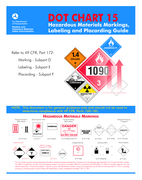
Guide on labeling and placarding hazardous materials
