Filter
512
Text search:
Miller,
M.
K.
Featured
35
72
Language
Document type
289
112
62
30
7
5
4
3
Countries
16
14
13
11
11
11
10
9
7
7
6
6
6
6
5
4
4
4
4
4
4
4
3
3
3
3
3
3
3
2
2
2
2
2
2
2
2
1
1
1
1
1
1
1
1
1
1
1
1
1
1
1
1
1
1
1
1
1
1
1
1
1
1
Authors & Publishers
Publication Years
Category
103
60
35
23
9
5
2
Toolboxes
93
58
36
34
26
25
20
18
18
17
12
9
7
7
6
6
5
4
3
3
2
2
Families and Societies Working Paper Series Changing families and sustainable societies: Policy contexts and diversity over the life course and across generations
The principle of “the best interest of the child” should guide decisions by politicians whenever
children are affected. This is one of the basic ideas in the UN Convention on the Rights
of the Child. Decision makers should assess the consequences for children before taking
action. Today, this
...
A resource for pesticide registrars and regulators.
The WHO urged governments to restrict access to highly toxic pesticides used for self-poisoning . Other effective interventions include education, youth intervention programs and follow-up of people at risk—and better data. Only 80 out of 183 WH
...
The publication is designed to provide Ipas staff, trainers, partners and other health-care providers with access to up-to-date, evidence-based recommendations. In general, the recommendations are the same as those in the World Health Organization’s 2012 Safe Abortion: Technical and Policy Guidanc
...
Following the release of the Wheelchair Service Training Package – Basic level (WSTP-B), WHO in partnership with United States Agency for International Development (USAID) has developed the Wheelchair Service Training Package – Intermediate Level (WSTP-I). WSTP-I is the second part of the WHO w
...
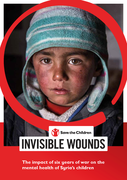
“The children are psychologically crushed and tired.
When we do activities like singing with them, they
don’t respond at all. They don’t laugh like they
would normally. They draw images of children
being butchered in the war, or tanks, or the siege
and the lack of food.”
Teacher in the
...

PeerJ PrePrints , http://dx.doi.org/10.7287/peerj.preprints.579v1 2 Nov 2014
In case of resistance to rifampicin, fluoroquinolones become the preferred category of second-line drugs. Unfortunately, quinolone-resistant strains of Mycobacterium leprae have also been reported in several countries, probably due to the extensive use of quinolones for treating several types of inf
...