
Filter
311
Text search:
Marks,
S.
et
al.
Featured
Recommendations
30
New Publications
57
Language
Document type
No document type
175
Studies & Reports
64
Guidelines
35
Manuals
12
Strategic & Response Plan
10
Training Material
9
Fact sheets
5
Situation Updates
1
Countries / Regions
India
23
Global
18
Kenya
8
South Africa
7
Zambia
6
Western and Central Europe
6
Ghana
5
Philippines
5
Asia
5
Sierra Leone
4
Liberia
4
Nepal
4
Tanzania
4
Ethiopia
3
Uganda
3
Syria
3
Indonesia
3
Eastern Europe
3
Guinea
2
Bangladesh
2
Malawi
2
Mozambique
2
Benin
2
Ukraine
2
Latin America and the Carribbean
2
Africa
2
Russia
2
Nigeria
1
Cameroon
1
Zimbabwe
1
Pakistan
1
South Sudan
1
Germany
1
Chad
1
Thailand
1
Sudan
1
Argentina
1
Namibia
1
Peru
1
Brazil
1
Madagascar
1
Lesotho
1
Myanmar / Burma
1
Sri Lanka
1
West and Central Africa
1
South–East Asia Region
1
Eastern Europe and Central Asia
1
Venezuela
1
Albania
1
Laos
1
Canada
1
Tajikistan
1
Vietnam
1
Authors & Publishers
Publication Years
Category
Countries
90
Clinical Guidelines
38
Public Health
24
Women & Child Health
22
Key Resources
8
Capacity Building
4
Pharmacy & Technologies
2
Toolboxes
Mental Health
36
HIV
27
Disability
21
TB
18
Planetary Health
18
NTDs
18
COVID-19
15
NCDs
12
Ebola
9
Caregiver
9
Conflict
7
Rapid Response
6
Global Health Education
6
AMR
5
Refugee
4
Natural Hazards
1
Specific Hazards
1
Pharmacy
1
Trachoma is the leading infectious cause of blindness (2). It is characterized by repeated
conjunctival infection with particular strains of Chlamydia trachomatis. This scars the conjunctivae and,
in some cases, leads to trichiasis with or without entropion. The abrasive action of eyelashes can
d
...
Noncommunicable diseases (NCDs) – chief among them, cardiovascular diseases (heart disease and stroke), cancer, diabetes and chronic respiratory diseases – along with mental health, cause nearly three quarters of deaths in the world. Their drivers are social, environmental, commercial and geneti
...
Noncommunicable diseases (NCDs) – chief among them, cardiovascular diseases (heart disease and stroke), cancer, diabetes and chronic respiratory diseases – along with mental health, cause nearly three quarters of deaths in the world. Their drivers are social, environmental, commercial and geneti
...
interim guidance, 25 November 2024
This publication makes the case for working with men and women, boys and girls, together in an intentional and mutually reinforcing way that challenges gender norms in the pursuit of improved health and gender equality. In addition to providing a definition for the new concept of gender synchronizat
...
This paper focuses on the Sustainable Development Goals related to poverty, economic growth, inequality, health, food production and the environment. It presents concrete examples of the underlying and complex aspects of antibiotic resistance and its impacts across different Sustainable Development
...
This document sets out, therefore, to explain the socioeconomic value of investing in the fight against NTDs and highlights priorities for global investment attention. Our work was guided by the need not only for
additional funding and funders but also for the need to understand the current funding
...
Lymphatic filariasis is a neglected tropical disease that can cause permanent disability through disruption of the lymphatic system. This disease is caused by parasitic filarial worms that are transmitted by mosquitos. Mass drug administration (MDA) of antihelmintics is recommended by WHO to elimina
...
Prepared as an outcome of ICMR Subcommittee on Soft Tissue Sarcoma and Osteosarcoma | This consensus document on Management of Soft Tissue Sarcoma and Osteosarcoma summarizes the modalities of treatment including the site-specific anti-cancer therapies, supportive and palliative care and molecular
...
A tool for measuring alcohol policy implementation
Afr J Psychiatry 2011;14:200-207
This is a case-ascertained prospective investigation of all identified health care contacts working in a health care facility in which a laboratory confirmed 2019-nCoV infected patient (see 2.2 Study population) receives care. Note that this study can be done in health care facilities at all 3 level
...

This new guidance aims to support programme implementers, coordinators and others in humanitarian settings in their actions to counter suicide and self-harm in humanitarian contexts and to save lives.
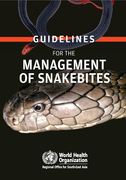
Snakebites are well-known medical emergencies in many parts of the world, especially in rural areas. Agricultural workers and children are the most affected. The incidence of snakebite mortality is particularly high in South-East Asia. Rational use of snake anti-venom can substantially reduce mortal
...
Kenya : Management of Severe Malaria
recommended
This Handbook, an updated edition of the Management of Severe Malaria, provides new and revised practical guidance on the diagnosis and management of severe malaria.
New edition
with special reference to prevention and control of avian influenza

This paper examines how diaspora and local organisations have responded to the crisis in Syria, how they evolved and the challenges that they face - and how international aid organisations and disapora and local groups can better work together in a new aid model.
