
Filter
355
Text search:
L.
Davies
Featured
Recommendations
27
New Publications
47
Language
Document type
No document type
181
Studies & Reports
97
Guidelines
53
Manuals
6
Fact sheets
5
Training Material
4
Resource Platforms
4
Strategic & Response Plan
4
Situation Updates
1
Countries / Regions
Global
17
Western and Central Europe
12
Africa
9
Kenya
8
South Africa
8
Russia
8
Eastern Europe
7
India
5
Zambia
5
Colombia
5
Liberia
4
Brazil
4
Latin America and the Carribbean
4
Nigeria
3
Senegal
3
Nepal
3
Indonesia
3
Côte d’Ivoire / Ivory Coast
2
Ethiopia
2
Cameroon
2
Uganda
2
Zimbabwe
2
South Sudan
2
Syria
2
Bangladesh
2
Malawi
2
Argentina
2
Eswatini/ Swaziland
2
Yemen
2
West and Central Africa
2
Middle East and North Africa
2
Asia
2
Vietnam
2
Guinea
1
Burkina Faso
1
Sierra Leone
1
Congo, Democratic Republic of
1
Mali
1
Morocco
1
USA
1
Ghana
1
Haiti
1
Pakistan
1
Germany
1
Lebanon
1
Chad
1
Tanzania
1
Thailand
1
Rwanda
1
Mozambique
1
Sudan
1
North Macedonia
1
Hungary
1
Ukraine
1
Ecuador
1
Botswana
1
Lesotho
1
Mexico
1
Western Pacific Region
1
Eastern Europe and Central Asia
1
Venezuela
1
Kyrgyzstan
1
Georgia
1
Jamaica
1
United Kingdom
1
Norway
1
Portugal
1
Authors & Publishers
Publication Years
Category
Countries
60
Clinical Guidelines
36
Public Health
28
Women & Child Health
11
Key Resources
11
Pharmacy & Technologies
4
Capacity Building
2
Toolboxes
Mental Health
54
HIV
39
COVID-19
37
Planetary Health
32
TB
26
NCDs
18
AMR
17
NTDs
17
Disability
16
Caregiver
11
Natural Hazards
10
Ebola
6
Rapid Response
4
Polio
3
Refugee
3
Global Health Education
3
Health Financing Toolbox
3
Cholera
1
Social Ethics
1
Unstable settings present challenges for the effective provision of antiretroviral treatment (ART). In this paper, we summarize the experience and results of providing ART and implementing contingency plans during acute instability in the Central African Republic (CAR) and Yemen.
Module 5
Monitoring and Evaluation
October 2018
Module 5: Monitoring and evaluation. This module is for people responsible for monitoring PrEP programmes at the national and site levels. It provides information on how to monitor PrEP for safety and effectiveness, suggesting core and additiona
...
Module 1
Clinical
July 2017
Module 1: Clinical. This module is for clinicians, including physicians, nurses and clinical officers. It gives an overview of how to provide PrEP safely and effectively, including: screening for substantial risk of HIV; performing appropriate testing before initi
...
Module 10
Testing providers
July 2017
Module 10: Testing providers. This module is for people who provide testing services at PrEP sites and laboratories. It offers guidance in selecting testing services, including screening of individuals before PrEP is initiated and monitoring while they ar
...
Despite the considerable improvement in global health, millions of people still lack access to quality health services, including access to effective antimicrobial medicines, or are impoverished as a result of health spending. At the same time, antimicrobial resistance – a consequence of overuse a
...
Stand 2.10.2020
Comprehensive Reviews in Food Science and Food Safety, Vol.12 (2013) pp.234-248
In 2006, the Institute of Food Technologists (IFT) published an Expert Report entitled “Antimicrobial Resistance: Implications for the Food System” (IFT 2006). That report summarized current scientific knowledge pe
...
The current document is anupdate of the guidelines developed by the EUCAST subcommittee on detection of resistance mechanisms. The EUCAST Steering Committee has carried out the current update. The document has been developed mainly for routine use in clinical laboratories and doesnot cover technical
...
The guidelines are to be used to guide the management of adults with lower respiratory tract infection (LRTI). As will be seen in the following text, this diagnosis, and the other clinical syndromes within this grouping, can be difficult to make accurately. In the absence of agreed definitions of th
...
Scientific Brief 9 July 2020
December 2015
National guidelines for of Clubfoot
This policy brief has been developed in response to the contemporary challenge of antibiotic resistance (ABR). ABR poses a formidable threat to global health and sustainable development. It is now increasingly recognized that the systematic neglect of cultural factors is one of the biggest obs
...
This document provides guidance on the implementation of the shielding approach in urban areas in LICs and crisis-affected regions. It is intended for the community itself, national and local governance institutions, and humanitarian and development actors operating in the country.
This brief considers the rationale for shielding individuals at high risk of severe disease or death from COVID-19 in low- and middleincome countries. It provides an overview of proposed approaches to shielding, discusses the categories of individuals who may be identified for shielding, and outline
...
Настоящее руководство «Клиническое ведение случаев COVID-19» базируется на
вышеуказанных стратегических приоритетах и адресовано клиницистам, участвующим в
оказаÐ
...
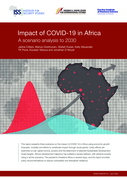
This report presents three scenarios on the impact of COVID-19 in Africa using economic growth forecasts, mortality and efforts to ameliorate impact through social grants. Likely effects are examined on per capita income, poverty and the attainment of selected Sustainable Development Goals targets.
...
This is an abridged version of the 2019 Standards containing the evidence-based recommendations most pertinent to primary care. The tables and figures have been renum-bered from the original document to match this version. The complete 2019 Standards of Care do
...
21 August 2020
This guidance provides specific considerations for the use of non-medical masks, also known as fabric masks, by children as a means for source control in the context of the current COVID-19 pandemic. It also advises on the use of medical masks for children under certain conditions.
The Zambia Population Based HIV impact assessment of 2016, reported the prevalence of viral hepatitis in Zambia as ranging between 5.6% among adults aged 15 to 59% in the general population, and 7.1% among HIV infected individuals. It is estimated that the majority of persons with chronic hepatitis
...
The World Health Organization’s comprehensive antenatal care (ANC) guideline WHO recommendations on antenatal care for a positive pregnancy experience was first published in 2016 with the objective of improving the quality of routine health care that all women and adolescent girls receive during p
...
