
Filter
301
Text search:
GBD
Featured
Recommendations
26
New Publications
40
Language
Document type
Studies & Reports
129
No document type
114
Guidelines
18
Strategic & Response Plan
17
Manuals
12
Fact sheets
5
Training Material
2
Brochures
2
Situation Updates
2
Countries / Regions
Global
36
India
11
Latin America and the Carribbean
10
Ghana
6
Kenya
6
South Africa
6
Africa
6
Ethiopia
5
Nigeria
4
Nepal
4
Malawi
4
Ukraine
4
Myanmar / Burma
4
Asia
4
Russia
4
Sierra Leone
3
Uganda
3
Germany
3
Tanzania
3
Bangladesh
3
Mozambique
3
Brazil
3
Liberia
2
Congo, Democratic Republic of
2
Haiti
2
Philippines
2
Zambia
2
China
2
Namibia
2
Sri Lanka
2
Chile
2
South–East Asia Region
2
Western and Central Europe
2
Venezuela
2
Guinea
1
Senegal
1
USA
1
Pakistan
1
Afghanistan
1
Cambodia
1
Thailand
1
Rwanda
1
Indonesia
1
Sudan
1
Peru
1
Eswatini/ Swaziland
1
North Macedonia
1
Colombia
1
East and Southern Africa
1
West and Central Africa
1
Middle East and North Africa
1
Eastern Europe and Central Asia
1
Armenia
1
Laos
1
Kyrgyzstan
1
Japan
1
United Kingdom
1
Portugal
1
Spain
1
Israel
1
Authors & Publishers
Publication Years
Category
Countries
88
Public Health
48
Clinical Guidelines
19
Key Resources
6
Women & Child Health
3
Capacity Building
1
Toolboxes
Mental Health
62
NCDs
43
Planetary Health
26
COVID-19
17
Global Health Education
15
Health Financing Toolbox
14
NTDs
10
Disability
9
Refugee
8
HIV
7
Rapid Response
5
AMR
5
TB
3
Caregiver
2
Ebola
1
Natural Hazards
1
Financing Global Health 2013: Transition in an Age of Austerity, IHME’s fifth annual report on global health expenditure, depicts financing trends that underline the resilience of development assistance for health. This year’s updated estimates show that despite lackluster economic growth and fi
...
Financing Global Health 2014 is the sixth edition of this annually produced report on global health financing. As in previous years, this report captures trends in development assistance for health (DAH) and government health expenditure (GHE). Health financing is one of IHME’s core research areas
...
Financing Global Health 2015 is the seventh edition of IHME’s annual series on global health financing. This report captures trends in development assistance for health (DAH) and government health expenditure as source (GHE-S) in low- and middle-income countries. Annually updated GHE-S and DAH est
...
Developmental disabilities are common. Yet, children with developmental disabilities have been neglected in health systems planning and policy provisions for health and continue to experience stigmatization, institutionalization, barriers to access health care and inequalities in health and educatio
...
While there has been real progress in addressing the burden of disease in the WHO African region, the COVID-19 pandemic has highlighted the link between health, economics and security, as the region saw decades of progress threatened, including positive trends in decreasing inequality. In the Africa
...
Little is known about the patterns of development assistance (DA) for each component of reproductive, maternal, newborn, child and adolescent health (RMNCAH) in conflict-affected countries nor about the DA allocation in relation to the burden of disease
: Development assistance for health (DAH) is one of the most important means for Japan to promote
diplomacy with developing countries and contribute to the international community. This study, for the first time,
estimated the gross disbursement of Japan’s DAH from 2012 to 2016 and clarified its
...
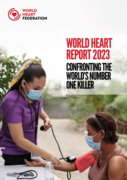
Global progress against cardiovascular disease (CVD) is flatlining.
Though rates of CVD deaths globally have fallen in the last three
decades, this trend has begun to stall and, without concerted
efforts, is at risk of reversing.
Cardiovascular diseases, principally ischemic heart disease (IHD), are the most important cause of death and disability in the majority of low- and lower-middle-income countries (LLMICs). In these countries, IHD mortality rates are significantly greater in individuals of a low socioeconomic status (
...
Background: Cardiovascular disease (CVD), mainly heart attack and stroke, is the
leading cause of premature mortality in low and middle income countries (LMICs).
Identifying and managing individuals at high risk of CVD is an important strategy to prevent and control CVD, in addition to multisector
...
More than 40% of the world population is 24 years old or younger, the vast majority of whom live in low- and lower middle–income countries. Globally, a quarter of disability-adjusted life years (DALYs) for mental disorders and substance abuse is borne by this age group and about 75% of mental diso
...
Worldwide, there are about 17 million deaths due to cardiovascular disease (CVD) each year and at least two or three times as many non-fatal events. Raised cholesterol greatly increases the risks of stroke and heart disease, causing a large
health burden across the world. The World Health Organizat
...
This paper explores the angles and opportunities of digital health, with a look
at digital innovation and its potential to support patients with circulatory diseases.
In reviewing developments in the field, current applications as well as gaps, the paper aims to support policymakers in leveraging
...
Background: Atherosclerotic cardiovascular diseases (ASCVD) including myocardial infarction, stroke and peripheral arterial disease continue to be major causes of premature death, disability and healthcare expenditure globally. Preventing the accumulation of cholesterol-containing atherogenic lipopr
...
ABSTRACT
More than 500 million people worldwide live with cardiovascular disease (CVD). Health systems today face fundamental challenges in delivering optimal care due to ageing populations, healthcare workforce constraints, financing, availability and affordability of CVD medicine, and service del
...
The World Heart Federation (WHF) commenced a Roadmap initiative in 2015 to reduce the global burden of cardiovascular disease and resultant burgeoning of healthcare costs. Roadmaps provide a blueprint for implementation of priority solutions for the principal cardiovascular diseases leading to death
...
In 2015, the United Nations set important targets to reduce premature
cardiovascular disease (CVD) deaths by 33% by 2030. Africa disproportionately
bears the brunt of CVD burden and has one of the highest risks of dying
from non-communicable diseases (NCDs) worldwide. There is currently
an epide
...
In this version of the compendium, each guidance is coded using the International Classification of Health Interventions (ICHI).
The compendium provides a systematic compilation of published guidance from WHO and other UN organizations on health and environment. Guidance on policies and actions a
...

Background
Noncommunicable diseases are major contributors to morbidity and mortality worldwide. Modifying the risk factors for these conditions, such as physical inactivity, is thus essential. Addressing the context or circumstances in which physical activity occurs may promote physical activity a
...

The incidence and mortality of cardiovascular diseases (CVDs) in low and middle income countries (LMICs) have been increasing, while access to CVDs medicines is suboptimal. We assessed selection of essential medicines for the prevention and treatment of CVDs on national essential medicines lists (NE
...
