
Filter
4736
Text search:
2021
Featured
449
297
Language
3503
620
546
272
255
242
215
95
39
37
23
23
22
20
20
18
16
16
16
15
14
14
13
13
13
12
12
12
11
9
9
9
9
8
8
8
7
7
6
5
5
5
5
4
4
4
4
4
3
3
3
2
2
2
2
2
2
2
1
1
1
1
1
1
1
1
1
1
1
1
1
Document type
1480
804
493
429
356
348
188
171
130
115
93
57
55
8
4
Countries
337
187
184
130
114
97
97
86
81
73
71
67
66
56
55
53
53
52
50
49
48
46
44
39
38
38
37
36
36
35
34
32
31
31
26
24
24
24
24
23
23
23
22
22
22
21
19
19
18
17
17
17
16
15
15
14
14
14
13
13
12
11
11
11
11
10
9
9
9
9
8
8
8
8
7
7
7
7
7
6
6
6
6
6
6
6
6
6
5
5
5
5
5
5
5
5
5
5
5
5
4
4
4
4
4
4
4
4
3
3
3
3
3
3
3
3
3
3
3
3
3
2
2
2
2
2
2
2
2
2
2
2
2
2
1
1
1
1
1
1
1
1
1
1
1
1
1
Authors & Publishers
897
261
177
104
102
98
89
70
66
60
60
56
45
44
39
38
38
35
32
31
30
30
30
26
26
25
24
21
19
19
16
16
16
16
16
16
15
15
15
15
15
14
14
14
13
13
12
12
12
12
12
11
11
11
11
11
11
11
10
10
10
10
10
9
9
9
9
9
9
8
8
8
8
8
8
8
8
8
8
8
8
8
7
7
7
7
7
7
7
7
7
7
7
7
7
6
6
6
6
6
6
6
6
6
6
6
6
6
6
6
6
6
5
5
5
5
5
5
5
5
5
5
5
5
5
5
5
5
5
5
5
5
5
5
5
5
5
5
5
5
4
4
4
4
4
4
4
4
4
4
4
4
4
4
4
4
4
4
4
4
4
4
4
4
4
4
4
4
4
4
4
4
4
4
4
4
4
4
4
4
4
4
4
4
4
4
4
4
4
4
4
4
4
4
3
3
3
3
3
3
3
3
3
3
3
3
3
3
3
3
3
3
3
3
3
3
3
3
3
3
3
3
3
3
3
3
3
3
3
3
3
3
3
3
3
3
3
3
3
3
3
3
3
3
3
3
3
3
3
3
3
3
3
3
3
3
3
3
3
3
3
3
3
3
3
3
3
3
3
3
3
3
3
3
3
3
3
3
3
2
2
2
2
2
2
2
2
2
2
2
2
2
2
2
2
2
2
2
2
2
2
2
2
2
2
2
2
2
2
2
2
2
2
2
2
2
2
2
2
2
2
2
2
2
2
2
2
2
2
2
2
2
2
2
2
2
2
2
2
2
2
2
2
2
2
2
2
2
2
2
2
2
2
2
2
2
2
2
2
2
2
2
2
2
2
2
2
2
2
2
2
2
2
2
2
2
2
2
2
2
2
2
2
2
2
2
2
2
2
2
2
2
2
2
2
2
2
2
2
2
2
2
2
2
2
2
2
2
2
2
2
2
2
2
2
2
2
2
2
2
2
2
2
2
2
2
2
2
2
2
2
2
2
2
2
2
2
2
2
2
2
2
2
2
2
2
2
2
2
2
2
2
2
2
2
2
2
2
2
2
2
2
2
2
2
2
2
2
2
2
2
2
2
2
2
2
2
2
2
2
2
2
2
2
2
2
2
2
2
2
2
2
2
2
2
2
2
2
2
2
2
2
2
2
2
2
2
1
1
1
1
1
1
1
1
1
1
1
1
1
1
1
1
1
1
1
1
1
1
1
1
1
1
1
1
1
1
1
1
1
1
1
1
1
1
1
1
1
1
1
1
1
1
1
1
1
1
1
1
1
1
1
1
1
1
1
1
1
1
1
1
1
1
1
1
1
1
1
1
1
1
1
1
1
1
1
1
1
1
1
1
1
1
1
1
1
1
1
1
1
1
1
1
1
1
1
1
1
1
1
1
1
1
1
1
1
1
1
1
1
1
1
1
1
1
1
1
1
1
1
1
1
1
1
1
1
1
1
1
1
1
1
1
1
1
1
1
1
1
1
1
1
1
1
1
1
1
1
1
1
1
1
1
1
1
1
1
1
1
1
1
1
1
1
1
1
1
1
1
1
1
1
1
1
1
1
1
1
1
1
1
1
1
1
1
1
1
1
1
1
1
1
1
1
1
1
1
1
1
1
1
1
1
1
1
1
1
1
1
1
1
1
1
1
1
1
1
1
1
1
1
1
1
1
1
1
1
1
1
1
1
1
1
1
1
1
1
1
1
1
1
1
1
1
1
1
1
1
1
1
1
1
1
1
1
1
1
1
1
1
1
1
1
1
1
1
1
1
1
1
1
1
1
1
1
1
1
1
1
1
1
1
1
1
1
1
1
1
1
1
1
1
1
1
1
1
1
1
1
1
1
1
1
1
1
1
1
1
1
1
1
1
1
1
1
1
1
1
1
1
1
1
1
1
1
1
1
1
1
1
1
1
1
1
1
1
1
1
1
1
1
1
1
1
1
1
1
1
1
1
1
1
1
1
1
1
1
1
1
1
1
1
1
1
1
1
1
1
1
1
1
1
1
1
1
1
1
1
1
1
1
1
1
1
1
1
1
1
1
1
1
1
1
1
1
1
1
1
1
1
1
1
1
1
1
1
1
1
1
1
1
1
1
1
1
1
1
1
1
1
1
1
1
1
1
1
1
1
1
1
1
1
1
1
1
1
1
1
1
1
1
1
1
1
1
1
1
1
1
1
1
1
1
1
1
1
1
1
1
1
1
1
1
1
1
1
1
1
1
1
1
1
1
1
1
1
1
1
1
1
1
1
1
1
1
1
1
1
1
1
1
1
1
1
1
1
1
1
1
1
1
1
1
1
1
1
1
1
1
1
1
1
1
1
1
1
1
1
1
1
1
1
1
1
1
1
1
1
1
1
1
1
1
1
1
1
1
1
1
1
1
1
1
1
1
1
1
1
1
1
1
1
1
1
1
1
1
1
1
1
1
1
1
1
1
1
1
1
1
1
1
1
1
1
1
1
1
1
1
1
1
1
1
1
1
1
1
1
1
1
1
1
1
1
1
1
1
1
1
1
1
1
1
1
1
1
1
1
1
1
1
1
1
1
1
1
1
1
1
1
1
1
1
1
1
1
1
1
1
1
1
1
1
1
1
1
1
1
1
1
1
1
1
1
1
1
1
1
1
1
1
1
1
1
1
1
1
1
1
1
1
1
1
1
1
1
1
1
1
1
1
1
1
1
1
1
1
1
1
1
1
1
1
1
1
1
1
1
1
1
1
1
1
1
1
1
1
1
1
1
1
1
1
1
1
1
1
1
1
1
1
1
1
1
1
1
1
1
1
1
1
1
1
1
1
1
1
1
1
1
1
1
1
1
1
1
1
1
1
1
1
1
1
1
1
1
1
1
1
1
1
1
1
1
1
1
1
1
1
1
1
1
1
1
1
1
1
1
1
1
1
1
1
1
1
1
1
1
1
1
1
1
1
1
1
1
1
1
1
1
1
1
1
1
1
1
1
1
1
1
1
1
1
1
1
1
1
1
1
1
1
1
1
1
1
1
1
1
1
1
1
1
1
1
1
1
1
1
1
1
1
1
1
1
1
1
1
1
1
1
1
1
1
1
1
1
1
1
1
1
1
1
1
1
1
1
1
1
1
1
1
1
1
1
1
1
1
1
1
1
1
1
1
1
1
1
1
1
1
1
1
1
1
1
1
1
1
1
1
1
1
1
1
1
1
1
1
1
1
1
1
1
1
1
1
1
1
1
1
1
1
1
1
1
1
1
1
1
1
1
1
1
1
1
1
1
1
1
1
1
1
1
1
1
1
1
1
1
1
1
1
1
1
1
1
1
1
1
1
1
1
1
1
1
1
1
1
1
1
1
1
1
1
1
1
1
1
1
1
1
1
1
1
1
1
1
1
1
1
1
1
1
1
1
1
1
1
1
1
1
1
1
1
1
1
1
1
1
1
1
1
1
1
1
1
1
1
1
1
1
1
1
1
1
1
1
1
1
1
1
1
1
1
1
1
1
1
1
1
1
1
1
1
1
1
1
1
1
1
1
1
1
1
1
1
1
1
1
1
1
1
1
1
1
1
1
1
1
1
1
1
1
1
1
1
1
1
1
1
1
1
1
1
1
1
1
1
1
1
1
1
1
1
1
1
1
1
1
1
1
1
1
1
1
1
1
1
1
1
1
1
1
1
1
1
1
1
1
1
1
1
1
1
1
1
1
1
1
1
1
1
1
1
1
1
1
1
1
1
1
1
1
1
1
1
1
1
1
1
1
1
1
1
1
1
1
1
1
1
1
1
1
1
1
1
1
1
1
1
1
1
1
1
1
1
1
1
1
1
1
1
1
1
1
1
1
1
1
1
1
1
1
1
1
1
1
1
1
1
1
1
1
1
1
1
1
1
1
1
1
1
1
1
1
1
1
1
1
1
1
1
1
1
1
1
1
1
1
1
1
1
1
1
1
1
1
1
1
1
1
1
1
1
1
1
1
1
1
1
1
1
1
1
1
1
1
1
1
1
1
1
1
1
1
1
1
1
1
1
1
1
1
1
1
1
1
1
1
1
1
1
1
1
1
1
1
1
1
1
1
1
1
1
1
1
1
1
1
1
1
1
1
1
1
1
1
1
1
1
1
1
1
1
1
1
1
1
1
1
1
1
1
1
1
1
1
1
1
1
1
1
1
1
1
1
1
1
1
1
1
1
1
1
1
1
1
1
1
1
1
1
1
1
1
1
1
1
1
1
1
1
1
1
1
1
1
1
1
1
1
1
1
1
1
1
1
1
1
1
1
1
1
1
1
1
1
1
1
1
1
1
1
1
1
1
1
1
1
1
1
1
1
1
1
1
1
1
1
1
1
1
1
1
1
1
1
1
1
1
1
1
1
1
1
1
1
1
1
1
1
1
1
1
1
1
1
1
1
1
1
1
1
1
1
1
1
1
1
1
1
1
1
1
1
1
1
1
1
1
1
1
1
1
1
1
1
1
1
1
1
1
1
1
1
1
1
1
1
1
1
1
1
1
1
1
1
1
1
1
1
1
1
1
1
1
1
1
1
1
1
1
1
1
1
1
1
1
1
1
1
1
1
1
1
1
1
1
1
1
1
1
1
1
1
1
1
1
1
1
1
1
1
1
1
1
1
1
1
1
1
1
1
1
1
1
1
1
1
1
1
1
1
1
1
1
1
1
1
1
1
1
1
1
1
1
1
1
1
1
1
1
1
1
1
1
1
1
1
1
1
1
1
1
1
1
1
1
1
1
1
1
1
1
1
1
1
1
1
1
1
1
1
1
1
1
1
1
1
1
1
1
1
1
1
1
1
1
1
1
1
1
1
1
1
1
1
1
1
1
1
1
1
1
1
1
1
1
1
1
1
1
1
1
1
1
1
1
1
1
1
1
1
1
1
1
1
1
1
1
1
1
1
1
1
1
1
1
1
1
1
1
1
1
1
1
1
1
1
1
1
1
1
1
1
1
1
1
1
1
1
1
1
1
1
1
1
1
1
1
1
1
1
1
1
1
1
1
1
1
1
1
1
1
1
1
1
1
1
1
1
1
1
1
1
1
1
1
1
1
1
1
1
1
1
1
1
1
1
1
1
1
1
1
1
1
1
1
1
1
1
1
1
1
1
1
1
1
1
1
1
1
1
1
1
1
1
1
1
1
1
1
1
1
1
1
1
1
1
1
1
1
1
1
1
1
1
1
1
1
1
1
1
1
1
1
1
1
1
1
1
1
1
1
1
1
1
1
1
1
1
1
1
1
1
1
1
1
1
1
1
1
1
1
1
1
1
1
1
1
1
1
1
1
1
1
1
1
1
1
1
1
1
1
1
1
1
1
1
1
1
1
1
1
1
1
1
1
1
1
1
1
1
1
1
1
1
1
1
1
1
1
1
1
1
1
1
1
1
1
1
1
1
1
1
1
1
1
1
1
1
1
1
1
1
1
1
1
1
1
1
1
1
1
1
1
1
1
1
1
1
1
1
1
1
1
1
1
1
1
1
1
1
1
1
1
1
1
1
1
1
1
1
1
1
1
1
1
1
1
1
1
1
1
1
1
1
1
1
1
1
1
1
1
1
1
1
1
1
1
1
1
1
1
1
1
1
1
1
1
1
1
1
1
1
1
1
1
1
1
1
1
1
1
1
1
1
1
1
1
1
1
1
1
1
1
1
1
1
1
1
1
1
1
1
1
1
1
1
1
1
1
1
1
1
1
1
1
1
1
1
1
1
1
1
1
1
1
1
1
1
1
1
1
1
1
1
1
1
1
1
1
1
1
1
1
1
1
1
1
1
1
1
1
1
1
1
1
1
1
1
1
1
1
1
1
1
1
1
1
1
1
1
1
1
1
1
1
1
1
1
1
1
1
1
1
1
1
1
1
1
1
1
1
1
1
1
1
1
1
1
1
1
1
1
1
1
1
1
1
1
1
1
1
1
1
1
1
1
1
1
1
1
1
1
1
1
1
1
1
1
1
1
1
1
1
1
1
1
1
1
1
1
1
1
1
1
1
1
1
1
1
1
1
1
1
1
1
1
1
1
1
1
1
1
1
1
1
1
1
1
1
1
1
1
1
1
1
1
1
1
1
1
1
1
1
1
1
1
1
1
1
1
1
1
1
1
1
1
1
1
1
1
1
1
1
1
1
1
1
1
1
1
1
1
1
1
1
1
1
1
1
1
1
1
1
1
1
1
1
1
1
1
1
1
1
1
1
1
1
1
1
1
1
1
1
1
1
1
1
1
1
1
1
1
1
1
1
1
1
1
1
1
1
1
1
1
1
1
1
1
1
1
1
1
1
1
1
1
1
1
1
1
1
1
1
1
1
1
1
1
1
1
1
1
1
1
1
1
1
1
1
1
1
1
1
1
1
1
1
1
1
1
1
1
1
1
1
1
1
1
1
1
Publication Years
1
4113
600
19
1
1
1
Category
1800
312
257
188
149
84
40
3
1
1
Toolboxes
1412
358
238
214
213
197
187
181
175
162
128
90
84
83
65
59
42
35
21
14
9
9
7
Over 6 million people worldwide are infected with Trypanosoma cruzi, the protozoan that causes Chagas disease. Endemic in 21 Latin American countries, the disease can be transmitted by vector insects called triatomines — also known as “kissing bugs” —, foods or beverages contaminated with th
...
e parasite, blood transfusions, organ transplants, or congenitally during pregnancy or delivery.
more
Trachoma, caused by particular serovars of Chlamydia trachomatis, is the leading
infectious cause of blindness. Infection is transmitted within ocular and nasal secretions that are passed from person to person on fingers, fomites (such as clothing) and eye-seeking flies (particularly Musca sorbens)
...
.
Ophthalmic infection is associated with an inflammatory conjunctivitis known as “active trachoma”. Repeated episodes of active trachoma can scar the eyelids. In some individuals this leads to trachomatous trichiasis (TT), in which one or more eyelashes on the upper
eyelid touch the eye. TT is extremely painful. It can be corrected surgically, but, if left untreated, may lead to corneal opacification, resulting in vision impairment and blindness.
more
La santé est un droit humain universel et un facteur essentiel de bien-être, de développement économique, de croissance,
de richesse et de prospérité pour tous. Les systèmes de santé jouent un rôle essentiel, car ils protègent, rétablissent et
préservent la santé des patients et des p
...
opulations. Un personnel de santé bien formé, motivé et soutenu est la clé de
voûte de tout système de santé et, sans lui, il n’y aurait pas de soins de santé
more
Un an après le début de la pandémie, la COVID-19 a changé le monde et continue de peser sur notre quotidien. La pandémie a mis en évidence les lacunes des systèmes de santé tandis que le personnel de santé a été exposé au virus de façon
disproportionnée. Tout au long de l’année pas
...
sée, les infirmières ont affiché leur volonté et leur souplesse
en s’adaptant à de nouvelles méthodes de travail. Des millions d’infections à la COVID-19 ont été signalées parmi les agents de santé dans le monde et, hélas, le Conseil International des Infirmières (CII) a enregistré près de 3 000 décès qui lui sont
imputables parmi les infirmières dans 60 pays. Il est probable que le chiffre réel soit beaucoup plus élevé, le nombre d’infections et de décès parmi les agents de santé restant impossible à évaluer avec précision dans la mesure où de nombreux systèmes et pays n’ont pas assuré le suivi de cette question capitale.
Sur le long terme, les effets de la COVID-19, dont la « COVID longue » et le syndrome de stress posttraumatique différé, pourraient avoir d’importants effets délétères, en particulier sur le personnel infirmie
more

Chagas disease is a tropical parasitic infection transmitted by crawling, blood-sucking insects (kissing bugs). You may have flu-like symptoms or none at all. But the disease can lead to life-threatening complications. With prompt treatment, most people with Chagas disease, also known as American tr
...
ypanosomiasis, recover fully.
more
This first online course is geared at helping healthcare workers in diagnosing and managing all aspects of dengue in order to avoid complications and fatalities.
This course was developed with a comprehensive vision. It is divided into seven modules that include:
Epidemiological informatio
...
n on dengue,
Pathophysiology of clinical manifestations,
Clinical and differential diagnosis,
Severity classification,
Recommendations for the management of dengue according to its severity and
Managing patients with comorbidities.
more

Lymphatic filariasis (LF) infection if untreated results in fluid accumulation in the limbs or breasts (lymphedema) or genitalia (hydrocele) that is painful and causes great discomfort. Morbidity management and disability prevention (MMDP) strategies such as surgery for hydrocele, treatment of acute
...
attacks and management of lymphedema are necessary for the management of the advanced stages of LF. However, very few countries including Zambia, have adequate information on the health beliefs and health seeking behavior of communities living in endemic areas towards MMDP services for LF. This study sought to explore community and health provider perspectives towards MMDP services for LF in a highly endemic region, Luangwa District, Zambia, between February and April 2019.
more
Transmission of Chagas disease (CD) has decreased in recent decades, but the disease remains an important problem in endemic areas. There was an increase in the proportion of nonvector transmission, mainly in nonendemic countries. The aim of this study was to gather evidence concerning healthcare pr
...
ofessional’s knowledge about CD.
more
DPDx - Laboratory Identification of Parasites of Public Health Concern
Trypanosoma cruzi, is a parasitic protozoan that is the causative agent of Chagas disease (American trypanosomiasis). Currently, six distinct lineages of T. cruzi are classified into discrete typing units (TcI-VI), which vary in
...
their geographic occurrence, host specificity, and pathogenicity.
more
Chagas disease (CD), caused by the parasite Trypanosoma cruzi, affects ~6–7 million people worldwide. Significant limitations still exist in our understanding of CD. Harnessing individual participant data (IPD) from studies could support more in-depth analyses to address
the many outstanding rese
...
arch questions. This systematic review aims to describe the characteristics and treatment practices of clinical studies in CD and assess the breadth and
availability of research data for the potential establishment of a data-sharing platform.
more
First discovered more than 100 years ago, Chagas disease continues to affect more than six million people worldwide and is one of the most prevalent public health problems in Latin America and, increasingly, on a global scale. In the last decades, migratory patterns have spread the disease to areas
...
where it was previously unknown, including the United States of America (USA), Europe and the Western Pacific region. With an estimated 75 million individuals at risk of infection, Chagas disease is becoming a global health challenge with significant social and economic burdens for the people affected by it.
more
Багато людей, яким доводиться тікати від жахливої війни в Україні, приїжджають також до Німеччини. В чужій країні неодмінно виникає безліч питань, особливо щодо асÐ
...
¿ектів перебування, медичного забезпечення та соціальної інтеграції. У десяти відео ми даємо відповіді на найважливіші питання для біженців з України і беремо до уваги такі аспекти: життя з ВІЛ та/або туберкульозом, права представників ґендерних меншин, вживання наркотиків і замісна підтримувальна терапія, також робота у сфері інтим-послуг та біженство без українського паспорта.
more
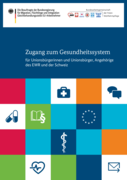
Zugang zum Gesundheitssystem für Unionsbürgerinnen und Unionsbürger, Angehörige des EWR und der Schweiz
Frings, D.
Die Beauftragte der Bundesregierung für Migration, Flüchtlinge und Integration; Die Beauftragte der Bundesregierung für Antirassismus; Gleichbehandlungsstelle EU-Arbeitnehmer
(2021)
C2
In der Europäischen Union (EU) leben über 500 Millionen Menschen. Die Sicherstellung der Gesundheits- versorgung für diese Menschen entspricht einem der wichtigsten sozialen Grund- und Menschenrechte. Auf
die Gewährleistung haben sich die Staaten Europas in der Europäischen Sozialcharta des Eu
...
roparats und die Mitgliedstaaten der EU in der Grundrechtecharta der EU verpflichtet.
more

DNDi’s long-term goal for sleeping sickness, also known as human African trypanosomiasis (HAT), is to develop and register two new drugs that are effective against both Stage 1 and Stage 2 of the disease and both subspecies of the parasite, T.b. gambiense and T.b. rhodesiense. T.b. rhodesiense is
...
an acute form of the disease, occurring primarily in Eastern and Southern Africa. Better treatments for T.b. rhodesiense sleeping sickness are urgently needed.
more
Residence Time, Water Contact, and Age-driven Schistosoma mansoni Infection in Hotspot Communities in Uganda
Moses, A.; Adriko, M.; Kibwika, B. et al.
The American Jornal of Tropical Medicine and Hygiene
(2021)
CC
Schistosomiasis, which is the second most important parasitic infection after malaria in terms of its socioeconomic impact, is responsible for the loss of an estimated 4.5 million disability-adjusted life years (DALYs) worldwide. Schistosomiasis, including both intestinal and urinary forms of the di
...
sease, occurs in 78 countries across the globe. An estimated 240 million people are infected, with more than 779 million living at risk globally. The majority of those infected and those at risk for infection live in low-income countries, and approximately 80% of the morbidity occurs in impoverished communities and households in sub-Saharan Africa. Within Uganda, 91 of the 134 districts are endemic for intestinal schistosomiasis caused by Schistosoma mansoni, and the eastern region, especially along Lake Victoria, has one of the highest S. mansoni burdens worldwide. Schistosoma haematobium is only endemic in the five districts of the Lango region in northern Uganda.
more
The sub-Saharan African region, carries 90% of the over 250 million cases of schistosomiasis occurring worldwide. In this region, after Nigeria, Tanzania is second country having the highest cases of schistosomiasis and approximately 51.5%0 of the Tanzanian population is either exposed or live in ar
...
eas with high risk of exposure. The country is endemic to both Schistosoma mansoni and Schistosoma haematobium, these infections are common in communities characterised with limited access to water, sanitation, hygienic practices and health services. Schistosoma mansoni infection is associated with hepatosplenic disease characterised with hepatomegaly, splenomegaly, progressive periportal fibrosis (PPF) which can lead to portal hypertension and its related sequelae, mainly ascites, liver surface irregularities, oesophageal varices and haematemesis. The main consequences of S. haematobium infection are haematuria, dysuria, nutritional deficiencies, urinary bladder lesions, hydronephrosis, urinary bladder squamous cell carcinoma and in children, growth retardation. Preventive chemotherapy using mass drug administration (MDA) of praziquantel targeting primary school aged children is the main strategy for controlling schistosomiasis in Tanzania.
more
Schistosomiasis is a prevalent parasitic, neglected tropical disease (NTD) affecting over 220 million people globally, especially in sub-Saharan Africa (SSA). The pathology of this disease in terms of intestinal, liver and urinary presentations is well-known, yet its chronic effect on host genitalia
...
is often ignored or overlooked. Male genital schistosomiasis (MGS) is a gender-specific manifestation of urogenital schistosomiasis (UGS), associated with the presence of Schistosoma haematobium eggs and related pathologies in genitalia of men inhabiting or visiting endemic areas in SSA. Despite the first reported by Madden, the epidemiology, diagnostic testing and case management of MGS are not well-described owing to limited research and diminishing focus over several decades.
more
Bug bites are irritating, and some can be harmful. Learn to identify the type of bug bite and when to seek emergency medical care.
HIV-1 infection disproportionately affects women in sub-Saharan Africa, where areas of high HIV-1 prevalence and Schistosoma haematobium endemicity largely overlap. Female genital schistosomiasis (FGS), caused most frequently by S. haematobium egg deposition in the genital tract, has been associated
...
with prevalent HIV-1 infection in cross-sectional studies. The presence of S. haematobium eggs in genital tissue is also associated with vascularization and the accumulation of CD4+ lymphocytes and macrophages, making the granuloma-associated environment a potential contributor to HIV-1 vulnerability. In addition to modulation of the local cervicovaginal environment, FGS has also been associated with a higher frequency of systemic CD4 T-cells expressing the chemokine receptor CCR5. Tissue-entrapped eggs are also associated with clinically visible FGS-associated manifestations in the cervicovaginal mucosa. FGS lesions may breach the intact cervicovaginal immune barrier and are hypothesized to provide an entry point for HIV-1 infection. However, the underlying mechanism for potential HIV-1 vulnerability in FGS has not been fully characterized and requires further investigation.
more
Species of the genus Schistosoma are digenetic trematodes and the causative agents of the Neglected Tropical Disease (NTD) schistosomiasis; a parasitic disease that ranks second only to malaria in terms of socioeconomic impacts. Over 220 million people worldwide are currently infected, 90% of whom l
...
ive in sub-Saharan Africa (SSA), with an estimated annual mortality of at least 200,000. Infection in humans, as well as alternative mammalian definitive hosts, occurs in contaminated freshwater environments via cercariae shed from specific snail intermediate hosts. Early acute morbidity can occur following cutaneous penetration, sometimes leading to an urticarial rash known as swimmers itch or cercarial dermatitis.
more
