Filter
973
Text search:
prescribing
quality
Featured
105
243
Language
Document type
468
193
185
53
27
19
15
6
3
2
1
1
Countries
55
36
36
34
25
25
22
18
17
17
15
13
12
11
11
10
10
9
8
8
8
7
7
7
6
6
6
5
5
5
5
5
4
4
4
3
3
3
3
3
3
3
3
2
2
2
2
2
2
2
2
2
2
2
2
2
1
1
1
1
1
1
1
1
1
1
1
1
1
1
1
1
1
1
1
1
1
1
1
1
1
1
1
1
Authors & Publishers
Publication Years
Category
368
108
53
31
16
5
3
1
Toolboxes
191
105
70
59
40
39
34
26
22
15
11
10
8
5
2
2
2
1
1
1
Take Action on Antimicrobial Resistance.For students in college and university
This is a booklet that is suitable for readers with a developed intellect. It is well summarized in a way that captures the most important facts to remember and actions to take against AMR.


A survey of prevention, testing and treatment policies and practices


Submitted to the US Agency for International Development by the
Systems for Improved Access to Pharmaceuticals and Services (SIAPS) Program.
This manual provides a framework to identify problems and design interventions to improve access to and use of medicines for children. It is a resource for
...
Q3: For behavioural and psychological symptoms in people with dementia, do following drugs, when compared to placebo/comparator, produce benefits/harm in the specified outcomes?

Perspectives on Drugs
WHO mhGAP Guideline update
recommended
Update of the Mental Health Gap Action Programme
(mhGAP) Guideline for Mental, Neurological and Substance use Disorders May 2015
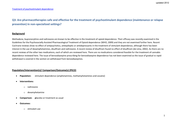
Q3: Are pharmacotherapies safe and effective for the treatment of psychostimulant dependence (maintenance or relapse prevention) in non-specialized settings?
The purpose of the Clinical Practice Guideline for Treatment of Patients with Anxiety Disorders in Primary Care is to provide professionals with practical recommendations based on scientific evidence to assist in the detection and effective treatment of these disorders