
Filter
4334
Text search:
household
population
Featured
328
1429
Language
4189
98
62
42
39
23
20
11
6
5
4
3
3
3
3
3
2
2
2
2
2
2
2
2
2
2
2
2
2
2
2
1
1
1
1
1
1
1
1
1
1
1
1
1
1
1
1
1
1
1
1
1
1
Document type
2772
726
342
166
147
67
48
40
7
7
6
2
1
Countries
184
180
161
133
127
124
120
111
106
103
100
96
89
87
79
74
73
68
56
54
52
49
48
47
46
44
41
41
41
41
38
36
35
33
31
28
25
23
20
19
19
19
18
17
17
17
15
15
15
15
14
13
12
12
11
11
11
11
10
10
10
9
9
9
9
8
7
7
7
6
6
5
5
5
5
4
4
4
4
4
4
3
3
3
3
3
3
3
3
3
2
2
2
2
2
2
2
2
2
2
2
2
2
2
2
2
2
2
1
1
1
1
1
1
1
1
1
1
1
1
1
1
1
1
1
1
1
1
1
1
1
1
1
1
1
1
1
1
1
1
Authors & Publishers
373
167
162
126
114
90
84
67
55
54
47
30
28
24
23
21
19
19
19
19
19
18
18
18
18
17
16
16
16
16
16
16
15
15
14
14
14
13
13
13
13
13
13
13
12
12
12
12
11
11
11
11
11
11
11
11
11
10
10
10
10
9
9
9
9
9
9
9
9
8
8
8
8
8
8
7
7
7
7
7
7
7
7
7
7
6
6
6
6
6
6
6
6
6
6
6
6
6
6
6
6
6
6
6
6
6
5
5
5
5
5
5
5
5
5
5
5
5
5
5
5
5
5
5
5
5
5
5
5
5
5
5
5
5
5
5
5
5
5
5
5
5
5
5
4
4
4
4
4
4
4
4
4
4
4
4
4
4
4
4
4
4
4
4
4
4
4
4
4
4
4
4
4
4
4
4
4
4
4
4
4
4
4
4
4
4
4
4
4
4
4
4
4
4
4
4
4
3
3
3
3
3
3
3
3
3
3
3
3
3
3
3
3
3
3
3
3
3
3
3
3
3
3
3
3
3
3
3
3
3
3
3
3
3
3
3
3
3
3
3
3
3
3
3
3
3
3
3
3
3
3
3
3
3
3
3
3
3
3
3
3
3
3
3
3
3
3
3
3
3
3
3
3
3
3
3
3
3
3
3
3
3
3
3
3
3
3
3
3
3
3
3
3
3
3
3
3
3
2
2
2
2
2
2
2
2
2
2
2
2
2
2
2
2
2
2
2
2
2
2
2
2
2
2
2
2
2
2
2
2
2
2
2
2
2
2
2
2
2
2
2
2
2
2
2
2
2
2
2
2
2
2
2
2
2
2
2
2
2
2
2
2
2
2
2
2
2
2
2
2
2
2
2
2
2
2
2
2
2
2
2
2
2
2
2
2
2
2
2
2
2
2
2
2
2
2
2
2
2
2
2
2
2
2
2
2
2
2
2
2
2
2
2
2
2
2
2
2
2
2
2
2
2
2
2
2
2
2
2
2
2
2
2
2
2
2
2
2
2
2
2
2
2
2
2
2
2
2
2
2
2
2
2
2
2
2
2
2
2
2
2
2
2
2
2
2
2
2
2
2
2
2
2
2
2
2
2
2
2
2
2
2
2
2
2
2
2
2
2
2
2
2
2
2
2
2
2
2
2
2
2
2
2
2
2
2
2
2
2
2
2
2
2
2
2
2
2
2
2
2
2
2
2
2
2
2
2
2
2
2
2
2
2
2
2
2
2
2
2
2
2
2
2
2
2
2
2
2
2
2
2
2
2
2
2
2
2
2
2
2
2
2
2
2
2
2
2
2
2
2
2
2
2
2
2
1
1
1
1
1
1
1
1
1
1
1
1
1
1
1
1
1
1
1
1
1
1
1
1
1
1
1
1
1
1
1
1
1
1
1
1
1
1
1
1
1
1
1
1
1
1
1
1
1
1
1
1
1
1
1
1
1
1
1
1
1
1
1
1
1
1
1
1
1
1
1
1
1
1
1
1
1
1
1
1
1
1
1
1
1
1
1
1
1
1
1
1
1
1
1
1
1
1
1
1
1
1
1
1
1
1
1
1
1
1
1
1
1
1
1
1
1
1
1
1
1
1
1
1
1
1
1
1
1
1
1
1
1
1
1
1
1
1
1
1
1
1
1
1
1
1
1
1
1
1
1
1
1
1
1
1
1
1
1
1
1
1
1
1
1
1
1
1
1
1
1
1
1
1
1
1
1
1
1
1
1
1
1
1
1
1
1
1
1
1
1
1
1
1
1
1
1
1
1
1
1
1
1
1
1
1
1
1
1
1
1
1
1
1
1
1
1
1
1
1
1
1
1
1
1
1
1
1
1
1
1
1
1
1
1
1
1
1
1
1
1
1
1
1
1
1
1
1
1
1
1
1
1
1
1
1
1
1
1
1
1
1
1
1
1
1
1
1
1
1
1
1
1
1
1
1
1
1
1
1
1
1
1
1
1
1
1
1
1
1
1
1
1
1
1
1
1
1
1
1
1
1
1
1
1
1
1
1
1
1
1
1
1
1
1
1
1
1
1
1
1
1
1
1
1
1
1
1
1
1
1
1
1
1
1
1
1
1
1
1
1
1
1
1
1
1
1
1
1
1
1
1
1
1
1
1
1
1
1
1
1
1
1
1
1
1
1
1
1
1
1
1
1
1
1
1
1
1
1
1
1
1
1
1
1
1
1
1
1
1
1
1
1
1
1
1
1
1
1
1
1
1
1
1
1
1
1
1
1
1
1
1
1
1
1
1
1
1
1
1
1
1
1
1
1
1
1
1
1
1
1
1
1
1
1
1
1
1
1
1
1
1
1
1
1
1
1
1
1
1
1
1
1
1
1
1
1
1
1
1
1
1
1
1
1
1
1
1
1
1
1
1
1
1
1
1
1
1
1
1
1
1
1
1
1
1
1
1
1
1
1
1
1
1
1
1
1
1
1
1
1
1
1
1
1
1
1
1
1
1
1
1
1
1
1
1
1
1
1
1
1
1
1
1
1
1
1
1
1
1
1
1
1
1
1
1
1
1
1
1
1
1
1
1
1
1
1
1
1
1
1
1
1
1
1
1
1
1
1
1
1
1
1
1
1
1
1
1
1
1
1
1
1
1
1
1
1
1
1
1
1
1
1
1
1
1
1
1
1
1
1
1
1
1
1
1
1
1
1
1
1
1
1
1
1
1
1
1
1
1
1
1
1
1
1
1
1
1
1
1
1
1
1
1
1
1
1
1
1
1
1
1
1
1
1
1
1
1
1
1
1
1
1
1
1
1
1
1
1
1
1
1
1
1
1
1
1
1
1
1
1
1
1
1
1
1
1
1
1
1
1
1
1
1
1
1
1
1
1
1
1
1
1
1
1
1
1
1
1
1
1
1
1
1
1
1
1
1
1
1
1
1
1
1
1
1
1
1
1
1
1
1
1
1
1
1
1
1
1
1
1
1
1
1
1
1
1
1
1
1
1
1
1
1
1
1
1
1
1
1
1
1
1
1
1
1
1
1
1
1
1
1
1
1
1
1
1
1
1
1
1
1
1
1
1
1
1
1
1
1
1
1
1
1
1
1
1
1
1
1
1
1
1
1
1
1
1
1
1
1
1
1
1
1
1
1
1
1
1
1
1
1
1
1
1
1
1
1
1
1
1
1
1
1
1
1
1
1
1
1
1
1
1
1
1
1
1
1
1
1
1
1
1
1
1
1
1
1
1
1
1
1
1
1
1
1
1
1
1
1
1
1
1
1
1
1
1
1
1
1
1
1
1
1
1
1
1
1
1
1
1
1
1
1
1
1
1
1
1
1
1
1
1
1
1
1
1
1
1
1
1
1
1
1
1
1
1
1
1
1
1
1
1
1
1
1
1
1
1
1
1
1
1
1
1
1
1
1
1
1
1
1
1
1
1
1
1
1
1
1
1
1
1
1
1
1
1
1
1
1
1
1
1
1
1
1
1
1
1
1
1
1
1
1
1
1
1
1
1
1
1
1
1
1
1
1
1
1
1
1
1
1
1
1
1
1
1
1
1
1
1
1
1
1
1
1
1
1
1
1
1
1
1
1
1
1
1
1
1
1
1
1
1
1
1
1
1
1
1
1
1
1
1
1
1
1
1
1
1
1
1
1
1
1
1
1
1
1
1
1
1
1
1
1
1
1
1
1
1
1
1
1
1
1
1
1
1
1
1
1
1
1
1
1
1
1
1
1
1
1
1
1
1
1
1
1
1
1
1
1
1
1
1
1
1
1
1
1
1
1
1
1
1
1
1
1
1
1
1
1
1
1
1
1
1
1
1
1
1
1
1
1
1
1
1
1
1
1
1
1
1
1
1
1
1
1
1
1
1
1
1
1
1
1
1
1
1
1
1
1
1
1
1
1
1
1
1
1
1
1
1
1
1
1
1
1
1
1
1
1
1
1
1
1
1
1
1
1
1
1
1
1
1
1
1
1
1
1
1
1
1
1
1
1
1
1
1
1
1
1
1
1
1
1
1
1
1
1
1
1
1
1
1
1
1
1
1
1
1
1
1
1
1
1
1
1
1
1
1
1
1
1
1
1
1
1
1
1
1
1
1
1
1
1
1
1
1
1
1
1
1
1
1
1
1
1
1
1
1
1
1
1
1
1
1
1
1
1
1
1
1
1
1
1
1
1
1
1
1
1
1
1
1
1
1
1
1
1
1
1
1
1
1
1
1
1
1
1
1
1
1
1
1
1
1
1
1
1
1
1
1
1
1
1
1
1
1
1
1
1
1
1
1
1
1
1
1
1
1
1
1
1
1
1
1
1
1
1
1
1
1
1
1
1
1
1
1
1
1
1
1
1
1
1
1
1
1
1
1
1
1
1
1
1
1
1
1
1
1
1
1
1
1
1
1
1
1
1
1
1
1
1
1
1
1
1
1
1
1
1
1
1
1
1
1
1
1
1
1
1
1
1
1
1
1
1
1
1
1
1
1
1
1
1
1
1
1
1
1
1
1
1
1
1
1
1
1
1
1
1
1
1
1
1
1
1
1
1
1
1
1
1
1
1
1
1
1
1
1
1
1
1
1
1
1
1
1
1
1
1
1
1
1
1
1
1
1
1
1
1
1
1
1
1
1
1
1
1
1
1
1
1
1
1
1
1
1
1
1
1
1
1
1
1
1
1
1
1
1
1
1
1
1
1
1
1
1
1
1
1
1
1
1
1
1
1
1
1
1
1
1
1
1
1
1
1
1
1
1
1
1
1
1
1
1
1
1
1
1
1
1
1
1
1
1
1
1
1
1
1
1
1
1
1
1
1
1
1
1
1
1
1
1
1
1
1
1
1
1
1
1
1
1
1
1
1
1
1
1
1
1
1
1
1
1
1
1
1
1
1
1
1
1
1
1
1
1
1
1
1
1
1
1
1
1
1
1
1
1
1
1
1
1
1
1
1
1
1
1
1
1
1
1
1
1
1
1
1
1
1
1
1
1
1
1
1
1
1
1
1
1
1
1
1
1
1
1
1
1
1
1
1
1
1
1
1
1
1
1
1
1
1
1
1
1
1
1
1
1
1
1
1
1
1
1
1
1
1
1
1
1
1
1
1
1
1
1
1
1
1
1
1
1
1
1
1
1
1
1
1
1
1
1
1
1
1
1
1
1
1
1
1
1
1
1
1
1
1
1
1
1
1
1
1
1
1
1
1
1
1
1
1
1
1
1
1
1
1
1
1
1
1
1
1
1
1
1
1
1
1
1
1
1
1
1
1
1
1
1
1
1
1
1
1
1
1
1
1
1
1
1
1
1
1
1
1
1
1
1
1
1
1
1
1
1
1
1
1
1
1
1
1
1
1
1
1
1
1
1
1
1
1
1
1
1
1
1
1
1
1
1
1
1
1
1
1
1
1
1
1
1
1
1
1
1
1
1
1
1
1
1
1
1
1
1
1
1
1
1
1
1
1
1
1
1
1
1
1
1
1
1
1
1
1
1
1
1
1
1
1
1
1
1
1
1
1
1
1
1
1
1
1
1
1
1
1
1
1
1
1
1
1
1
1
1
1
1
1
1
1
1
1
1
1
1
1
1
1
1
1
1
1
1
1
1
1
1
1
1
1
1
1
1
1
1
1
1
1
1
1
1
1
1
1
1
1
1
1
1
1
1
1
1
1
1
1
1
1
1
1
1
1
1
1
1
1
1
1
1
1
1
1
1
1
1
1
1
1
1
1
1
1
1
1
1
1
1
1
1
1
1
1
1
1
1
1
1
1
1
1
1
1
1
1
1
1
1
1
1
1
1
1
1
1
1
1
1
1
1
1
1
1
1
1
1
1
1
1
1
1
1
1
1
1
1
1
1
1
1
1
1
1
1
1
1
1
1
1
1
1
1
1
1
1
1
1
1
1
1
1
1
1
1
1
1
1
1
1
1
1
1
1
1
1
1
1
1
1
1
1
1
1
1
1
1
1
1
1
1
1
1
1
1
1
1
1
1
1
1
1
1
1
1
1
1
1
1
1
1
1
1
1
1
1
1
1
1
1
1
1
1
1
1
1
1
1
1
1
1
1
1
1
1
1
1
1
1
1
1
1
1
1
1
1
1
1
1
1
1
1
1
1
1
1
1
1
1
1
1
1
1
1
1
1
1
1
1
1
1
1
1
1
1
1
1
1
1
1
1
1
1
1
1
1
1
1
1
1
1
1
1
1
1
1
1
1
1
1
1
1
1
1
1
1
1
1
1
1
1
1
1
1
1
1
1
1
1
1
1
1
1
1
1
1
1
1
1
1
1
1
1
1
1
1
1
1
1
1
1
1
1
1
1
1
1
1
1
1
1
1
1
1
1
1
1
1
1
1
1
1
1
1
1
1
1
1
1
1
1
1
1
1
1
1
1
1
1
1
1
1
1
1
1
1
1
1
1
1
1
1
1
1
1
1
1
1
1
1
1
1
1
1
1
1
1
1
1
1
1
1
1
1
1
1
1
1
1
1
1
1
1
1
1
1
1
1
1
1
1
1
1
1
1
1
1
1
1
1
1
1
1
1
1
1
1
1
1
1
1
1
1
1
1
1
1
1
1
1
1
1
1
1
1
1
1
1
1
1
1
1
1
1
1
1
1
1
1
1
1
1
1
1
1
1
1
1
1
1
1
1
1
1
1
1
1
1
1
1
1
1
1
1
1
1
1
1
1
1
1
1
1
1
1
1
1
1
1
1
1
1
1
1
1
1
1
1
1
1
1
1
1
1
1
1
1
1
1
1
1
1
1
1
1
1
1
1
1
1
1
1
1
1
1
1
1
1
1
1
1
1
1
1
1
1
1
1
1
1
1
1
1
1
1
1
1
1
1
1
1
1
1
1
1
1
1
1
1
1
1
1
1
1
1
1
1
1
1
1
1
1
1
1
1
1
1
1
1
1
1
1
1
1
1
1
1
1
1
1
1
1
1
1
1
1
1
1
1
1
1
1
1
1
1
1
1
1
1
1
1
1
1
1
1
1
1
1
1
1
1
1
1
1
1
1
1
1
1
1
1
1
1
1
1
1
1
1
1
1
1
1
1
1
1
1
1
1
1
1
1
1
1
1
1
1
1
1
1
1
1
1
1
1
1
1
1
1
1
1
1
1
1
1
1
1
1
1
1
1
1
1
1
1
1
1
1
1
1
1
1
1
1
1
1
1
1
1
1
1
1
1
1
1
1
1
1
1
1
1
1
1
1
1
1
1
1
1
1
1
1
1
1
1
1
1
1
1
1
1
1
1
1
1
1
1
1
1
1
1
1
1
1
1
1
1
1
1
1
1
1
1
1
1
1
1
1
1
1
1
1
1
1
1
1
1
1
1
1
1
1
1
1
1
1
1
1
1
1
1
1
1
1
1
1
1
1
1
1
1
1
1
1
1
1
1
1
1
1
1
1
1
1
1
1
1
1
1
1
1
1
1
1
1
1
1
1
1
1
1
1
1
1
1
1
1
1
1
1
1
1
1
1
1
1
1
1
1
1
1
1
1
1
1
1
1
1
1
1
1
1
1
1
1
1
1
1
1
1
1
1
1
1
1
1
1
1
1
1
1
1
1
1
1
1
1
1
1
1
1
1
1
1
1
1
1
1
1
1
1
1
1
1
1
1
1
1
1
1
1
1
1
1
1
1
1
1
1
1
1
1
1
1
1
1
1
1
1
1
1
1
1
1
1
1
1
1
1
1
1
1
1
1
1
1
1
1
1
1
1
1
1
1
1
1
1
1
1
1
1
1
1
1
1
1
1
1
1
1
1
1
1
1
1
1
1
1
1
1
1
1
1
1
1
1
1
1
1
1
1
1
1
1
1
1
1
1
1
1
1
1
1
1
1
1
1
1
1
1
1
1
1
1
1
1
1
1
1
1
1
1
1
1
1
1
1
1
1
1
1
1
1
1
1
1
1
1
1
1
1
1
1
1
1
1
1
1
1
1
1
1
1
1
1
1
1
1
1
1
1
1
1
1
1
1
1
1
1
1
1
1
1
1
1
1
1
1
1
1
1
1
1
1
1
1
1
1
1
1
1
1
1
1
1
1
1
1
1
1
1
1
1
1
1
1
1
1
1
1
1
1
1
1
1
1
1
1
1
1
1
1
1
1
1
1
1
1
1
1
1
1
1
1
1
1
1
1
1
1
1
1
1
1
1
1
1
1
1
1
1
1
1
1
1
1
1
1
1
1
1
1
1
1
1
1
1
1
1
1
1
1
1
1
1
1
1
1
1
1
1
1
1
1
1
1
1
1
1
1
1
1
1
1
1
1
1
1
1
1
1
1
1
1
1
1
1
1
1
1
1
1
1
1
1
1
1
1
1
1
1
1
1
1
1
1
1
1
1
1
1
1
1
1
1
1
1
1
1
1
1
1
1
1
1
1
1
1
1
1
1
1
1
1
1
1
1
Publication Years
1040
2903
381
8
1
1
Category
2112
225
213
189
187
69
14
4
Toolboxes
329
215
204
201
197
194
175
133
96
94
83
81
65
61
58
42
40
32
28
27
23
10
5
4
2
The 2019 SLDHS is a national sample survey that provides up-to-date information on demographic and health indicators. The sample was selected using a stratified, two-stage cluster design, with enumeration areas (EAs) as the sampling units for the first stage. The second stage was a complete listing
...
of households carried out in each of the 578 selected EAs. The target groups were women age 15-49 and men age 15-59 in
randomly selected households across the country. A representative sample of approximately 13,872 households was selected for the survey. Half of the households (6,936) were selected for biomarker and men’s interview. The men’s survey was conducted in half (50%) of the sample households, and all men age 15-59 in these households were included. In this subsample, one eligible woman in each household was randomly selected to be asked additional questions about domestic violence.
more
Gender-based violence and child protection among Syrian refugees in Jordan, with a focus on early marriage
UNWomen
(2013)
Findings from this report reveal that, rates of early marriage are high, a significant percentage of children contribute to the household’s income or are its main source of income, and restrictions on the mobility of women and girls constrain thei
...
r participation in social and economic activities and their access to basic services. As the overwhelming majority of refugees do not have paid employment and rely mainly on aid and dwindling family resources, the more the situation of displacement is prolonged the greater the likelihood of higher rates of child labour for boys and early marriage for girls.
more
This brief summarizes FEWS NET’s most forward-looking analysis of projected emergency food assistance needs in FEWS NET coverage countries. The projected size of each country’s acutely food insecure population is compared to last year and the re
...
cent five-year average. Countries where external emergency food assistance needs are anticipated are identified. Projected lean season months highlighted in red indicate either an early start or an extension to the typical lean season. Additional information is provided for countries with large food insecure populations, an expectation of high severity, or where other key issues warrant additional discussion.
more
This research report provides results from the study of living conditions
among people with disabilities in Lesotho. Comparisons are made
between disabled and non-disabled in household level and individual
level. Disability was defined as limitat
...
ion to perform certain activities that
was measured according to the Washington City Group questions.
Results obtained in Lesotho are also compared to those obtained in
earlier studies carried out in Mozambique, Zambia, Namibia, Zimbabwe
and Malawi. The Lesotho study was undertaken in 2009-2010.
more
Global cardiovascular disease (CVD) burden is high and rising, especially in low-income and middle-income countries (LMICs). Focussing on 45 LMICs, we aimed to determine (1) the adult population’s median 10-year predicted CVD risk, including its v
...
ariation within countries by socio-demographic characteristics, and (2) the prevalence of self-reported blood pressure (BP) medication use among those with and without an indication for such medication as per World Health Organization (WHO) guidelines.
more
The purpose of this document is to inform the public about biological and chemical hazards and thereby prepare the population for an immediate response in the event of an incident until public health support is provided.
The agents reported here
...
are: Anthrax, Botulism, Haemorrhagic Fever,
Smallpox, the Plague, Tularaemia, Chlorine, Cyanide, Lewisite, Mustard Gas,
Ricin, Sarin, Soman, Tabun and VX. This list is not exhaustive and no doubt
other dangerous types could be produced. They have been selected as they are the most often mentioned threats. This information has been prepared with the public in mind, and thus much of the medical terminology has been removed and replaced with every day language.
Also available in Arabic: http://www.who.int/csr/delibepidemics/biochem_threatsAR.pdf?ua=1
more
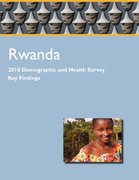
This report summarizes the findings of the 2010 Rwanda Demographic and Health Survey (RDHS). The 2010 Rwanda Demographic and Health Survey (RDHS) was designed to provide data for monitoring the population and health situation in Rwanda. The 2010 RDH
...
S is the fifth Demographic and Health Survey to be conducted in Rwanda (DHS in 1992, 2000, and 2005 and Interim DHS in 2007-08). The objective of the survey was to provide up-to-date information on fertility, family planning, childhood mortality, nutrition including anemia testing, maternal and child health, domestic violence, malaria including malaria testing, maternal mortality, awareness and behavior regarding HIV/AIDS and other sexually transmitted infections, and HIV prevalence.
more

This National Food and Nutrition Policy developed in 2013 builds on several achievements that have improved the status of nutrition and household food security in Rwanda during the past six years. The outlines ambitious but necessary strategies need
...
ed to solve serious and
persistent problems including the high prevalence of child stunting and high levels of anaemia in children and women. The NFNP also takes into account major differences in the economic development environment and the higher national and international priority placed on improving nutrition and related household food security problems in the second decade of the new millennium compared to 2007 when the country’s first National Nutrition Policy was adopted.
more
This document outlines Rwanda's policy on non-communicable diseases. The overall goal of NCDs Policy is to alleviate the burden of NCDs and their risk factors and protect Rwandan population from premature morbidity and mortality related to NCDs. Thi
...
s policy was developed through a series of consultative meetings and workshops of NCDs' core team members of MOH and RBC, National Technical Working Group (TWG), all implementing and non implementing partners and other development partners. This policy was developed in line with the Millennium Development Goals (MDGs), Vision 2020, Rwanda Economic Development Poverty Reduction Strategy (EDPRS II) of 2013-18 and NCDs Global Action Plan 2013-2020 and national Health Policy. This policy focuses on of the following NCDs: Cardiovascular diseases, Chronic Pulmonary Diseases (CPD), Cancers, Diabetes, injuries and disabilities, oral, eye and kidney diseases.
more

USAID/KENYA Evaluation Services and Program Support (ESPS)
The United States Agency for International Development (USAID) has a solid track record of supporting health and development initiatives in Kenya. AIDS, Population, and Health Integrate ... d Assistance (APHIA) is the agency’s flagship health initiative in the country. APHIA is currently in its third iteration, APHIAPlus, which began in January 2011 and is slated to end in December 2015. APHIAPlus was designed to contribute to Result 3 (“Increased use of quality health services, products, and information”) and Result 4 (“Social determinants of health”) of USAID/Kenya’s implementation framework. The main technical areas of focus are HIV/AIDS; malaria; family planning (FP); tuberculosis (TB); maternal, newborn, and child health (MNCH); and water, sanitation, and hygiene (WASH). more
The United States Agency for International Development (USAID) has a solid track record of supporting health and development initiatives in Kenya. AIDS, Population, and Health Integrate ... d Assistance (APHIA) is the agency’s flagship health initiative in the country. APHIA is currently in its third iteration, APHIAPlus, which began in January 2011 and is slated to end in December 2015. APHIAPlus was designed to contribute to Result 3 (“Increased use of quality health services, products, and information”) and Result 4 (“Social determinants of health”) of USAID/Kenya’s implementation framework. The main technical areas of focus are HIV/AIDS; malaria; family planning (FP); tuberculosis (TB); maternal, newborn, and child health (MNCH); and water, sanitation, and hygiene (WASH). more
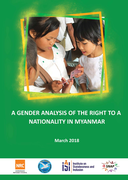
According to 2014 Census data, almost a third of the population in Myanmar do not have adequate identity and civil documentation. Of these, 54 percent are women.
Women who live in remote or conflict affected areas, who are displaced or belong to ... stateless ethnic and religious minorities face the consequences of an insecure legal identity. They cannot enrol their children in school, open a bank account, travel freely or register land.
The report provides an analysis of the gender aspects of citizenship legislation in Myanmar and its application in light of the standards set by the UN Convention on the Elimination of Discrimination Against Women (CEDAW). It analyses in detail women’s ability to acquire citizenship on an equal basis as men, their ability to acquire, retain or confer citizenship following marriage and their ability to confer citizenship to their children. The report highlights the normative and practical challenges faced by women and proposes ways forward. more
Women who live in remote or conflict affected areas, who are displaced or belong to ... stateless ethnic and religious minorities face the consequences of an insecure legal identity. They cannot enrol their children in school, open a bank account, travel freely or register land.
The report provides an analysis of the gender aspects of citizenship legislation in Myanmar and its application in light of the standards set by the UN Convention on the Elimination of Discrimination Against Women (CEDAW). It analyses in detail women’s ability to acquire citizenship on an equal basis as men, their ability to acquire, retain or confer citizenship following marriage and their ability to confer citizenship to their children. The report highlights the normative and practical challenges faced by women and proposes ways forward. more

This report summarizes the latest scientific knowledge on the links between exposure to air pollution and adverse health effects in children. It is intended to inform and motivate individual and collective action by health care professionals to prevent damage to children’s health from exposure to
...
air pollution. Air pollution is a major environmental health threat. Exposure to fine particles in both the ambient environment and in the household causes about seven million premature deaths each year. Ambient air pollution (AAP) alone imposes enormous costs on the global economy, amounting to more than US$ 5 trillion in total welfare losses in 2013.
more
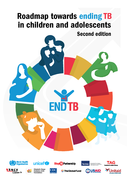
2nd edition. The 2018 Roadmap incorporates an additional critical population: adolescents. Despite making up 1 in 6 of the world’s people, adolescents have been largely overlooked as global momentum to address TB has grown. Spanning the ages of 10
...
–19 years, adolescents are both at risk of TB and represent an important population for TB control. They often present with infectious TB and frequently have multiple contacts in congregate settings, such as schools and other educational institutions. Nevertheless, few countries capture TB data in suitably age-disaggregated ways to allow full understanding of its impact in this group and even fewer provide the adolescent-friendly services our young people need to access diagnosis and care.
more
Young children are especially susceptible to exposure to trauma. Rates of abuse and neglect among this population are staggering. This article presents a review of relevant literature, including research findings specific to early childhood vulnerab
...
ility to trauma, symptoms associated with traumatic events, diagnostic validity of early childhood trauma, and treatments for young children. In the past, misconceptions about the mental health of young children have hindered accurate diagnosis and treatment of trauma-related mental illness. Due to the prevalence of trauma exposure in early childhood, counselors are encouraged to become familiar with ways that clients and families are impacted and methods for treatment. Implications for future research also are presented.
more

This timely report comes at a decisive moment in history where
we can reshape urban environments and health systems for the
majority of the world’s population that live in cities. Enabling
this transformation are the SDGs, which have reconfigur
...
ed how
governments and the international community need to plan and
implement actions to eradicate poverty and inequality, create
inclusive economic growth, preserve the planet and improve
population health. Central to this quest is to create equitable,
healthier cities for sustainable development.
more
The WMH Survey Initiative is a project of the Assessment, Classification, and Epidemiology (ACE) Group at the World Health Organization coordinating the implementation and analysis of general population epidemiologic surveys of mental, substance use
...
, and behavioral disorders in countries in all WHO Regions.
more
In this paper they make estimates of the potential short-term economic impact of COVID-19 on global monetary poverty through contractions in per capita household income or consumption.
The estimates are based on three scenarios: low, medium, and
...
high global contractions of 5, 10, and 20 per cent; we calculate the impact of each of these scenarios on the poverty headcount using the international poverty lines of US$1.90, US$3.20 and US$5.50 per day.
The estimates show that COVID poses a real challenge to the UN Sustainable Development Goal of ending poverty by 2030 because global poverty could increase for the first time since 1990 and, depending on the poverty line, such increase could represent a reversal of approximately a decade in the world’s progress in reducing poverty.
In some regions the adverse impacts could result in poverty levels similar to those recorded 30 years ago. Under the most extreme scenario of a 20 per cent income or consumption contraction, the number of people living in poverty could increase by 420–580 million, relative to the latest official recorded figures for 2018.
more

Résumé.
Malgré les efforts de promotion des mutuelles de santé depuis une décennie et l’existence d’une vingtaine de compagnies privées proposant des polices d’assurance maladie, moins de 1% de la population camerounaise bénéficie dâ€
...
™une couverture maladie. Les facteurs sous jacents sont entre autres : (i) la méfiance des ménages vis-à-vis des mutuelles de santé et des assureurs privés; (ii) l’absence d’obligation d’une assurance maladie qui en fait un produit de luxe ; (iii) l’ignorance des avantages des mécanismes assurantiels; (iv) la pauvreté et le montant élevé des primes d’adhésion et des cotisations annuelles ; et (v) la forte prévalence de l’emploi dans le secteur informel (80,6%). Pour y faire face nous proposons de : 1) Créer et pérenniser un environnement favorable à la promotion et au développement des MS ; 2) Subventionner les primes par le Gouvernement, les Partenaires et les Municipalités pour en réduire le prix d’achat ; 3) Instituer une collecte flexible des primes et établir un dispositif attractif de mutualisation du risque et des procédures d’achat qui inspirent confiance aux usagers et aux prestataires des soins.
more
Shielding is a term used to describe the protection of individuals at high risk of severe COVID-19 illness by separating them from the general population.
According to the World Health Organization (WHO), sub-Saharan Africa has only 3% of the world’s health workers to cater for 11% of the world population, bearing over 25% of the global disease burden (WHO, 2014). With a steady increase in reported
...
cases on the African Continent, the current COVID-19 pandemic threatens to overwhelm our already taxed health infrastructure. It is, therefore, imperative to take serious and urgent measures towards disease management and monitoring especially as the need for self-quarantine and contact surveillance rises.
In view of the infrastructural and resource gaps, technology should be considered for remote management of healthcare deliver to patients during this period. As it is abundantly clear, even countries with more advanced healthcare infrastructure and resources have struggled to treat COVID-19 and non-COVID-19 patients during this pandemic.
more
