
Filter
2147
Text search:
clinical
trials
Featured
223
384
Language
1997
73
68
59
27
20
13
12
8
3
2
2
2
2
2
1
1
1
1
1
1
1
Document type
1127
397
346
92
79
43
24
13
12
10
2
2
Countries / Regions
111
86
51
37
36
34
24
22
22
20
20
20
19
18
18
17
17
17
17
16
16
15
15
15
14
13
12
11
11
11
10
10
10
9
9
9
8
7
6
6
6
6
5
5
5
5
5
5
4
4
4
4
3
3
3
3
3
3
3
3
3
2
2
2
2
2
2
2
2
2
2
2
2
2
2
1
1
1
1
1
1
1
1
1
1
1
1
1
1
1
1
1
1
1
1
1
1
1
1
Authors & Publishers
455
180
136
77
60
52
52
25
23
19
19
19
15
14
13
12
12
11
10
10
10
10
9
8
8
7
7
7
7
6
6
6
6
6
6
6
6
5
5
5
5
5
5
5
5
5
5
5
5
4
4
4
4
4
4
4
4
4
4
4
4
4
4
4
4
4
4
4
4
4
4
3
3
3
3
3
3
3
3
3
3
3
3
3
3
3
3
3
3
3
3
3
3
3
3
3
3
3
3
3
3
3
3
3
3
3
3
3
3
3
3
3
3
3
3
3
3
3
3
2
2
2
2
2
2
2
2
2
2
2
2
2
2
2
2
2
2
2
2
2
2
2
2
2
2
2
2
2
2
2
2
2
2
2
2
2
2
2
2
2
2
2
2
2
2
2
2
2
2
2
2
2
2
2
2
2
2
2
2
2
2
2
2
2
2
2
2
2
2
2
2
2
2
2
2
2
2
2
2
2
2
2
2
2
2
2
2
2
2
2
2
2
2
2
2
2
2
2
2
2
2
2
2
2
2
2
2
2
2
2
2
2
2
2
2
2
2
2
2
2
2
2
2
2
2
2
2
2
2
2
2
2
2
2
2
2
2
2
2
2
2
2
2
2
2
2
2
2
2
2
2
2
2
2
2
2
2
2
2
1
1
1
1
1
1
1
1
1
1
1
1
1
1
1
1
1
1
1
1
1
1
1
1
1
1
1
1
1
1
1
1
1
1
1
1
1
1
1
1
1
1
1
1
1
1
1
1
1
1
1
1
1
1
1
1
1
1
1
1
1
1
1
1
1
1
1
1
1
1
1
1
1
1
1
1
1
1
1
1
1
1
1
1
1
1
1
1
1
1
1
1
1
1
1
1
1
1
1
1
1
1
1
1
1
1
1
1
1
1
1
1
1
1
1
1
1
1
1
1
1
1
1
1
1
1
1
1
1
1
1
1
1
1
1
1
1
1
1
1
1
1
1
1
1
1
1
1
1
1
1
1
1
1
1
1
1
1
1
1
1
1
1
1
1
1
1
1
1
1
1
1
1
1
1
1
1
1
1
1
1
1
1
1
1
1
1
1
1
1
1
1
1
1
1
1
1
1
1
1
1
1
1
1
1
1
1
1
1
1
1
1
1
1
1
1
1
1
1
1
1
1
1
1
1
1
1
1
1
1
1
1
1
1
1
1
1
1
1
1
1
1
1
1
1
1
1
1
1
1
1
1
1
1
1
1
1
1
1
1
1
1
1
1
1
1
1
1
1
1
1
1
1
1
1
1
1
1
1
1
1
1
1
1
1
1
1
1
1
1
1
1
1
1
1
1
1
1
1
1
1
1
1
1
1
1
1
1
1
1
1
1
1
1
1
1
1
1
1
1
1
1
1
1
1
1
1
1
1
1
1
1
1
1
1
1
1
1
1
1
1
1
1
1
1
1
1
1
1
1
1
1
1
1
1
1
1
1
1
1
1
1
1
1
1
1
1
1
1
1
1
1
1
1
1
1
1
1
1
1
1
1
1
1
1
1
1
1
1
1
1
1
1
1
1
1
1
1
1
1
1
1
1
1
1
1
1
1
1
1
1
1
1
1
1
1
1
1
1
1
1
1
1
1
1
1
1
1
1
1
1
1
1
1
1
1
1
1
1
1
1
1
1
1
1
1
1
1
1
1
1
1
1
1
1
1
1
1
1
1
1
1
1
1
1
1
1
1
1
1
1
1
1
1
1
1
1
1
1
1
1
1
1
1
1
1
1
1
1
1
1
1
1
1
1
1
1
1
1
1
1
1
1
1
1
1
1
1
1
1
1
1
1
1
1
1
1
1
1
1
1
1
1
1
1
1
1
1
1
1
1
1
1
1
1
1
1
1
1
1
1
1
1
1
1
1
1
1
1
1
1
1
1
1
1
1
1
1
1
1
1
1
1
1
1
1
1
1
1
1
1
1
1
1
1
1
1
1
1
1
1
1
1
1
1
1
1
1
1
1
1
1
1
1
1
1
1
1
1
1
1
1
1
1
1
1
1
1
1
1
1
1
1
1
1
1
1
1
1
1
1
1
1
1
1
1
1
1
1
1
1
1
1
1
1
1
1
1
1
1
1
1
1
1
1
1
1
1
1
1
1
1
1
1
1
1
1
1
1
1
1
1
1
1
1
1
1
1
1
1
1
1
1
1
1
1
1
1
1
1
1
1
1
1
1
1
1
1
1
1
1
1
1
1
1
1
1
1
1
1
1
1
1
1
1
1
1
1
1
1
1
1
1
1
1
1
1
1
1
1
1
1
1
1
1
1
1
1
1
1
1
1
1
1
1
1
1
1
1
1
1
1
1
1
1
1
1
1
1
1
1
1
1
1
1
1
1
1
1
1
1
1
1
1
1
1
1
1
1
1
1
1
1
1
1
1
1
1
1
1
1
1
1
1
1
1
1
1
1
1
1
1
1
1
1
1
1
1
1
1
1
1
1
1
1
1
1
1
1
1
1
1
1
1
1
1
1
1
1
1
1
1
1
1
1
1
1
1
1
1
1
1
1
1
1
1
1
1
1
1
1
1
1
1
1
1
1
1
1
1
1
1
1
1
1
1
1
1
1
1
1
1
1
1
1
1
1
1
1
1
1
1
1
1
1
1
1
1
1
1
1
1
1
1
1
1
1
1
1
1
1
1
1
1
1
1
1
1
1
1
1
1
1
1
1
1
1
1
1
1
1
1
1
1
1
1
1
1
1
1
1
1
1
1
1
1
1
1
1
1
1
1
1
1
1
1
1
1
1
1
1
1
1
1
1
1
1
1
1
1
1
1
1
1
1
1
1
1
1
1
1
1
1
1
1
1
1
1
1
1
1
1
1
1
1
1
1
1
1
1
1
1
1
1
1
1
1
1
1
1
1
1
1
1
1
1
1
1
1
1
1
1
1
1
1
1
1
1
1
1
1
1
1
1
1
1
1
1
1
1
1
1
1
1
1
1
1
1
1
1
1
1
1
1
1
1
1
1
1
1
1
1
1
1
1
1
1
1
1
1
1
1
1
1
1
1
1
1
1
1
1
1
1
1
1
1
1
1
1
1
1
1
1
1
1
1
1
1
1
1
1
1
1
1
1
1
1
1
1
1
1
1
1
1
1
1
1
1
1
1
1
1
1
1
1
1
1
1
1
1
1
1
1
1
1
1
1
1
1
1
1
1
1
1
1
1
1
1
1
1
1
1
1
1
1
1
1
1
1
1
1
1
1
1
1
1
1
1
1
1
1
1
1
1
1
1
1
1
1
1
1
1
1
1
1
1
1
1
1
1
1
1
1
1
1
1
1
1
1
1
1
1
1
1
1
1
1
1
1
1
1
1
1
1
1
1
1
1
1
1
1
1
1
1
1
1
1
1
1
1
1
1
1
1
1
1
1
1
1
1
1
1
1
1
1
1
1
1
1
1
1
1
1
1
1
1
1
1
1
1
1
1
1
1
1
1
1
1
1
1
1
1
1
1
1
1
1
1
1
1
1
1
1
1
1
1
1
1
1
1
1
1
1
1
1
1
1
1
1
1
1
1
1
1
1
1
1
1
1
1
1
1
1
1
1
1
1
1
1
1
1
1
1
1
1
1
1
1
1
1
1
1
1
1
1
1
1
1
1
1
1
1
1
1
1
1
1
1
1
1
1
1
1
1
1
1
1
1
1
1
1
1
1
1
1
1
1
1
1
1
1
1
1
1
1
1
1
1
1
1
1
1
1
1
1
1
1
1
1
1
1
1
1
1
1
1
1
1
1
1
1
1
1
1
1
1
1
1
1
1
1
1
1
1
1
1
1
1
1
1
1
1
1
1
1
1
1
1
1
1
1
1
1
1
1
1
1
1
1
1
1
1
1
1
1
1
1
1
1
1
1
1
1
1
1
1
1
1
1
1
1
1
1
1
1
1
1
1
1
1
1
1
1
1
1
1
1
1
1
1
1
1
1
1
1
1
1
1
1
1
1
1
1
1
1
1
1
1
1
1
1
1
1
1
1
1
1
1
1
1
1
1
1
1
1
1
1
1
1
1
1
1
1
1
1
1
1
1
1
1
1
1
1
1
1
1
1
1
1
1
1
1
1
1
1
1
1
1
1
1
1
1
1
1
1
1
1
1
1
1
1
1
1
1
1
1
1
1
1
1
1
1
1
1
1
1
1
1
1
1
1
1
1
1
1
1
1
1
1
1
1
1
1
1
1
1
1
1
1
1
1
1
1
1
1
1
1
1
1
1
1
1
1
1
1
1
1
1
1
1
1
1
1
1
1
1
1
1
1
1
1
1
1
1
1
1
1
1
1
1
1
1
1
1
1
1
1
1
1
1
1
1
1
1
1
1
1
1
1
1
1
1
1
1
1
1
1
1
1
1
1
1
1
1
1
1
1
1
1
1
1
1
1
1
1
1
1
1
1
1
1
1
1
1
1
1
1
1
1
1
1
1
1
1
1
1
1
1
1
1
1
1
1
1
1
1
1
1
1
1
1
1
1
1
1
1
1
1
1
1
1
1
1
1
1
1
1
1
1
1
1
1
1
1
1
1
1
1
1
1
1
1
1
1
1
1
1
1
1
1
1
1
1
1
1
Publication Years
653
1317
163
13
1
Category
520
331
144
127
30
28
20
Toolboxes
287
267
225
181
87
85
67
59
51
49
47
27
23
20
18
12
11
11
9
7
4
3
2
To evaluate the epidemiological evolution of patients with HIV (PtHIV), between 2002 and 2012, in a day-hospital that became an HIV reference centre for south-west Burkina Faso.
This was a retrospective study of PtHIV followed in the Bobo Dioulasso university hospital since 2002. The study was ba
...
sed on clinical data recorded using ESOPE software and analysed using Excel and SAS.
more

Meeting Report 27-29 October 2020
The overall goal of the meeting was to discuss recent changes in treatment regimens and diagnostics for drug-resistant TB and to determine how these impact on the definition of XDR-TB, with a view to revising this definition. The pre-existing definition of XDR-TB w
...
as formulated in 2006 at a meeting of the Global Taskforce on XDR-TB, convened by WHO, and has been in use for clinical and surveillance purposes, since this time.
more
The consolidated guidelines are complemented by an operational handbook which is designed to assist with implementation of the WHO recommendations by Member States, technical partners and others who are involved in the management of patients with DR-TB. The WHO Operational Handbook on Tuberculosis,
...
Module 4: Treatment - Drug-Resistant Tuberculosis Treatment provides practical guidance on how to put in place the recommendations at the scale needed to achieve national and global impact.
The operational handbook provides practical information and tools that complement the recommendations in the guidelines. The strategies described in the operational handbook are based on the latest WHO recommendations which were formulated by Guideline Development Groups using the GRADE approach. In many cases however, the recommendations in their current form lacked sufficient clinical and programmatic detail, which is important for implementation. This operational handbook complements the guidelines with practical advice based on best practices and knowledge from the fields such as pharmacokinetics, pharmacodynamics, microbiology, pharmacovigilance and clinical and programmatic management.
more
n light of the potential risk posed by SARS-CoV-2 variants, in January 2021 WHO organized an ad hoc consultation to discuss the development of an R&D agenda in response to existing and emerging SARS-CoV-2 variants.
The key objectives were to identify the critical research questions related to var
...
iants and agree on a research approach to address them. Six breakout groups covered a range of specific issues related to COVID-19 variants: Epidemiology and mathematical modelling; evolutionary biology; animal models; assays and diagnostics; clinical management and therapeutics; and vaccines.
This report is a summary of presentations and panel discussions.
more

The purpose of this document is to provide relevant information and guidelines on
coronavirus outbreaks – and in particular the novel coronavirus SARS-CoV-2 and the
diseases it produces, COVID-19 – for pharmacists and the pharmacy workforce, both in a
primary care context (i.e. community phar
...
macies and primary healthcare facilities) and in
hospital settings, as well as for pharmacists working as clinical biologists in medical
analysis laboratories, for example, as clinical biologists, and offer a set of references that
may be consulted for more informationstor
more
The objectives of the meeting were:
1. To update the current status of the disease transmission, country capacities and plans for tackling the disease.
2. To understand the epidemiology including disease distribution and risk, the models
for estimating under-detection, the geographical variati
...
ons of in clinical presentation,
the roles of domestic and wild animal reservoirs and the subsequent different
transmission patterns and control approaches, including vector control.
3. To update current research and development efforts for improving diagnostic and
treatment tools.
4. To define the goals for achieving the control of r-HAT, the need for a multisectoral
approach and to discuss the strategy for controlling r-HAT and the coordination
mechanisms.
more
Background
Chronic congestive heart failure is a common condition that, if untreated, markedly impairs the quality of life and is associated with a high risk of recurrent hospitalization and death.
Methods
This review is based on articles retrieved by a selective search in PubMed, as well as on r
...
elevant guidelines.
Results
Evidence-based treatment options are available only for congestive heart failure with a low ejection fraction. Pharmacotherapy is based on neurohumoral inhibition of the renin-angiotensin-aldosterone system and the adrenergic system. The prognosis of patients with this condition has been further improved recently through the introduction of combined angiotensin receptor antagonists and neprilysin inhibitors. Modern implantable devices are a further component of treatment. Implantable defibrillators and special pacemakers for cardiac resynchronization are well established; the utility of alternative devices (baroreflex modulation or cardiac contractility modulation) needs to be investigated in further studies. It was recently shown that the catheter-based treatment of secondary mitral regurgitation with a MitraClip improves the outcome of selected patients.
Conclusion
The treatment of chronic systolic heart failure as recommended in the relevant guidelines, with drugs and implanted devices if indicated, can significantly improve the clinical outcome.
more
Over the past 20 years, the Global Initiative for Asthma (GINA) has regularly published and annually updated a global strategy for asthma management and prevention that has formed the basis for many national guidelines. However, uptake of existing guidelines is poor. A major revision of the GINA r
...
eport was published in 2014, and updated in 2015, reflecting an evolving understanding of heterogeneous airways disease, a broader evidence base, increasing interest in targeted treatment, and evidence about effective implementation approaches. During development of the report, the clinical utility of recommendations and strategies for their practical implementation were considered in parallel with the scientific evidence.
more
Pneumonia and diarrhoea account for 23% of under-five mortality and were responsible for an estimated 1.17 million deaths in children under five globally. Furthermore, pneumonia and diarrhoea were responsible for 18% of mortality in children 5–9 years of age, resulting in an estimated 86 000 preve
...
ntable deaths globally in 2021. Existing World Health Organization (WHO) guidance on the clinical management of pneumonia and diarrhoea has mainly focused on children less than 5 years of age.
more
Updated 22 august 2016. This document aims to provide interim guidance on the case definition of GBS and strategies to manage the syndrome, in the context of Zika virus and its potential association with GBS. This document is intended to inform the development of local
...
clinical protocols and health policies related to the care of patients with GBS
more
Psoriasis, which can involve the skin, nails and joints, is a chronic, painful, disfiguring and disabling noncommunicable disease (NCD) for which there is no cure. It negatively impacts on quality of life. Some of those who suffer from the disease develop chronic, inflammatory arthritis (psoriatic a
...
rthritis) that leads to joint deformations and disability. People with psoriasis are also reported to be at increased risk of developing other serious clinical conditions such as cardiovascular and other NCDs
more

Ebola disease and Marburg disease outbreaks continue to occur in Africa, with increased frequency. In addition to resulting in high mortality and morbidity, the outbreaks generate fear and mistrust about the response activities within the communities affected.
Infection prevention and control (IP
...
C) is a key pillar in the outbreak response; adherence to IPC practices can prevent and control transmission of infections to health and care workers, patients and their family members.
During the 2014-2016 West African Ebola disease outbreak, there was an urgent need for rapid IPC guidance to help support ministries of health, health-care providers and non-governmental organizations (NGOs). In response, WHO produced several documents related to the outbreak based on expert opinion, including IPC-specific documents and documents on clinical management that also referenced key IPC principles and practices. Since that time, many practices in the field have become institutionalized.
more
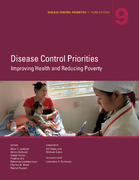
As the culminating volume in the DCP3 series, volume 9 will provide an overview of DCP3 findings and methods, a summary of messages and substantive lessons to be taken from DCP3, and a further discussion of cross-cutting and synthesizing topics across the first eight volumes. The introductory chapte
...
rs (1-3) in this volume take as their starting point the elements of the Essential Packages presented in the overview chapters of each volume. First, the chapter on intersectoral policy priorities for health includes fiscal and intersectoral policies and assembles a subset of the population policies and applies strict criteria for a low-income setting in order to propose a "highest-priority" essential package. Second, the chapter on packages of care and delivery platforms for universal health coverage (UHC) includes health sector interventions, primarily clinical and public health services, and uses the same approach to propose a highest priority package of interventions and policies that meet similar criteria, provides cost estimates, and describes a pathway to UHC.
more

The ICF Practical Manual provides information on how to use ICF. Anyone interested in learning more about use of the International Classification of Functioning, Disability and Health (ICF, WHO 2001) may benefit from reading this Practical Manual. The ICF is presently used in many different contexts
...
and for many different purposes around the world. It can be used as a tool for statistical, research, clinical, social policy, or educational purposes and applied, not only in the health sector, but also in sectors such as insurance, social security, labour, education, economics, policy or legislation development, and the environment. People interested in functioning and disability and seeking ways to apply the ICF should find the contents of this Practical Manual helpful. The Practical Manual provides a range of information on how to apply ICF in various situations. It is built on the acquired expertise, knowledge and judgement of users in their respective areas of work, and is designed to be used alongside the ICF itself, which remains the primary reference.
more
Guidelines for managing advanced HIV disease and rapid initiation of antiretroviral therapy
World Health Organization (WHO)
(2017)
C_WHO
The objectives of these guidelines are to provide recommendations outlining a public health approach to managing people presenting with advanced HIV disease, and to provide guidance on the timing of initiation of antiretroviral therapy (ART) for all people living with HIV.
WHO recommends that a ... package of screening, prophylaxis, rapid ART initiation and intensified adherence interventions be offered to everyone living with HIV presenting with advanced disease.
WHO strongly recommends that rapid ART initiation should be offered to people living with HIV following confirmed diagnosis and clinical assessment. Rapid initiation of ART is defined as within seven days of HIV diagnosis. WHO further strongly recommends ART initiation on the same day as HIV diagnosis based on the person’s willingness and readiness to start ART immediately, unless there are clinical reasons to delay treatment. more
WHO recommends that a ... package of screening, prophylaxis, rapid ART initiation and intensified adherence interventions be offered to everyone living with HIV presenting with advanced disease.
WHO strongly recommends that rapid ART initiation should be offered to people living with HIV following confirmed diagnosis and clinical assessment. Rapid initiation of ART is defined as within seven days of HIV diagnosis. WHO further strongly recommends ART initiation on the same day as HIV diagnosis based on the person’s willingness and readiness to start ART immediately, unless there are clinical reasons to delay treatment. more
Int J Bipolar Disord (2018) 6:6 https://doi.org/10.1186/s40345‑017‑0110‑8
In 2001, the WHO stated that: "The use of mobile and wireless technologies to support the achievement of health objectives (mHealth) has the potential to transform the face of health service delivery across the globe"
...
. Within mental health, interventions and monitoring systems for depression, anxiety, substance abuse, eating disorder, schizophrenia and bipolar disorder have been developed and used. The present paper presents the status and findings from studies using automatically generated objective smartphone data in the monitoring of bipolar disorder, and addresses considerations on the current literature and methodological as well as clinical aspects to consider in the future studies.
more
Updated 17 April 2020
Improving care for women during pregnancy and around the time of childbirth to prevent and treat pre-eclampsia and eclampsia is a necessary step towards the achievement of the health targets of the Sustainable Development Goals (SDGs). Efforts to prevent and reduce morbidity a
...
nd mortality due to these conditions can help address the profound inequities in maternal and perinatal health globally. To achieve this, healthcare providers, health managers, policy makers and other stakeholders need up-to-date and evidence-informed recommendations to guide clinical policies and practices.
more
Module 3
Counsellors
July 2017
Module 3: Counsellors. This module is for staff who counsel people as they consider PrEP or start taking PrEP and support them in coping with side-effects and adherence strategies. Those who counsel PrEP users may be lay, peer or professional counsellors and hea
...
lthcare workers, including nurses, clinical officers and doctors.
more
Module 12:
Adolescents and young adults
July 2018
Module 12: Adolescents and young adults. This module is for people who are interested in providing PrEP services to older adolescents and young adults who are at substantial risk for HIV. It provides information on: factors that influence HIV
...
susceptibility among young people; clinical considerations for safety and continuation on PrEP; ways to improve access and service utilization; and inclusive monitoring approaches to improve the recording and reporting of data on young people.
more
This document aims to provide guidance to healthcare facilities and healthcare providers in the European Union/European Economic Area (EU/EEA) and the United Kingdom (UK) on preparedness and infection prevention and control (IPC) measures for the management of possible and confirmed cases of COVID-1
...
9 in healthcare settings, including long-term care facilities (LTCFs). In addition, this document addresses the management of clinical diagnostic specimens at laboratories in the EU/EEA. This is the sixth update of the ECDC guidance on ‘Infection prevention and control and preparedness for COVID-19 in healthcare settings’, and replaces the document dated 6 October 2020.
more
