Filter
820
Text search:
World
Health
Organization
(
WHO),
Regional
Office
for
South-East-Asia
Featured
Recommendations
101
New Publications
231
Language
Document type
No document type
413
Studies & Reports
163
Guidelines
130
Manuals
40
Strategic & Response Plan
32
Training Material
12
Resource Platforms
8
Situation Updates
7
Fact sheets
6
Infographics
5
Brochures
2
Online Courses
2
Countries / Regions
South–East Asia Region
66
Global
53
India
42
Asia
35
Myanmar / Burma
26
Nepal
23
Bangladesh
17
Philippines
12
Indonesia
11
Western Pacific Region
11
Africa
10
Thailand
9
Western and Central Europe
9
Cambodia
8
Afghanistan
5
Pakistan
4
South Africa
4
Sri Lanka
4
Eastern Europe
4
Russia
4
Nigeria
3
Ethiopia
3
Ghana
3
Uganda
3
Syria
3
Kenya
3
China
3
East and Southern Africa
3
West and Central Africa
3
Middle East and North Africa
3
Venezuela
3
Laos
3
Vietnam
3
Burkina Faso
2
Congo, Democratic Republic of
2
Haiti
2
Rwanda
2
Mozambique
2
Sudan
2
Yemen
2
Timor Leste/ East Timor
2
Sierra Leone
1
Liberia
1
Senegal
1
Morocco
1
USA
1
Saudi Arabia
1
Cameroon
1
South Sudan
1
Iraq
1
Jordan
1
Lebanon
1
Zambia
1
Tanzania
1
Papua New Guinea
1
Eswatini/ Swaziland
1
Brazil
1
Ukraine
1
Ecuador
1
Greece
1
Mexico
1
Latin America and the Carribbean
1
Eastern Europe and Central Asia
1
Other region
1
Paraguay
1
Bhutan
1
Palestine
1
North Korea
1
Albania
1
Mongolia
1
Tajikistan
1
Iran
1
Kazakhstan
1
Georgia
1
Tunisia
1
Bosnia and Herzegovina
1
Authors & Publishers
Publication Years
Category
Countries
177
Clinical Guidelines
125
Public Health
73
Women & Child Health
67
Key Resources
26
Capacity Building
21
Pharmacy & Technologies
15
General Guidelines
2
Toolboxes
HIV
79
Mental Health
72
COVID-19
58
TB
55
Rapid Response
40
Planetary Health
39
NTDs
38
AMR
36
Caregiver
30
Global Health Education
28
NCDs
20
Disability
19
Pharmacy
16
Zika
11
Refugee
9
Natural Hazards
7
Ebola
6
Conflict
6
Specific Hazards
6
Health Financing Toolbox
6
Polio
5
Cholera
2
Typhoon
1
Health Financing
1
This manual summarizes key issues related to the safety of NTD medicines and their administration, with a focus on essential medicines used in mass drug administration (MDA), also called preventive chemotherapy. It can be used as a standalone reference manual, but is intended to be used in conjuncti
...
WHO Technical Series 971
Mpox continues to affect people around the world. A new framework released today by WHO will guide health authorities, communities and other stakeh
...

Water, sanitation and hygiene (WASH) are critical in the prevention and care for all of the 17 neglected tropical diseases (NTDs) scheduled for intensified control or elimination by 2020.
Provi ...
Provi ...
Cities are uniquely positioned to understand local needs and respond rapidly to changing conditions to safeguard health. These changes require strong city leadership to implement multisectoral, health
...
Cryptococcal disease is one of the most common opportunistic infections among people living with advanced HIV disease and is a major contributor to severe illness, morbidity, and mortality, particularly in sub-Saharan Africa.
These guidelines update the recommendations that were first released i
...
Interium guidance, 25 June 2021Timely and accurate diagnostic testing is an essential tool in preventing and controlling the spread of COVID-19. This document describes recommendations for national testing strategies and the use of PCR and rapid ant
...
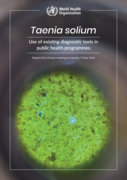
Taeniasis and cysticercosis caused by the parasite T. solium affect vulnerable populations,
mainly in Latin America, sub-Saharan Africa and Asia, where pigs (the intermediate host) roam
free and poor sanitation allows pigs access to human faeces.

The objectives of these guidelines are to provide recommendations outlining a public health approach to managing people presenting with advanced HIV disease, and to provide guidance on the timing of initiation of antiretroviral therapy (ART)
...
These policy guidelines provide a strategic approach and new recommendations for integrated TB and HIV services for patients suffering from substance-abuse addiction. The key recommendations fall un
...
The objectives of these WHO guidelines are to provide updated evidence- based recommendations for the treatment of persons with hepatitis C infection using, where possible, all DAA-only combinations
...
Hepatitis B (HBV) infection is a major public health problem and cause of chronic liver disease.
The 2024 HBV guidelines provide updated evidence-informed recommendations on key priority topics. These include expanded and simplified treatment cri
...
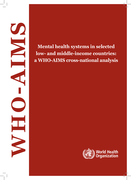
Data on the essential building blocks of mental health systems, including mental health
governance, financing, service delivery, human resources and information, are reported.
...
This report has been prepared in response to informal requests by SIDS Member States and territories for WHO assistance in confronting the stark and dire situation which climate change has created i
...

In 2015, 26% of the deaths of 5.9 million children who died before reaching their fifth birthday could have been prevented
through addressing environmental risks – a shocking missed opportunity. The prenatal and early childhood period represents
...

This fourth WHO report on neglected tropical diseases (NTDs) reviews the progress made towards achieving the Roadmap targets for 2020, noting the remaining challenges, then looks beyond 2020 to eval
...
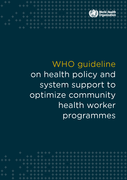
WHO guideline on health policy and system support to optimize community health worker programmes
recommended
The guideline uses state-of-the-art evidence to identify effective policy options to strengthen community health worker (CHW) programme performance through their proper integration in health systems
...