
Filter
359
Text search:
United
Nations
Department
of
Peace
Operations
Featured
Recommendations
26
New Publications
150
Language
Document type
No document type
250
Studies & Reports
56
Manuals
19
Guidelines
16
Strategic & Response Plan
12
Situation Updates
3
Training Material
1
Resource Platforms
1
Fact sheets
1
Countries / Regions
Myanmar / Burma
21
Liberia
17
Sierra Leone
12
Uganda
12
South Sudan
12
Haiti
10
Syria
10
Nigeria
9
Congo, Democratic Republic of
9
Nepal
9
Global
8
Kenya
7
Guinea
6
Bangladesh
6
Venezuela
6
Zambia
5
Central African Republic
5
Yemen
5
Senegal
4
Ghana
4
Afghanistan
4
Cambodia
4
Rwanda
4
South–East Asia Region
4
Western and Central Europe
4
Asia
4
Ethiopia
3
Philippines
3
Thailand
3
South Africa
3
Malawi
3
Benin
3
Colombia
3
West and Central Africa
3
USA
2
India
2
Jordan
2
Indonesia
2
Papua New Guinea
2
Sudan
2
Namibia
2
Ukraine
2
East and Southern Africa
2
Middle East and North Africa
2
Africa
2
Mali
1
Togo
1
Iraq
1
Germany
1
Lebanon
1
Tanzania
1
Gambia
1
Mozambique
1
Peru
1
Brazil
1
Croatia
1
Greece
1
Libya
1
Lesotho
1
Sri Lanka
1
Latin America and the Carribbean
1
Eastern Europe and Central Asia
1
Eastern Europe
1
Laos
1
Timor Leste/ East Timor
1
Vietnam
1
Authors & Publishers
Publication Years
Category
Countries
145
Key Resources
27
Women & Child Health
15
Public Health
8
Clinical Guidelines
7
Capacity Building
2
Toolboxes
Conflict
41
Mental Health
28
Ebola
20
Natural Hazards
19
Refugee
18
COVID-19
17
HIV
15
Global Health Education
11
Planetary Health
11
Disability
10
Specific Hazards
10
Health Financing Toolbox
5
Rapid Response
4
TB
4
Typhoon
2
Zika
2
Cholera
1
Caregiver
1
WHO Guidance for Climate Resilient and Environmentally Sustainable Health Care Facilities
recommended
The aim of this guidance is to enhance the capacity of health care facilities to protect and improve the health of their target communities in an u
...
This research is one case in a study commissioned by the World Food Programme to investigate the participation of recipient community in the targeting and management of humanitarian food assistance
...
Intra-African migration remains a dominant trend in contemporary African migration. The Strategy frames the Organization’s new orientation with Africa at policy and strategic levels. It is consistent with the goals and objectives of the Global Com
...
This report shows that increased domestic revenues can and will cover only part of the necessary SDG budget spending of the LIDCs. Achieving the SDGs in the LIDCs will also require increases
...
Myanmar has made significant progress in its disaster management policies, plans, and procedures since 2008, when Cyclone Nargis impacted the country leaving devastation in its aftermath. The Government of Myanmar (GoM) has modified the government s
...
In an effort to improve the capabilities and accountability of humanitarian and economic practitioners, the SEEP (Small Enterprise Education and Promotion) Network's Minimum Economic Recovery Standards focus on minimum industry standards for facilit
...
Collection of country-level good practices
As part of the Mental Health Gap Action Programme, WHO has developed training manuals (Training of trainers and supervisors training manual and Training o
...
This Manual is primarily intended for community level volunteers trained in Community Based Disaster Risk Management (CBDRM) and CBDRM Practitioners and Professionals.
The year of publication is not specified in the document.
The year of publication is not specified in the document.
Thailand is exposed to flooding, landslides, drought, earthquakes, tsunamis, heat waves, forest fires, and epidemics. Thailand is also exposed to technological hazards such as chemical accidents. Flooding is the natural hazard with the most significant impact on human life, livelihoods, and the econ
...
The GHS Index is intended to be a key resource in the face of increasing risks of high-consequence and globally catastrophic biological events and in light
...
The rapid arrival of millions of asylum seekers and migrants in Europe in 2015–16 forced cities both large and small to rethink their approach to immigrant inclusion.
A manual intended for medical and other personnel responsible for humanitarian activities in armed conflicts. It covers the following topics: setting up a health-care system that meets the essential needs of war victims, particularly
...
n Autumn 2013, HHI Executive Director, Vincenzo Bollettino, traveled to the Philippines to participate in an assessment of civil-military engagement in the humanitarian response to Typhoon Haiyan. The report was sponsored by the Center for Excellenc
...
Abuses by ArmThis report is based on research in Catatumbo in April 2019. We interviewed more than 80 people, including abuse victims, their relatives, community leaders, church representatives, human rights officials, local authorities, judicial officials, and members
...
Results from studies evaluating the effectiveness of focused psychosocial support interventions in children exposed to traumatic events in humanitarian settings in low-income and middle-income countries have been inconsistent, showing varying result
...
Governments have dedicated a pivotal role to the private sector in the implementation and financing of the 2030 Agenda and the SDGs. This has pushed a turn towards the private sector, the promotion of
...
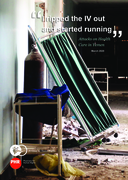
Indiscriminate attacks on health care have contributed to an epic humanitarian catastrophe in Yemen. A new report tracks these attacks in the hope of holding perpetrators on all sides accountable.
It details how both Houthi forces—with their u
...

This annual report highlights the work of the WHO from January to June 2021 ( December 2021). The activities featured herein are by no means exhausted but implemented with technical and financial support through WHO in Nigeria; facilitated by its pr
...
A Field-Based Assessment of Formal and Informal Procedures and Practices
