
Filter
2867
Text search:
TB
in
children
Featured
267
882
Language
2657
71
64
60
20
19
13
8
6
6
5
4
4
3
2
2
2
2
2
1
1
1
1
1
1
1
1
1
1
1
1
1
1
Document type
1985
319
280
92
81
42
35
16
10
4
2
1
Countries
156
116
110
74
73
72
68
67
66
61
58
58
56
54
50
49
47
44
42
41
41
36
30
29
29
29
28
26
23
20
19
19
17
17
16
14
14
12
11
10
9
9
8
8
7
7
7
7
7
6
6
6
6
5
5
5
5
4
4
4
4
4
4
4
4
4
4
4
4
3
3
3
3
3
3
3
3
2
2
2
2
2
2
2
2
2
2
2
1
1
1
1
1
1
1
1
1
1
1
1
1
1
1
1
1
1
1
1
1
1
1
1
1
1
1
1
1
Authors & Publishers
226
185
144
111
79
61
61
41
38
34
24
24
22
22
21
20
19
19
19
19
18
18
17
17
16
15
15
14
13
13
13
11
11
11
11
10
10
10
9
9
9
9
9
8
8
8
8
8
8
8
8
8
8
8
8
8
8
7
7
7
7
7
7
7
7
7
7
7
7
6
6
6
6
6
6
6
6
6
6
6
5
5
5
5
5
5
5
5
5
5
5
5
5
5
5
5
5
5
5
5
5
4
4
4
4
4
4
4
4
4
4
4
4
4
4
4
4
4
4
4
4
4
4
4
4
4
4
4
4
4
4
4
4
4
4
4
4
4
4
4
4
3
3
3
3
3
3
3
3
3
3
3
3
3
3
3
3
3
3
3
3
3
3
3
3
3
3
3
3
3
3
3
3
3
3
3
3
3
3
3
3
3
3
3
3
3
3
3
3
3
3
3
3
3
3
3
3
3
3
3
3
3
3
3
3
3
3
3
3
3
3
3
3
3
2
2
2
2
2
2
2
2
2
2
2
2
2
2
2
2
2
2
2
2
2
2
2
2
2
2
2
2
2
2
2
2
2
2
2
2
2
2
2
2
2
2
2
2
2
2
2
2
2
2
2
2
2
2
2
2
2
2
2
2
2
2
2
2
2
2
2
2
2
2
2
2
2
2
2
2
2
2
2
2
2
2
2
2
2
2
2
2
2
2
2
2
2
2
2
2
2
2
2
2
2
2
2
2
2
2
2
2
2
2
2
2
2
2
2
2
2
2
2
2
2
2
2
2
2
2
2
2
2
2
2
2
2
2
2
2
2
2
2
2
2
2
2
2
2
2
2
2
2
2
2
2
2
2
2
2
2
2
2
2
2
2
2
2
2
2
2
2
2
2
2
2
2
2
2
2
2
2
2
2
2
2
2
2
2
2
2
2
2
2
2
2
2
2
2
2
2
2
2
2
2
2
2
2
2
2
2
2
2
2
2
2
2
2
2
2
2
2
2
2
2
2
2
2
2
2
2
1
1
1
1
1
1
1
1
1
1
1
1
1
1
1
1
1
1
1
1
1
1
1
1
1
1
1
1
1
1
1
1
1
1
1
1
1
1
1
1
1
1
1
1
1
1
1
1
1
1
1
1
1
1
1
1
1
1
1
1
1
1
1
1
1
1
1
1
1
1
1
1
1
1
1
1
1
1
1
1
1
1
1
1
1
1
1
1
1
1
1
1
1
1
1
1
1
1
1
1
1
1
1
1
1
1
1
1
1
1
1
1
1
1
1
1
1
1
1
1
1
1
1
1
1
1
1
1
1
1
1
1
1
1
1
1
1
1
1
1
1
1
1
1
1
1
1
1
1
1
1
1
1
1
1
1
1
1
1
1
1
1
1
1
1
1
1
1
1
1
1
1
1
1
1
1
1
1
1
1
1
1
1
1
1
1
1
1
1
1
1
1
1
1
1
1
1
1
1
1
1
1
1
1
1
1
1
1
1
1
1
1
1
1
1
1
1
1
1
1
1
1
1
1
1
1
1
1
1
1
1
1
1
1
1
1
1
1
1
1
1
1
1
1
1
1
1
1
1
1
1
1
1
1
1
1
1
1
1
1
1
1
1
1
1
1
1
1
1
1
1
1
1
1
1
1
1
1
1
1
1
1
1
1
1
1
1
1
1
1
1
1
1
1
1
1
1
1
1
1
1
1
1
1
1
1
1
1
1
1
1
1
1
1
1
1
1
1
1
1
1
1
1
1
1
1
1
1
1
1
1
1
1
1
1
1
1
1
1
1
1
1
1
1
1
1
1
1
1
1
1
1
1
1
1
1
1
1
1
1
1
1
1
1
1
1
1
1
1
1
1
1
1
1
1
1
1
1
1
1
1
1
1
1
1
1
1
1
1
1
1
1
1
1
1
1
1
1
1
1
1
1
1
1
1
1
1
1
1
1
1
1
1
1
1
1
1
1
1
1
1
1
1
1
1
1
1
1
1
1
1
1
1
1
1
1
1
1
1
1
1
1
1
1
1
1
1
1
1
1
1
1
1
1
1
1
1
1
1
1
1
1
1
1
1
1
1
1
1
1
1
1
1
1
1
1
1
1
1
1
1
1
1
1
1
1
1
1
1
1
1
1
1
1
1
1
1
1
1
1
1
1
1
1
1
1
1
1
1
1
1
1
1
1
1
1
1
1
1
1
1
1
1
1
1
1
1
1
1
1
1
1
1
1
1
1
1
1
1
1
1
1
1
1
1
1
1
1
1
1
1
1
1
1
1
1
1
1
1
1
1
1
1
1
1
1
1
1
1
1
1
1
1
1
1
1
1
1
1
1
1
1
1
1
1
1
1
1
1
1
1
1
1
1
1
1
1
1
1
1
1
1
1
1
1
1
1
1
1
1
1
1
1
1
1
1
1
1
1
1
1
1
1
1
1
1
1
1
1
1
1
1
1
1
1
1
1
1
1
1
1
1
1
1
1
1
1
1
1
1
1
1
1
1
1
1
1
1
1
1
1
1
1
1
1
1
1
1
1
1
1
1
1
1
1
1
1
1
1
1
1
1
1
1
1
1
1
1
1
1
1
1
1
1
1
1
1
1
1
1
1
1
1
1
1
1
1
1
1
1
1
1
1
1
1
1
1
1
1
1
1
1
1
1
1
1
1
1
1
1
1
1
1
1
1
1
1
1
1
1
1
1
1
1
1
1
1
1
1
1
1
1
1
1
1
1
1
1
1
1
1
1
1
1
1
1
1
1
1
1
1
1
1
1
1
1
1
1
1
1
1
1
1
1
1
1
1
1
1
1
1
1
1
1
1
1
1
1
1
1
1
1
1
1
1
1
1
1
1
1
1
1
1
1
1
1
1
1
1
1
1
1
1
1
1
1
1
1
1
1
1
1
1
1
1
1
1
1
1
1
1
1
1
1
1
1
1
1
1
1
1
1
1
1
1
1
1
1
1
1
1
1
1
1
1
1
1
1
1
1
1
1
1
1
1
1
1
1
1
1
1
1
1
1
1
1
1
1
1
1
1
1
1
1
1
1
1
1
1
1
1
1
1
1
1
1
1
1
1
1
1
1
1
1
1
1
1
1
1
1
1
1
1
1
1
1
1
1
1
1
1
1
1
1
1
1
1
1
1
1
1
1
1
1
1
1
1
1
1
1
1
1
1
1
1
1
1
1
1
1
1
1
1
1
1
1
1
1
1
1
1
1
1
1
1
1
1
1
1
1
1
1
1
1
1
1
1
1
1
1
1
1
1
1
1
1
1
1
1
1
1
1
1
1
1
1
1
1
1
1
1
1
1
1
1
1
1
1
1
1
1
1
1
1
1
1
1
1
1
1
1
1
1
1
1
1
1
1
1
1
1
1
1
1
1
1
1
1
1
1
1
1
1
1
1
1
1
1
1
1
1
1
1
1
1
1
1
1
1
1
1
1
1
1
1
1
1
1
1
1
1
1
1
1
1
1
1
1
1
1
1
1
1
1
1
1
1
1
1
1
1
1
1
1
1
1
1
1
1
1
1
1
1
1
1
1
1
1
1
1
1
1
1
1
1
1
1
1
1
1
1
1
1
1
1
1
1
1
1
1
1
1
1
1
1
1
1
1
1
1
1
1
1
1
1
1
1
1
1
1
1
1
1
1
1
1
1
1
1
1
1
1
1
1
1
1
1
1
1
1
1
1
1
1
1
1
1
1
1
1
1
1
1
1
1
1
1
1
1
1
1
1
1
1
1
1
1
1
1
1
1
1
1
1
1
1
1
1
1
1
1
1
1
1
1
1
1
1
1
1
1
1
1
1
1
1
1
1
1
1
1
1
1
1
1
1
1
1
1
1
1
1
1
1
1
1
1
1
1
1
1
1
1
1
1
1
1
1
1
1
1
1
1
1
1
1
1
1
1
1
1
1
1
1
1
1
1
1
1
1
1
1
1
1
1
1
1
1
1
1
1
1
1
1
1
1
1
1
1
1
1
1
1
1
1
1
1
1
1
1
1
1
1
1
1
1
1
1
1
1
1
1
1
1
1
1
1
1
1
1
1
1
1
1
1
1
1
1
1
1
1
1
1
1
1
1
1
1
1
1
1
1
1
1
1
1
1
1
1
1
1
1
1
1
1
1
1
1
1
1
1
1
1
1
1
1
1
1
1
1
1
1
1
1
1
1
1
1
1
1
1
1
1
1
1
1
1
1
1
1
1
1
1
1
1
1
1
1
1
1
1
1
1
1
1
1
1
1
1
1
1
1
1
1
1
1
1
1
1
1
1
1
1
1
1
1
1
1
1
1
1
1
1
1
1
1
1
1
1
1
1
1
1
1
1
1
1
1
1
1
1
1
1
1
1
1
1
1
1
1
1
1
1
1
1
1
1
1
1
1
1
1
1
1
1
1
1
1
1
1
1
1
1
1
1
1
1
1
1
1
1
1
1
1
1
1
1
1
1
1
1
1
1
1
1
1
1
1
1
1
1
1
1
1
1
1
1
1
1
1
1
1
1
1
1
1
1
1
1
1
1
1
1
1
1
1
1
1
1
1
1
1
1
1
1
1
1
1
1
1
1
1
1
1
1
1
1
1
1
1
1
1
1
1
1
1
1
1
1
1
1
1
1
1
1
1
1
1
1
1
1
1
1
1
1
1
1
1
1
1
1
1
1
1
1
1
1
1
1
1
1
1
1
1
1
1
1
1
1
1
1
1
1
1
1
1
1
1
1
1
1
1
1
1
1
1
1
1
1
1
1
1
1
1
1
1
1
1
1
1
1
1
1
1
1
1
1
1
1
1
1
1
1
1
1
1
1
1
1
1
1
1
1
1
1
1
1
1
1
1
1
1
1
1
1
1
1
1
1
1
1
1
1
1
1
1
1
1
1
1
1
1
1
1
1
1
1
1
1
1
1
1
1
1
1
1
1
1
1
1
1
1
1
1
1
1
1
1
1
1
1
1
1
1
1
1
1
1
1
1
1
1
1
1
1
1
1
1
1
1
1
1
1
1
1
1
1
1
1
1
1
1
1
1
1
1
1
1
1
1
1
1
1
1
1
1
1
1
1
1
1
1
1
1
1
1
1
1
1
1
1
1
1
1
1
1
1
1
1
1
1
1
1
1
1
1
1
1
1
1
1
1
1
1
1
1
1
1
1
1
1
1
1
1
1
1
1
1
1
1
1
1
1
1
1
1
1
1
1
1
1
1
1
1
1
1
1
1
1
1
1
1
1
1
1
1
1
1
1
1
1
1
1
1
1
1
1
1
1
1
1
1
1
1
1
1
1
1
1
1
1
1
1
1
1
1
1
1
1
1
1
1
1
1
1
1
1
1
1
1
1
1
1
1
1
1
1
1
1
1
1
1
1
1
1
1
1
1
1
1
1
1
1
1
1
1
1
1
1
1
1
1
1
1
1
1
1
1
1
1
1
1
1
1
1
1
1
1
1
1
1
1
1
1
1
1
1
1
1
1
1
1
1
1
1
1
1
1
1
1
1
1
1
1
1
1
1
1
1
1
1
1
1
1
1
1
1
1
1
1
1
1
1
1
1
1
1
1
1
1
1
1
1
1
1
1
1
1
1
1
1
1
1
1
1
1
1
1
1
1
1
1
1
1
1
1
1
1
1
1
1
Publication Years
476
2065
319
7
Category
1360
220
105
102
51
46
24
3
1
Toolboxes
500
414
93
69
61
60
45
43
41
38
37
36
36
32
25
23
19
17
17
5
5
3
1
1
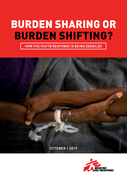
MSF provides treatment for HIV and tuberculosis (TB) in more than 20 countries around the world. The report Burden sharing or burden shifting? How the HIV/
...
TB response is being derailed examines the situation in nine countries where MSF runs programmes: Central African Republic, Democratic Republic of Congo, Eswatini, Guinea, Kenya, Malawi, Mozambique, Myanmar and Zimbabwe. With a focus on the financial resources available, this report highlights the current risks and gaps in HIV and TB service delivery in these countries.
Given the findings of gaps in diagnosis, prevention and care services and dwindling resources, MSF calls for a robust assessment of the needs and the resource capacity of each affected country, and calls on international donors to ensure that the financial burden is shared, rather than shifted onto those countries worst affected by the diseases.
more
United Nations Common Position on Ending HIV, TB and Viral Hepatitis through Intersectoral Collaboration
World Health Organization (Europe)
(2018)
C_WHO
In the framework of the United Nations Sustainable Development Goals Issue-based Coalition on Health and Well-being for All at All Ages in Europe and Central Asia
In 2020, the COVID-19 pandemic impacted the world beyond imagination. To date, it has infected more than 135 million people, killed over 2.9 million people, and is projected to plunge up to 115 million people into extreme poverty.1 As countries have
...
gone into lockdown, gender-based violence has increased, unemployment has soared, and access to health care for the poorest and most vulnerable has been cut. COVID-19 has made people less likely to seek health care because they are afraid of getting infected with the virus. Fear and uncertainty surrounding COVID-19 have also increased stigma and discrimination. As frontline workers without enough access to personal protective equipment (PPE) risk their lives to treat patients, the virus pushes already fragile health systems to the brink.
more
For 50 SAM children with medical complications and for a paediatric ward of 10-15 beds for 3 months
The PED/SAM kit is especially designed to provide medicines, renewables and equipment suitable for chi
...
ldren and to treat the common childhood illness including severe acute malnutrition with medical complications.
This kit does NOT contain any food supplements, TB, HIV medicines or vaccines.
more
The goal of this addendum is to help management and staff
minimize the risk of TB transmission at facilities in resource limited settings in whi
...
ch a.) HIV-infected persons receive diagnosis, care, treatment,
and/or support, and b.) there is a high prevalence of HIV infection, both known
and undiagnosed, in settings such as prisons, jails, other
detention centers, and drug rehabilitation centers.
more
Monitoring and Evaluation Toolkit: HIV, TB and Malaria and Health Systems Strenghtening
The Global Fund
(2011)
The TB section of the toolkit presents selected (a) programmatic output and (b) outcome and impact indicators for TB. In addition to recommended mo
...
nitoring programs and measuring the outcomes and impact of TB programs, indicators for the strengthening of health systems, strengthening of community systems and some indicators that measure quality of services are also included.
more
Facilitator's Guide. This guide is designed to assist facilitators in training community health workers (CHWs) and community volunteers (CVs) in integrating community-based
...
TB services into their work. The training will help community workers who already provide numerous services to understand TB and contribute to prevention, care and support services in their communities
more
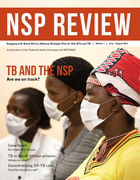
NSP Review
Engaging with South Africa’s National Strategic Plan for HIV, STIs and TB Edition 7 July – August 2013
A publication of the Treatment Action Campaign and SECTION27
GeneXpert: An imperfect rollout
...
TB in South African prisons: Where to now?
Decentralising DR-TB care: How far along are we?
more
A healthcare worker manual. 2nd edition
The development of this National Manual for the Management of HIV-related Opportunistic Infections and Conditions for use by health care workers at the frontline of our fight against HIV/AIDS is intended to improve their understanding of the causes, preventio
...
n and appropriate management of opportunistic infections and conditions in adults and adolescents (OIs in children is covered effectively in the Integrated Management of Childhood Illnesses – IMCI – materials). It is also intended to be a practical guide at the clinic level, so as to improve quality of life, treatment outcomes and survival of PLHA. Crucially, this manual uses a “symptom-based” approach to support health care workers at the most basic primary level to be able to effectively initiate the care of PLHA with OIs and refer patients as appropriate (effective triage of patients at the primary care level). The result of this will be to move the management of OIs closer to the patient while ensuring that referral links with higher-level facilities and care is cultivated.
more

his Framework begins with a desired future scenario and considers actions and interventions necessary to get there. It advocates for holistic view to address tuberculosis. The Framework revisits challenges and actions in four layers:
...
TB specific; challenges in health systems that influence TB care; challenges in sectors beyond health that determine TB; and overarching governance issues. Multisectoral action and accountability are embedded in the Framework. The Framework is based on the principles of people-centered care and system development.
more
WHO Model Formulary for Children
recommended
WHO Model Formulary for children based on the Second Model List of Essential Medicines for Children 2009.
In 2007, the World Health Assembly pass
...
ed a Resolution titled ‘Better Medicines for Children’. This resolution recognized the need for research and development into medicines for children, including better dosage forms, better evidence and better information about how to ensure that medicines for treating the common childhood diseases are given at the right dose for children of all ages.
more

This document was prepared in response to a need to review and potentially update the current recommendations for the antibiotic treatment of both inpatient and outpatient management of severe acute malnutrition (SAM). The current recommendations (T
...
able 1) are based on guidelines published in 2013 in the WHO Pocketbook for Hospital Care for Children, and the 2013 update on SAM (outpatient management). The global threat of increasing antimicrobial resistance and new data on efficacy and safety profiles requires a re-review of the current evidence to ensure recommendations are the most appropriate. The evidence base for the use of antibiotics in children presenting with uncomplicated SAM has been recently enlarged.
more
Apart from implementation of TB infection Prevention and Control measures, treatment of those with active TB of the lungs is key in preventing the
...
spread of the TB bacilli. The Public Health Act CAP 242, section 17 classify TB as notifiable infectious disease and under section 26 as part of prevention and control of infectious diseases, those exposed or suffer from the notifiable infectious diseases should be isolated in designated place and detained while taking medication until in the assessment of the Medical officer of health confirm that the person is free from infection or able to be discharged without danger to public health.
more
This report has been developed, based on data provided by the TB & ORD surveillance system from across Rwanda. It provides a comprehensive picture of the occurrence and management of TB & ORD and Le
...
prosy in Rwanda. It is structured based on the 2013-2018 Rwanda TB national strategic plan (2013-2018 TB NSP) and on the 2014-2018 Rwanda Leprosy national strategic plan (2014-2018 Leprosy NSP).
more
INDEX-TB Guidelines - Guidelines on extra-pulmonary tuberculosis for India
Indian Council of Medical Research (ICMR), Global Health Advocates, Cochrane Infectious Diseases Group
World Health Organisation (WHO)
(2016)
C1
The main objective of these guidelines is to provide guidance on up-to-date, uniform, evidence-informed practices for suspecting, diagnosing and managing various forms of extra-pulmonary tuberculosis (EPTB) at all levels of healthcare delivery. They can then contribute to the National Programme to i
...
mprove detection, care and outcomes in EPTB; to help the programme with initiation of treatment, adherence and completion whilst minimizing drug toxicity and overtreatment; and contribute to practices that minimize the development of drug resistance.
more
The main aim of these guidelines is to enable the central units of national TB and HIV/AIDS programmes to support districts to plan, coordinate and implement collaborative TB/HIV activities. These g
...
uidelines reinforce current medical understanding, that highly active antiretroviral treatment (HAART) has decreased TB incidence of people living with HIV/AIDS. They are comprehensive, giving an overview of the range of activities that could be undertaken in high burden TB/HIV countries or where a rising prevalence of HIV might fuel TB. Activities highlight the need for comprehensive care, prevention and support for adults living with HIV/AIDS. Comprehensive TB and HIV care and prevention rely on full implementation of the DOTS strategy as part of a wide ranging HIV/AIDS care and prevention programme as well as collaborative TB and HIV programme activities.
more
The content of these guidelines acknowledges that wasting and undernutrition in HIV-infected children reflect a series of failures within the health system, the home and community and not just a bio
...
logical process related to virus and host interactions.
The guidelines do not cover the feeding of infants 0 to 6 months old, because the specialised care in this age group is already addressed in other WHO guidelines and documents.
more
The purpose of this Operational Guideline is to support state health authorities, programme managers and health care professionals with recommendations on appropriate management of children with SAM in
...
the health facilities. Facility based management includes setting up and managing within the health facility premises, a functional space where these children are cared for. This Facility Based Unit is referred to as Nutritional Rehabilitation Centre or NRC in the document. While the scale and design may vary in a given situation, it is intended that the document provide the basis for a consistent set of principles that can be used by all states for facility based management of children with SAM. The Operational Guideline focuses on the Facility/Hospital based approach for the management of SAM children under 5 years of age based on the WHO and revised IAP protocols.
more
Following review of evidence and advice from the Technical Advisory Group (TAG) on Tuberculosis (TB) Diagnostics and Laboratory Strengthening, the World Health Organization (WHO) announces that current WHO recommendations for the use of interferon-
...
gamma release assays (IGRA) are also valid for Beijing Wantai’s TB-IGRA and Qiagen QuantiFERON-TB Gold Plus products. This expands the range of tests available to detect TB infection. Full details are provided in this WHO policy statement.
more
Risk factors for asthma among schoolchildren who participated in a casecontrol study in urban Uganda
Data on asthma aetiology in Africa are scarce. We investigated the risk factors for asthma among schoolchildren (5–17 years) in urban Uganda. We conducted a case-control study, among 555 cases and
...
1115 controls. Asthma was diagnosed by study clinicians. The main risk factors for asthma were tertiary education for fathers (adjusted OR (95% CI); 2.32 (1.71–3.16)) and mothers (1.85 (1.38–2.48)); area of residence at birth, with children born in a small town or in the city having an increased asthma risk compared to schoolchildren born in rural areas (2.16 (1.60–2.92)) and (2.79 (1.79–4.35)), respectively; father’s and mother’s history of asthma; children’s own allergic conditions; atopy; and cooking on gas/electricity. In conclusion, asthma was associated with a strong rural-town-city risk gradient, higher parental socio-economic status and urbanicity. This work provides the basis for future studies to identify specific environmental/lifestyle factors responsible for increasing asthma risk among children in urban areas in LMICs.
more
