
Filter
1983
Text search:
good
clinical
laboratory
practices
Featured
239
583
Language
Document type
1195
306
229
110
89
29
10
6
2
1
1
1
1
Countries
129
82
63
63
55
54
54
53
47
41
39
38
37
35
35
35
25
23
23
22
21
18
16
14
14
13
13
12
11
10
9
9
9
8
8
7
7
7
6
5
5
5
5
5
4
4
4
4
4
4
3
3
3
3
3
3
3
3
3
2
2
2
2
2
2
2
2
2
2
2
2
2
2
2
2
2
2
1
1
1
1
1
1
1
1
1
1
1
1
1
1
1
1
1
1
1
1
1
1
1
1
1
1
1
1
1
1
1
1
Authors & Publishers
Publication Years
Category
858
197
111
84
66
48
45
Toolboxes
173
169
145
125
105
74
66
48
46
44
30
22
19
19
17
14
14
11
11
8
7
7
1
1
Prepared as an outcome of ICMR Subcommittee on Colorectal Cancer | Coordinated by Division of Non Communicable Diseases | This Consensus Document on Management of Colorectal Cancer summarizes the modalities of treatment including the site-specific anti-cancer therapies,
supportive and palliative ca
...
Prepared as an outcome of ICMR Subcommittee on Soft Tissue Sarcoma and Osteosarcoma | This consensus document on Management of Soft Tissue Sarcoma and Osteosarcoma summarizes the modalities of treatment including the site-specific anti-cancer therapies, supportive and palliative care and molecular
...
The main objective of these guidelines is to provide guidance on up-to-date, uniform, evidence-informed practices for suspecting, diagnosing and managing various forms of extra-pulmonary tuberculosis (EPTB) at all levels of healthcare delivery. They
...

Antimicrobial agents play an indispensable role in animal health and welfare management. At the same time, the need for prudent use is obvious to ensure good food safety outcomes and to manage the potential risk of antimicrobial resistance. The emer
...
Water, sanitation, hygiene, and waste management for SARS-CoV-2, the virus that causes COVID-19
recommended
Updated Interim guidance 29 July 2020
The provision of safe water, sanitation and waste management and hygienic conditions is essential for preventing and for protecting human health during all infectious disease outbreaks, including of coronavirus disease 2019 (COVID-19). Ensuring evidenced-based
...
Recommendations from the American Nurses Association/Centers for Disease Control and Prevention Workgroup on the Role of Registered Nurses in Hospital Antibiotic Stewardship Practices
8 January 2021
Sequencing enabled the world to rapidly identify SARS-CoV-2 and develop diagnostic tests and other tools for outbreak management. Continued genome sequencing supports the monitoring of the disease’s spread and evolution of the virus. Accelerated integration of genome sequencing int
...

The WHO Guidance on community mental health services: Promoting person-centred and rights-based approaches document is part of the WHO Guidance and technical packages on community mental health services set of publications. It provides a detailed description of person-centred and human rights-based
...
Wound care is a regular component of the package of care we offer in the majority of our health care facilities and represents a high volume of activities. The current practices in MSF projects are often based on the habits of each in
...
Caring for burns patients from the incident scene to definitive treatment can be a complex, resource-consuming process with the potential to overwhelm health system capacity.This document provides practical guidance for building capacity and capability for burns care from
...
The key updates include: content update in various sections based on new evidence; design changes for enhanced usability; a streamlined and simplified clinical assessment that includes an algorithm for follow-up; inclusion of two new modules
- Ess
...
The objectives of these WHO guidelines are to provide updated evidence- based recommendations for the treatment of persons with hepatitis C infection using, where possible, all DAA-only combinations. The guidelines also provide recommendations on the preferred regimens based on a patient’s HCV gen
...
This report investigates the impact of potential misclassification of samples on HIV prevalence estimates for 23 surveys conducted from 2010-2014. In addition to visual inspection of laboratory results, we examined how accounting for potential miscl
...
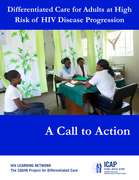
The evidence base for differentiated care for stable patients has grown in recent years. There has been less attention, however, to developing differentiated models of care for patients with advanced or unstable HIV disease. Current clinical guideli
...
Prepared as an outcome of ICMR Subcommittee on Non Hodgkin’s Lymphoma (High Grade) | This consensus document on management of non- hodgkin’s lymphoma – high grade summarizes the modalities of treatment including the site-specific anti-cancer therapies, supportive and palliative care and molec
...
High salt consumption is an important determinant of high blood pressure and reducing it would improve health outcomes by lowering cardiovascular disease and therefore death rates. Reducing salt intake has been identified as one of the most effective public health measures and is one of the leading
...

This report aims to raise awareness about the role that the reform of public health laws can play in advancing the right to health and in creating the conditions for people to live healthy lives. By encouraging a better understanding of how public health law can be used to improve the health of the
...

The five hepatitis viruses have different epidemiological profiles, and their impact, duration, and transmission route also vary. The most common transmission routes contributing to the spread of hepatitis are exposure to infected blood via blood transfusion or unsafe injection
...
First Global Patient Safety Challenge Clean Care is Safer Care
The WHO Guidelines on Hand Hygiene in Health Care provide health-care workers (HCWs), hospital administrators and health authorities with a thorough review of evidence on hand hygiene in health care and specific recommendations to impro
...
Responding to a polio outbreak. Guidelines
recommended
The occurrence of a case of wild polio in a previously polio free area as presently in Syria, whether through importation, laboratory accident, or mutation of vaccine virus (VDPV), should be considered a public health emergency, that requires a rapi
...
