
Filter
376
Text search:
estonia
Featured
17
53
Language
Document type
243
80
17
14
9
5
5
2
1
Countries / Regions
64
28
19
13
11
8
4
4
4
3
3
3
2
2
2
2
2
2
2
2
1
1
1
1
1
1
1
1
1
1
1
1
1
1
1
1
1
1
1
1
1
Authors & Publishers
Publication Years
Category
42
24
20
16
9
2
1
Toolboxes
80
71
57
17
16
14
12
12
12
10
9
7
6
5
5
3
2
1
1
1
Health, Rights and Drugs
recommended
Harm Reducation, Decriminalization and Zero Discrimination for People who use Drugs
Mood disorders
Chapter E.4
2018 edition
Accessed: 28.03.2019
Trastornos des ánimo
Capítulo E.4
Edition 2018
Editores: Matías Irarrázaval & Andres Martin
Traducción: Fernanda Prieto-Tagle & María Vidal
Alcohol misuses
Substance use disorders
Chapter G.1
Roubles de l’humeur
Chapitre E.4
Edition en français Traduction : Cora Cravero Sous la direction de : David Cohen Avec le soutien de la SFPEADA
This report presents the most current data on four specific forms of violence – violent discipline and exposure to domestic abuse during early childhood; violence at school; violent deaths among adolescents; and sexual violence in childhood and adolescence. The statistics reveal that children expe
...
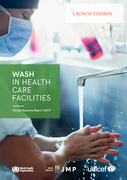
The WHO/UNICEF JMP report, WASH in Health Care Facilities, is the first comprehensive global assessment of water, sanitation and hygiene (WASH) in health care facilities. It also finds that 1 in 5 health care facilities has no sanitation service*, impacting 1.5 billion people. The report further rev
...
Global concerns: Implications for the future
Child Mental Health Atlas
Responses to epidemics, emergencies and disasters raise many ethical issues for the people involved, including public health specialists and policy makers. This training manual provides material on ethical issues in research, surveillance and patient care in these difficult contexts.
Mental health conditions affect one in 10 people at any one time and account for a large proportion of non-fatal disease burden. There is a high degree of comorbidity between mental health conditions such as depression and other noncommunicable diseases (NCDs), including cardiovascular disease, diab
...
Conjunto de Guías sobre Servicios y Politicas de Salud Mental
Editores Médicos, s.a. EDIMSA. 2005
Good Practices in Mental Health & Well-being
EU Compass for Action on Mental Health and Well-being
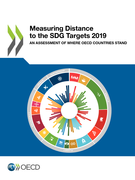
With eleven years left to achieve the ambitious goals of the 2030 Agenda, how close are OECD countries to reaching the SDGs? And how is our understanding constrained by targets and indicators that still cannot be measured? The OECD Measuring Distance to the SDG Targets Study aims to help member coun
...
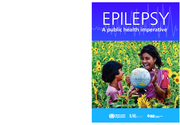
Epilepsy: a public health imperative
recommended
This is the first global report on epilepsy summarizing the available evidence on the burden of epilepsy and the public health response required at global, regional and national levels.
The reports highlights major gaps in awareness, diagnosis, treatment, and health policies through a series of a
...
New and updated information.
Adverse health effects of hot weather and heat-waves are largely preventable. Prevention requires a portfolio of actions at different levels:from health system preparedness, coordinated with meteorological early warning systems, to timely public
...
