
Filter
352
Text search:
eau
et
assainissement
Featured
50
102
Language
Document type
160
52
51
30
26
10
9
6
3
2
2
1
Countries / Regions
37
23
21
19
12
12
11
10
9
8
7
7
7
6
6
5
5
4
4
3
2
2
2
2
2
2
2
2
1
1
1
1
1
1
1
1
1
1
1
1
1
1
1
1
1
1
1
Authors & Publishers
Publication Years
Category
133
127
13
13
9
9
2
1
Toolboxes
39
23
21
18
17
16
16
12
10
10
7
4
3
3
1
1
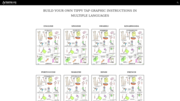
The brochure "How to Build Your Own Tippy Tap", published by SPRING in 2015, provides step-by-step instructions for creating a simple handwashing device called a tippy tap. It highlights the importance of hand hygiene and demonstrates how to construct the device using locally available, low-cost mat
...
The compendium is designed for use by staff working directly with communities - e.g. health workers and community volunteers working with disabled and older people and their families in rural areas of sub-Saharan Africa.
A few examples of technologies are presented that families can adapt to suit t
...
Manual for step-by-step risk management for safely managed sanitation systems. 2nd edition.
This Sanitation safety planning (SSP) manual provides practical, step-by-step guidance to assist in the implementation of the 2018 World Health Organization (WHO) Guidelines on sanitation and health and the
...
The Water, Sanitation, and Hygiene Improvement Training Package is intended to support the training of local outreach workers and their subsequent work in communities to promote improved water, sanitation and hygiene (WASH) practices to reduce diarrhea
With hundreds of illustrations and clear instructions, A Community Guide to Environmental Health helps health promoters, development workers, environmental activists, and community leaders take charge of their environmental health in villages and cities alike. Also available in Arabic, Spanish, Chin
...

This content is from the Advance Chapters of the NEW Where There Is No Doctor
Cholera kits 2020
recommended
For several years, agencies supporting preparedness and response to cholera outbreaks have supplied medicines and medical devices through the Interagency Diarrhoeal Disease Kits (IDDK).
In an effort to better align the presentation and content of the kits to field needs, the composition of the ch
...
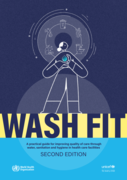
2nd edition
WASH FIT is a risk-based, continuous improvement framework with a set of tools for undertaking water, sanitation and hygiene (WASH) improvements as part of wider quality improvements in health care facilities. It is aimed at small primary, and in some instances secondary, health care fa
...
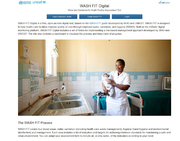
WASH FIT Digital is a free, open-access digital tool, based on the WASH FIT guide developed by WHO and UNICEF. WASH FIT is designed to help health care facilities improve quality of care through improved water, sanitation, and hygiene (WASH). Built on the mWater digital monitoring platform, WASH FIT
...
The purpose of this Strategy is to set out the way to meet the needs of the rural populations for improved domestic water supply services, access to and use of improved sanitation with elimination of open defecation, and improved hygiene behaviour by the Year 2030. It also addresses water, sanitatio
...
OBJETIVOS
•Definir la Higiene de manos y las infecciones adquiridas en los hospitales (HAIs).
•Describir el impacto negativo de las HAIs en pacientes dados de alta.
•Discutir cómo la higiene de manos puede prevenir los HAIs.
•Identificar las barreras para el cumplimiento de la higiene d
...
Results from the baseline study indicated that schoolgirls in the southwestern refugee settlement context lacked access to the menstrual hygiene knowledge and products required for them to manage their menstruation in a healthy and dignified manner. Although UNHCR mandates that all women and girls o
...
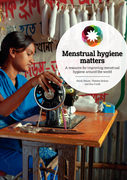
A resource for improving menstraul hygiene around the world.
Comprehensive guidance with examples of good practice, information for colleagues and pupils in class and tips on how to break the taboo
El presente documento contiene directrices provisionales sobre la utilización de mascarillas en comunidades que han notificado la aparición de brotes causados por el nuevo coronavirus (2019-nCoV). Está dirigido a profesionales, coordinadores sanitarios, trabajadores sanitarios y
...
Las mejores prácticas de agua, saneamiento e higiene, en particular el lavado de manos con jabón y agua limpia, deben aplicarse y mantenerse estrictamente, ya que constituyen una barrera adicional importante para la transmisión de COVID-19 y para la transmisión de enfermedades infecciosas en gen
...
This page describes ten immediate water, sanitation and hygiene (WASH) actions that low-resource healthcare facilities can undertake with limited budget in the near-term (0-3 months) to prepare for and address COVID-19. On the second page, WHO and UNICEF have provided input on how to best adapt thei
...
