Filter
472
Text search:
White,
Z.
Featured
43
105
Language
Document type
253
117
62
17
14
5
2
2
Countries / Regions
30
23
21
15
8
8
7
7
7
6
6
5
5
5
5
5
4
4
4
3
3
3
3
3
3
3
3
2
2
2
2
2
2
2
2
2
2
2
2
2
2
2
1
1
1
1
1
1
1
1
1
1
1
1
1
1
1
1
1
1
1
1
1
1
1
1
1
1
1
1
1
1
1
1
1
Authors & Publishers
Publication Years
Category
143
55
34
31
12
7
2
Toolboxes
44
44
43
35
34
21
19
16
13
9
9
9
8
6
5
4
4
3
3
3
2

10–11 May 2016, Catania, Italy

DHS Working Papers No. 120
Climate change (CC) impacts on health outcomes, both direct and indirect, are sufficient to jeopardize achieving the World Bank Group’s visions and agendas in poverty reduction, population resilience, and health, nutrition and population (HNP). In the last 5 years, the number of voices calling for
...
DHS Working Papers No. 111 | Zimbabwe Working Papers No. 12
Infectious diseases are the leading cause of death globally, particularly among children and young adults. The spread of new pathogens and the threat of antimicrobial resistance pose particular challenges in combating these diseases. Major Infectious Diseases identifies feasible, cost-effective pack
...
www.jogh.org • doi: 10.7189/jogh.02.020405 ~ December 2012 • Vol. 2 No. 2 • 020405
This course describes the health effects of war, weapons and strategies of violent conflict. Beginning with weapons of mass destruction it then moves on to other weapons and strategies of war such as the use of landmines and mass rape. The course concludes with a number of lessons which give an hist
...
Report of the Joint World Health Organization–Brien Holden Vision Institute Global Scientific Meeting on Myopia | University of New South Wales, Sydney, Australia 16–18 March 2015
This guidance document provides basic broad principles for a spokesperson
of any health authority on how to respond to vocal vaccine deniers.
The suggestions are based on psychological research on persuasion,
on research in public health, communication studies and on WHO risk
communication guide
...
The use of explosive weapons, such as bombs, rockets, and mortar and
artillery shells, in cities, towns and villages and in other populated areas
has devastating humanitarian consequences. Explosive weapons act mainly
through the projection of blast and fragmentation wi
...

salud pública de méxico / vol. 50, suplemento 2 de 2008, pp.167-177.
In response to the emerging global concern regarding health and people with intellectual disabilities (ID), several developed countries have established national initiatives to address the unique health needs of this population
...
The Journal of Infection in Developing Countries 7(3):289-292
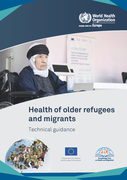
Technical guidance.
This technical guidance aims to inform policy and practice development specifically related to improving the health of older refugees and migrants within the European Union and the larger WHO European Region. Both ageing and migration are in themselves complex multidimensional p
...
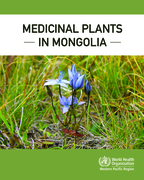
This volume introduces Mongolian traditional medicine and details the nature and uses of medicinal plants found in the country.
The book focuses on the medicinal plants used most commonly in Mongolia. Each monograph contains colour pictures of the plant and a wide array of information—from the sc
...
Traditional medicine, including the knowledge, skills and practices of holistic health care, exists in all cultures. It is based on indigenous theories, beliefs and experiences and is widely accepted for its role in health maintenance and the treatment of disease.Medicinal plants are the main ingred
...