
Filter
3213
Text search:
WASH
Featured
409
954
Language
2811
241
136
93
68
53
24
23
14
13
12
11
10
10
9
9
8
8
7
7
6
6
6
6
6
5
5
5
5
5
4
4
4
4
4
4
4
4
4
3
3
3
3
3
2
2
2
2
2
2
2
2
2
2
1
1
1
1
1
1
1
1
1
1
1
1
1
1
1
1
1
1
1
1
1
1
1
1
Document type
1549
469
366
203
188
123
91
84
71
21
18
15
13
2
Countries
145
114
106
104
81
76
71
70
69
68
67
66
55
55
52
51
49
49
43
40
39
36
36
35
35
33
31
31
29
25
25
23
22
22
22
21
20
19
19
18
17
17
17
17
16
15
14
14
13
13
13
12
12
12
10
9
9
9
9
8
8
7
7
7
7
7
7
7
7
6
6
6
5
5
5
5
5
5
4
4
4
4
4
4
4
4
4
4
3
3
3
3
3
3
3
3
3
3
3
3
3
2
2
2
2
2
2
2
2
2
2
2
2
2
2
2
1
1
1
1
1
1
1
1
1
1
1
1
1
1
1
1
1
1
1
1
1
Authors & Publishers
381
149
112
87
86
80
71
63
60
30
30
29
28
27
26
26
22
20
19
18
18
18
17
16
16
15
15
14
14
13
13
12
12
12
11
11
10
10
10
10
10
10
10
10
10
10
10
9
9
9
9
9
9
9
8
8
8
8
8
8
7
7
7
7
7
7
7
7
7
7
7
7
7
7
6
6
6
6
6
6
6
6
6
6
6
6
6
6
6
6
6
6
6
5
5
5
5
5
5
5
5
5
5
5
5
5
5
5
5
5
5
5
5
5
4
4
4
4
4
4
4
4
4
4
4
4
4
4
4
4
4
4
4
4
4
4
4
4
4
4
4
4
4
4
4
4
4
4
4
3
3
3
3
3
3
3
3
3
3
3
3
3
3
3
3
3
3
3
3
3
3
3
3
3
3
3
3
3
3
3
3
3
3
3
3
3
3
3
3
3
3
3
3
3
3
3
3
3
3
3
3
3
3
3
3
3
3
3
3
3
3
3
3
3
3
3
3
3
3
3
3
3
3
3
3
3
3
3
3
3
3
3
3
3
3
3
3
3
2
2
2
2
2
2
2
2
2
2
2
2
2
2
2
2
2
2
2
2
2
2
2
2
2
2
2
2
2
2
2
2
2
2
2
2
2
2
2
2
2
2
2
2
2
2
2
2
2
2
2
2
2
2
2
2
2
2
2
2
2
2
2
2
2
2
2
2
2
2
2
2
2
2
2
2
2
2
2
2
2
2
2
2
2
2
2
2
2
2
2
2
2
2
2
2
2
2
2
2
2
2
2
2
2
2
2
2
2
2
2
2
2
2
2
2
2
2
2
2
2
2
2
2
2
2
2
2
2
2
2
2
2
2
2
2
2
2
2
2
2
2
2
2
2
2
2
2
2
2
2
2
2
2
2
2
2
2
2
2
2
2
2
2
2
2
2
2
2
2
2
2
2
2
2
2
2
2
2
1
1
1
1
1
1
1
1
1
1
1
1
1
1
1
1
1
1
1
1
1
1
1
1
1
1
1
1
1
1
1
1
1
1
1
1
1
1
1
1
1
1
1
1
1
1
1
1
1
1
1
1
1
1
1
1
1
1
1
1
1
1
1
1
1
1
1
1
1
1
1
1
1
1
1
1
1
1
1
1
1
1
1
1
1
1
1
1
1
1
1
1
1
1
1
1
1
1
1
1
1
1
1
1
1
1
1
1
1
1
1
1
1
1
1
1
1
1
1
1
1
1
1
1
1
1
1
1
1
1
1
1
1
1
1
1
1
1
1
1
1
1
1
1
1
1
1
1
1
1
1
1
1
1
1
1
1
1
1
1
1
1
1
1
1
1
1
1
1
1
1
1
1
1
1
1
1
1
1
1
1
1
1
1
1
1
1
1
1
1
1
1
1
1
1
1
1
1
1
1
1
1
1
1
1
1
1
1
1
1
1
1
1
1
1
1
1
1
1
1
1
1
1
1
1
1
1
1
1
1
1
1
1
1
1
1
1
1
1
1
1
1
1
1
1
1
1
1
1
1
1
1
1
1
1
1
1
1
1
1
1
1
1
1
1
1
1
1
1
1
1
1
1
1
1
1
1
1
1
1
1
1
1
1
1
1
1
1
1
1
1
1
1
1
1
1
1
1
1
1
1
1
1
1
1
1
1
1
1
1
1
1
1
1
1
1
1
1
1
1
1
1
1
1
1
1
1
1
1
1
1
1
1
1
1
1
1
1
1
1
1
1
1
1
1
1
1
1
1
1
1
1
1
1
1
1
1
1
1
1
1
1
1
1
1
1
1
1
1
1
1
1
1
1
1
1
1
1
1
1
1
1
1
1
1
1
1
1
1
1
1
1
1
1
1
1
1
1
1
1
1
1
1
1
1
1
1
1
1
1
1
1
1
1
1
1
1
1
1
1
1
1
1
1
1
1
1
1
1
1
1
1
1
1
1
1
1
1
1
1
1
1
1
1
1
1
1
1
1
1
1
1
1
1
1
1
1
1
1
1
1
1
1
1
1
1
1
1
1
1
1
1
1
1
1
1
1
1
1
1
1
1
1
1
1
1
1
1
1
1
1
1
1
1
1
1
1
1
1
1
1
1
1
1
1
1
1
1
1
1
1
1
1
1
1
1
1
1
1
1
1
1
1
1
1
1
1
1
1
1
1
1
1
1
1
1
1
1
1
1
1
1
1
1
1
1
1
1
1
1
1
1
1
1
1
1
1
1
1
1
1
1
1
1
1
1
1
1
1
1
1
1
1
1
1
1
1
1
1
1
1
1
1
1
1
1
1
1
1
1
1
1
1
1
1
1
1
1
1
1
1
1
1
1
1
1
1
1
1
1
1
1
1
1
1
1
1
1
1
1
1
1
1
1
1
1
1
1
1
1
1
1
1
1
1
1
1
1
1
1
1
1
1
1
1
1
1
1
1
1
1
1
1
1
1
1
1
1
1
1
1
1
1
1
1
1
1
1
1
1
1
1
1
1
1
1
1
1
1
1
1
1
1
1
1
1
1
1
1
1
1
1
1
1
1
1
1
1
1
1
1
1
1
1
1
1
1
1
1
1
1
1
1
1
1
1
1
1
1
1
1
1
1
1
1
1
1
1
1
1
1
1
1
1
1
1
1
1
1
1
1
1
1
1
1
1
1
1
1
1
1
1
1
1
1
1
1
1
1
1
1
1
1
1
1
1
1
1
1
1
1
1
1
1
1
1
1
1
1
1
1
1
1
1
1
1
1
1
1
1
1
1
1
1
1
1
1
1
1
1
1
1
1
1
1
1
1
1
1
1
1
1
1
1
1
1
1
1
1
1
1
1
1
1
1
1
1
1
1
1
1
1
1
1
1
1
1
1
1
1
1
1
1
1
1
1
1
1
1
1
1
1
1
1
1
1
1
1
1
1
1
1
1
1
1
1
1
1
1
1
1
1
1
1
1
1
1
1
1
1
1
1
1
1
1
1
1
1
1
1
1
1
1
1
1
1
1
1
1
1
1
1
1
1
1
1
1
1
1
1
1
1
1
1
1
1
1
1
1
1
1
1
1
1
1
1
1
1
1
1
1
1
1
1
1
1
1
1
1
1
1
1
1
1
1
1
1
1
1
1
1
1
1
1
1
1
1
1
1
1
1
1
1
1
1
1
1
1
1
1
1
1
1
1
1
1
1
1
1
1
1
1
1
1
1
1
1
1
1
1
1
1
1
1
1
1
1
1
1
1
1
1
1
1
1
1
1
1
1
1
1
1
1
1
1
1
1
1
1
1
1
1
1
1
1
1
1
1
1
1
1
1
1
1
1
1
1
1
1
1
1
1
1
1
1
1
1
1
1
1
1
1
1
1
1
1
1
1
1
1
1
1
1
1
1
1
1
1
1
1
1
1
1
1
1
1
1
1
1
1
1
1
1
1
1
1
1
1
1
1
1
1
1
1
1
1
1
1
1
1
1
1
1
1
1
1
1
1
1
1
1
1
1
1
1
1
1
1
1
1
1
1
1
1
1
1
1
1
1
1
1
1
1
1
1
1
1
1
1
1
1
1
1
1
1
1
1
1
1
1
1
1
1
1
1
1
1
1
1
1
1
1
1
1
1
1
1
1
1
1
1
1
1
1
1
1
1
1
1
1
1
1
1
1
1
1
1
1
1
1
1
1
1
1
1
1
1
1
1
1
1
1
1
1
1
1
1
1
1
1
1
1
1
1
1
1
1
1
1
1
1
1
1
1
1
1
1
1
1
1
1
1
1
1
1
1
1
1
1
1
1
1
1
1
1
1
1
1
1
1
1
1
1
1
1
1
1
1
1
1
1
1
1
1
1
1
1
1
1
1
1
1
1
1
1
1
1
1
1
1
1
1
1
1
1
1
1
1
1
1
1
1
1
1
1
1
1
1
1
1
1
1
1
1
1
1
1
1
1
1
1
1
1
1
1
1
1
1
1
1
1
1
1
1
1
1
1
1
1
1
1
1
1
1
1
1
1
1
1
1
1
1
1
1
1
1
1
1
1
1
1
1
1
1
1
1
1
1
1
1
1
1
1
1
1
1
1
1
1
1
1
1
1
1
1
1
1
1
1
1
1
1
1
1
1
1
1
1
1
1
1
1
1
1
1
1
1
1
1
1
1
1
1
1
1
1
1
1
1
1
1
1
1
1
1
1
1
1
1
1
1
1
1
1
1
1
1
1
1
1
1
1
1
1
1
1
1
1
1
1
1
1
1
1
1
1
1
1
1
1
1
1
1
1
1
1
1
1
1
1
1
1
1
1
1
1
1
1
1
1
1
1
1
1
1
1
1
1
1
1
1
1
1
1
1
1
1
1
1
1
1
1
1
1
1
1
1
1
1
1
1
1
1
1
1
1
1
1
1
1
1
1
1
1
1
1
1
1
1
1
1
1
1
1
1
1
1
1
1
1
1
1
1
1
1
1
1
1
1
1
1
1
1
1
1
1
1
1
1
1
1
1
1
1
1
1
1
1
1
1
1
1
1
1
1
1
1
1
1
1
1
1
1
1
1
1
1
1
1
1
1
1
1
1
1
1
1
1
1
1
1
1
1
1
1
1
1
1
1
1
1
1
1
1
1
1
1
1
1
1
1
1
1
1
1
1
1
1
1
1
1
1
1
1
1
1
1
1
1
1
1
1
1
1
1
1
1
1
1
1
1
1
1
1
1
1
1
1
1
1
1
1
1
1
1
1
1
1
1
1
1
1
1
1
1
1
1
1
Publication Years
1181
1750
268
13
1
Category
1352
368
168
152
110
108
36
4
1
Toolboxes
584
222
154
134
131
122
120
118
108
97
83
65
57
55
43
37
36
24
12
10
6
6
6
3
1

Maternal, Infant and Young Child Nutrition Strategic Actions:
1 Endorse and disseminate key policies and regulations
2 Improve maternal nutrition
3 Protect, promote, and support optimal infant and young child feeding practices
4 Support optimal infant and young child feeding in ... difficult circumstances
5 Ensure intra-sectoral integration (Health and Nutrition)
6 Improve intersectoral integration (food security and livelihood, WASH, protection, education and shelter)
7 Support capacity building and service strengthening
8 Initiate advocacy and social behavioural change communication
9 Sustain research, information, monitoring and evaluation
10 Mobilise resources and support more
1 Endorse and disseminate key policies and regulations
2 Improve maternal nutrition
3 Protect, promote, and support optimal infant and young child feeding practices
4 Support optimal infant and young child feeding in ... difficult circumstances
5 Ensure intra-sectoral integration (Health and Nutrition)
6 Improve intersectoral integration (food security and livelihood, WASH, protection, education and shelter)
7 Support capacity building and service strengthening
8 Initiate advocacy and social behavioural change communication
9 Sustain research, information, monitoring and evaluation
10 Mobilise resources and support more
Propósito de la guía. Considerando el contexto de aumento de factores de riesgo de origen natural y social al cual está sujeta la población en general y los niños, niñas, adolescentes y jóvenes (NNAJ) en forma particular, el propósito de esta guía es ofrecer orientaciones a los gobiernos pa
...
ra el desarrollo y la implementación de políticas públicas dirigidas a la Gestión del Riesgo de Desastres (GRD) bajo un enfoque multi-sectorial (específicamente en los sectores de Protección de la niñez y la juventud, Educación, Agua, saneamiento e higiene -WASH, por su siglas en inglés y Salud y Nutrición) para asegurar sus derechos en toda circunstancia. Estas orientaciones son sustentadas en los principios fundamentales de la Declaración Universal de los Derechos humanos (DUDH), la Convención de los Derechos de la Niñez (CDN), la Carta de la Niñez para la Reducción del Riesgo de Desastres, los Compromisos Básicos para la Infancia en la Acción Humanitaria de
UNICEF (CCC´s por su siglas en inglés) principalmente, tomado en consideración los objetivos estratégicos y las prioridades del Marco de Acción de Hyogo (MAH) o Hyogo Framework for Action (HFA) por su nombre y siglas en inglés.
more
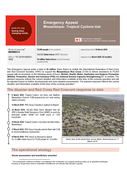
The disaster and Red Cross Red Crescent response to date
9 March 2019: Tropical Cyclone Idai forms over Northern Mozambique Channel. CVM preparedness and early warning actions underway
13 March 2019: IFRC Surge Capacity is deployed to Maputo
14 March 2019: 342,562 Swiss francs allocated from th
...
e IFRC’s Disaster Relief Emergency Fund (DREF) to meet the immediate shelter, WASH and health needs of 1,500 households
15 March 2019: Tropical Cyclone Idai makes landfall in Beira,
Mozambique.
17 March 2019: IFRC Surge Capacity arrival in Beira with CVM to conduct preliminary assessments.
19 March 2019: IFRC issues an Emergency Appeal for 10 million Swiss francs for 75,000 people for 12 months.
more
As of 21 March 2019, a total of 250,000 people are reported to be affected by the floods in nine districts. An estimated 48 per cent of the affected population is under 18 years of age.
There is limited road access in the Chimanimani, the worst affected district.
An estimated 60,000 children are
...
in need of immediate protection services, and 100,000 children are in need of welfare and civil registration services in nine flood affected districts.
Initial estimates indicate that 54 classrooms from 114 schools have been affected by the floods, impacting about 30,000 learners. Over 5,000 households have been reached with critical WASH Hygiene kits in affected districts.
more
Personne ne se rend dans un établissement de soins de santé pour tomber malade. On s’y rend pour aller mieux, pour accoucher, pour se faire vacciner. Cependant, des centaines de millions de gens sont confrontés à un risque accru d’infection quand ils se font soigner dans des établissements
...
de santé où les services de première nécessité font défaut, y compris les services d’approvisionnement en eau, d’assainissement et d’hygiène (WASH) et les services de gestion des déchets médicaux. Non seulement l’absence de services WASH dans les établissements de santé compromet la sécurité sanitaire des patients et leur dignité, mais il peut éventuellement exacerber la propagation d’infections résistant aux antimicrobiens et compromettre les efforts faits en vue de l’amélioration de la santé maternelle et infantile.
more
El coronavirus se está extendiendo a nivel mundial. ¿Cómo pueden los individuos, las comunidades y los actores humanitarios responder mejor al brote de COVID-19? ¿Cómo puede el Manual Esfera orientar nuestra respuesta?
Este documento tiene dos secciones: A. La primera sección aborda los
...
principios fundamentales que son esenciales para conseguir una intervención exitosa y holística. B. La segunda aborda las normas y la orientación relevantes en los capítulos en materia de WASH y Salud del Manual Esfera.
more
Il Coronavirus1 si sta diffondendo a livello globale. In che modo possono persone, comunità ed agenzie umanitarie fornire un’assistenza efficace durante l’epidemia di COVID-19? In che modo può il manuale Sphere guidare il nostro intervento?
Questo documento si compone di due sezioni: A. La
...
prima sezione presenta i principi fondamentali che sono alla base di un intervento olistico ed efficace. B. La seconda presenta gli standard e le linee guida pertinenti contenuti nei capitoli ‘Approvvigionamento idrico, servizi sanitari e sensibilizzazione all’igiene (WASH)’ e ‘Salute’ del manuale Sphere.
more
Le Coronavirus se propage dans le monde entier. Quelle est la meilleure réponse à l’épidémie de COVID-19 que peuvent apporter les personnes, les communautés et les humanitaires ? Et comment le manuel Sphère peut-il orienter nos interventions ?
Ce document est divisé en deux sections :
...
A. La première passe en revue les principes fondamentaux essentiels à une intervention holistique réussie B. La deuxième énumère les standards et orientations pertinents qui figurent dans les chapitres WASH et Santé du manuel.
more
The Coronavirus is spreading globally. How can individuals, communities and humanitarian actors best respond to the COVID-19 outbreak? How can the Sphere Handbook guide our response?
This document has two sections: A. The first section covers fundamental principles which are crucial to a succe
...
ssful, holistic intervention. B. The second covers relevant standards and guidance in the handbook’s WASH and Health chapters.
more
This report is the first of its kind. It brings together various data sets to present the current status of hand hygiene, highlight lagging progress, and call governments and supporting agencies to action, offering numerous inspiring examples of change.
During the COVID-19 pandemic, hand hygiene
...
received unprecedented attention and became a central pillar in national COVID prevention strategies. However, concern with hand hygiene should not only be as temporary public health measure in times of crisis, but as a vital everyday behaviour that contributes to health and economic resilience. Hand hygiene is a highly cost-effective investment, providing outsized health benefits for relatively little cost.
Despite efforts to promote hand hygiene, the rates of access to hand hygiene facilities remain stubbornly low. If current rates of progress continue, by the end of the SDG era in 2030, 1.9 billion people will still lack facilities to wash their hands at home.
This report presents a compelling case for investment in five key ‘accelerators’ as a pathway towards achieving hand hygiene for all – governance, financing, capacity development, data and information, and innovation. These accelerators are identified under the UN-Water SDG 6 Global Acceleration Framework.
more
Int J Hyg Environ Health. 2019 Jun; 222(5): 765–777. doi: 10.1016/j.ijheh.2019.05.004;
To develop updated estimates in response to new exposure and exposure-response data of the
burden of diarrhoea, respiratory infections, malnutrition, schistosomiasis, malaria, soil-transmitted helminth
infec
...
tions and trachoma from exposure to inadequate drinking-water, sanitation and hygiene behaviours
(WASH) with a focus on low- and middle-income countries.
more
PLOS Glob Public Health 2(8): e0000272. https://doi.org/10.1371/journal.pgph.0000272
Sepsis is a major global health problem, especially in sub-Saharan Africa. Improving patient care requires that healthcare providers understand patients’ priorities and provide quality care within the confines of
...
the context they work. We report the perspectives of patients, caregivers and healthcare workers regarding care quality for patients admitted for sepsis to public hospitals in Uganda and Malawi. This qualitative descriptive study in two hospitals included face-to face semi-structured interviews with purposively selected patients recovering from sepsis, their caregivers and healthcare workers. In both Malawi and Uganda, sepsis care often occurred in resource-constrained environments which undermined healthcare workers’ capacity to deliver safe, consistent and accessible care. Constraints included limited space, strained; water, sanitation and hygiene (WASH) amenities and practices, inadequate human and material resources and inadequate provision for basic needs including nutrition. Heavy workloads for healthcare workers strained relationships, led to poor communication and reduced engagement with patients and caregivers.
more
Goal and objectives of the guideline
The goal of this guideline is to provide evidence-based recommendations to countries in their efforts to accomplish schistosomiasis morbidity control and elimination as a public health problem, and to move towards interruption of transmission.
The recommendatio
...
ns contained herein will help countries to implement national schistosomiasis control and elimination programmes and support efforts to verify the interruption of transmission.
The specific objectives are to provide guidance on:
prevalence thresholds, target age groups and frequency of preventive chemotherapy for schistosomiasis;
establishment of water, sanitation and hygiene (WASH) and snail control activities to support control and elimination of schistosomiasis;
use of diagnostic tests in humans in low transmission areas and for moving to, and evaluating the interruption of transmission of schistosomiasis;
tools for the assessment of Schistosoma spp. infection in snail hosts; and
diagnostic tests for the assessment of schistosomiasis infection in animal reservoirs of infection
more
Those who clean are the first line of defense against health care-associated infections (HAIs), and support efforts to reduce antimicrobial resistance (AMR).
Strengthening the training of this important group can contribute to resolving many of today’s public health challenges. This is importan
...
t given that cleaning both surfaces and hands is vital to control the transmission of a number of HAIs.
This two-part training package targets those who clean heath care facilities.
The Trainer’s Guide takes the user through how to prepare, deliver and sustain an effective training for those who clean. The Modules and Resources provides instructions, definitions, photographs, posters and specific illustrations of recommended practices
The package can be used by those who deliver environmental cleaning training programmes and/or those with a background in IPC including ministries of health, nongovernmental organizations, academic institutions, experts working in Quality of care, IPC and environmental cleaning/ Water, sanitation and Hygiene (WASH) and Health facility IPC focal points and onsite cleaning supervisors
more
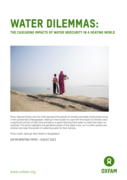
Climate-induced water insecurity poses one of the biggest threats to humanity and will lead to more hunger, disease and displacement
Oxfam water engineers are having to drill deeper, more expensive and harder-to-maintain water boreholes used by some of the poorest communities around the world, mo
...
re often now only to find dry, depleted or polluted reservoirs.
Today, during World Water Week, Oxfam publishes the first of its series of reports, “Water Dilemmas”, about the growing water crisis, in large part driven by global heating from greenhouse gas emissions. The report describes how climate change will impact water security in different regions, leading to more hunger, disease and displacement.
Carlos Calderon, Humanitarian Advocacy and Partnerships Lead for Oxfam Aotearoa said, “This new Oxfam research is focused on the global Water, Sanitation and Hygiene (WaSH) situation, but it paints a picture that illustrates the complexity of elements that, combined, will continue to increasingly affect women, girls, boys and men in the decades to come. Changing weather, poverty, inequality, gender-based violence, political instability and conflicts are impacting the availability and quality of adequate water systems. All governments, particularly those from rich countries, should responsively take action at a global scale. The clock is ticking. Our children will judge us for our actions today, or for the lack of them.”
more
“All sectors of humanitarian response are critical to providing an adequate and holistic response for children who have survived different types of violence, exploitation, abuse and neglect. Following the immediate humanitarian response, all humanitarian sectors have an important contribution to m
...
ake to the effective rehabilitation and reintegration of child survivors. ‘Mainstreaming’ child protection, or ensuring that child protection considerations inform all aspects of humanitarian action, helps to maximize the child protection impacts of the work that all humanitarians do. ”
How to Use This briefing paper: This briefing paper is a quick reference for Plan International Child Protection in Emergencies (CPiE) staff on how to engage with other sectors operating in the emergency to ensure that child protection principles and considerations inform all aspects of humanitarian programming in other sectors. While there is child protection mainstreaming guidance for how to work with specific sectors (e.g. WASH, nutrition, distribution) this “All Sectors” briefing note can give CPiE staff the big picture of shared child protection mainstreaming messages that should be conveyed to all sectors. This briefing is aligned with the Minimum Standards for Child Protection in Humanitarian Action and the Sphere Standards, as well as Plan International staff feedback on what actions are the most vital for child protection mainstreaming in other sectors.
more
Infection prevention and control (IPC) in a CTC/ CTU IPC are all practical measures taken in the healthcare facility to prevent harm caused by infections to patients, health workers and communities.
The main goal of IPC in the cholera response is to
• To reduce transmission of health care-as
...
sociated infections of cholera and any other infectious disease
• To enhance the safety of staff, patients and visitors
• To enhance the ability of the organization/health care facility to respond to an outbreak
• To reduce the risk of the hospital (health care facility) itself amplifying the outbreak
Water, Sanitation and Hygiene (WASH)
WASH are all measures taken to guarantee environmental hygiene, safe water of all used within the health facility. It encompasses water, sanitation, waste management, cleaning within the health facility which in this case is CTU/C. A complete WASH package in the CTU/CTC reduces the risk of spread of Vibrio cholerae inside and outside the CTC/CTU.
The probability of spreading or acquiring cholera through a CTC/CTU can be highly reduced when proper IPC and WASH measures are respected, followed and monitored. These measures are, in principle, valid in CTC/CTUs and ORPs, although they need to be adapted to the specific characteristics of the facility concerned.
more
Antimicrobial resistance (AMR) has emerged as a leading cause of death in the African region, surpassing fatalities from malaria, HIV, and TB. In response to this critical threat, the region has adopted the AMR Global Action Plan and the African Union Framework for Antimicrobial Resistance Control 2
...
020 – 2025, which is tailored to meet the specific needs of African nations through a coordinated approach. While most countries in the region have developed and prioritized National Action Plans (NAPs) to tackle AMR, the overall response remains inadequate given the magnitude of the threat, which endangers human, animal, environmental, aquatic, and plant health.
Africa bears a significant burden of infectious diseases, accounting for approximately 95% of malaria deaths, 70% of people living with HIV, and 25% of TB deaths globally. In 2019, AMR was linked to approximately 55,000 deaths from HIV, 30,000 from malaria, and 255,000 overall. Major drivers of AMR in the region include the overuse and misuse of antimicrobials in human and food systems, migration, suboptimal vaccination rates, and environmental contamination from hospital and pharmaceutical effluents. Additionally, there is a lack of access to quality-assured antimicrobials and diagnostics, compounded by inadequate knowledge about AMR. Unlike high-income countries, where indiscriminate antimicrobial use is the primary factor driving AMR, African countries face additional challenges, including a lack of access to clean and safe water, poor Water, Sanitation, and Hygiene (WASH) programs, inadequate infection prevention measures, and suboptimal vaccinations for preventable diseases. One in three hospitals in the region lacks clean, safe running water, and one in eight people defecate openly due to inadequate sanitation. Investments in WASH, infection prevention, and biosecurity could save approximately 700,000 lives annually.
Addressing AMR in Africa requires a comprehensive, multi-sectoral approach involving the entire society. Sustainable access to antimicrobials, including antibiotics, vaccines, and therapeutics, is crucial, as lack of access leads to more morbidity and mortality than AMR itself. Support for the region should focus on preventing infections, strengthening health and food systems, developing human resources, ensuring sustainable access to diagnostics and therapeutics, and investing in laboratory infrastructure to support surveillance and data generation.
more

USAID/KENYA Evaluation Services and Program Support (ESPS)
The United States Agency for International Development (USAID) has a solid track record of supporting health and development initiatives in Kenya. AIDS, Population, and Health Integrated Assistance (APHIA) is the agency’s flagship hea ... lth initiative in the country. APHIA is currently in its third iteration, APHIAPlus, which began in January 2011 and is slated to end in December 2015. APHIAPlus was designed to contribute to Result 3 (“Increased use of quality health services, products, and information”) and Result 4 (“Social determinants of health”) of USAID/Kenya’s implementation framework. The main technical areas of focus are HIV/AIDS; malaria; family planning (FP); tuberculosis (TB); maternal, newborn, and child health (MNCH); and water, sanitation, and hygiene (WASH). more
The United States Agency for International Development (USAID) has a solid track record of supporting health and development initiatives in Kenya. AIDS, Population, and Health Integrated Assistance (APHIA) is the agency’s flagship hea ... lth initiative in the country. APHIA is currently in its third iteration, APHIAPlus, which began in January 2011 and is slated to end in December 2015. APHIAPlus was designed to contribute to Result 3 (“Increased use of quality health services, products, and information”) and Result 4 (“Social determinants of health”) of USAID/Kenya’s implementation framework. The main technical areas of focus are HIV/AIDS; malaria; family planning (FP); tuberculosis (TB); maternal, newborn, and child health (MNCH); and water, sanitation, and hygiene (WASH). more
Healthcare-associated infections (HAI) are a significant burden globally, with millions of patients affected each year. These infections affect both high- and limited-resource healthcare settings, but in limited-resource settings, rates are approximately twice as high as high-resource settings (15 o
...
ut of every 100 patients versus 7 out of every 100 patients). Furthermore, rates of infections within certain patient populations are significantly higher in limited-resource settings, including surgical patients, patients in intensive-care units (ICU) and neonatal units. It is well documented that environmental contamination plays a role in the transmission of HAIs in healthcare settings. Therefore, environmental cleaning is a fundamental intervention for infection prevention and control (IPC).It is a multifaceted intervention that involves cleaning and disinfection (when indicated) of the environment alongside other key program elements to support successful implementation (e.g., leadership support, training, monitoring, and feedback mechanisms). To be effective, environmental cleaning activities must be implemented within the framework of the facility IPC program, and not as a standalone intervention. It is also essential that IPC programs advocate for and work with facility administration and government officials to budget, operate and maintain adequate water, sanitation and hygiene (WASH) infrastructure to ensure that environmental cleaning can be performed according to best practices.
more
