
Filter
269
Text search:
IFRC,
et
al.
Featured
Recommendations
57
New Publications
78
Language
Document type
No document type
133
Guidelines
50
Studies & Reports
37
Manuals
29
Training Material
10
Fact sheets
5
Strategic & Response Plan
3
Situation Updates
1
Online Courses
1
Countries / Regions
Nepal
8
Latin America and the Carribbean
8
Western and Central Europe
8
Global
8
Myanmar / Burma
7
Liberia
6
Congo, Democratic Republic of
6
Syria
6
Guinea
5
Sierra Leone
5
Bangladesh
5
Eastern Europe and Central Asia
5
Russia
5
Uganda
4
Haiti
4
Germany
3
Colombia
3
South–East Asia Region
3
Nigeria
2
Philippines
2
India
2
Indonesia
2
Sudan
2
Brazil
2
Ukraine
2
Yemen
2
West and Central Africa
2
Middle East and North Africa
2
Africa
2
Burkina Faso
1
Senegal
1
Mali
1
Côte d’Ivoire / Ivory Coast
1
Saudi Arabia
1
Pakistan
1
South Sudan
1
Lebanon
1
Chad
1
Rwanda
1
Malaysia
1
Argentina
1
Croatia
1
Bolivia
1
Lesotho
1
Nicaragua
1
Chile
1
Western Pacific Region
1
Paraguay
1
Asia
1
Venezuela
1
Italy
1
Laos
1
Moldova
1
Jamaica
1
Spain
1
French Guyana
1
Authors & Publishers
Publication Years
Category
Countries
53
Key Resources
47
Women & Child Health
11
Capacity Building
7
Clinical Guidelines
7
Public Health
6
Toolboxes
COVID-19
61
Natural Hazards
24
Ebola
20
Rapid Response
19
Planetary Health
16
Conflict
15
Disability
14
Mental Health
14
Refugee
7
Zika
7
TB
7
Global Health Education
6
HIV
3
Specific Hazards
1
AMR
1
Caregiver
1
DG Echo Funding Guidelines
Desk Review and Recommendations for Private Sector Engagement
Morbidity and Mortality Weekly Report (MMWR) January 16, 2015 / 64(01);20-27
Strengthening health-system emergency preparedness.
The paper sets out the specific communication challenge posed by Ebola and why it was so difficult to get to grips with this in the early months of the outbreak. It thendocuments when the health communication response became more useful and explores what that tells us about effective media and commu
...
Psychosocial Support and Social and Emotional Learning for Children and Youth in Emergency Settings
recommended
The purpose of this paper is to clarify relevant terminologies and approaches relating to psychosocial well-being and social and emotional learning (SEL) in education in crisis affected contexts, and to explore how psychosocial support (PSS) and social and emotional learning relate to one another.
A STUDY OF THE CHALLENGES FACED BY PERSONS WITH DISABILITIES IN POST-EARTHQUAKE
NEPAL.
Human Rights, Minimum Standards and Monitoring at the European and International Levels
Key Recommendations for an Inclusive Urban Agenda
The training manual consists of: (i) Tools for communication, reassurance and comfort for staff working directly with distressed children; (ii) Advice and guidance for staff working with parents and primary care-givers; (iii) Suggestions for ways to support a distressed child. It provides a non-i
...
This brief focuses specifically on the Grand Nord (Great North): the Beni and Lubero territories of northern North Kivu that are the epicentre of the outbreak. Further participatory enquiry should be undertaken with the affected populations, but given ongoing transmission, conveying key consideratio
...
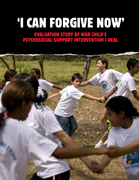
Despite growing evidence on the impact of psychosocial support interventions, there is an urgent need for a stronger evidence base on approaches that effectively support children affected by armed conflict. To contribute to this evidence base, and building on a pilot study conducted in Uganda in 200
...
This paper focuses on the Sustainable Development Goals related to poverty, economic growth, inequality, health, food production and the environment. It presents concrete examples of the underlying and complex aspects of antibiotic resistance and its impacts across different Sustainable Development
...
The Sustainable Development Goals (SDGs) were launched in September 2015, made up of 17 Goals and 169 Targets that set out a plan of action that will shape the mainstream development agenda for the next 15 years1. There has already been much debate about how these Goals will be achieved, but the sig
...
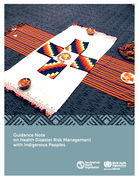
For centuries, indigenous peoples around the world have used their traditional knowledge to prepare for, cope with and survive disasters. Their methods and practices originated within their communities and have been maintained and passed down over generations. Until recently, policy makers have larg
...
