
Filter
2350
Text search:
neonatal
care
Featured
211
832
Language
2160
111
81
39
29
25
12
11
9
5
5
5
5
4
4
4
4
3
3
3
2
2
2
2
2
2
2
1
1
1
1
1
1
1
1
1
1
1
1
1
Document type
1455
303
288
92
69
47
41
22
15
4
4
3
3
1
Countries
170
103
94
80
68
68
60
59
58
57
53
48
47
42
41
38
37
31
29
27
27
26
23
21
20
17
15
15
15
14
14
12
12
12
11
11
11
11
10
10
10
10
9
9
8
8
8
8
7
7
6
5
5
5
5
5
4
4
4
4
4
4
4
3
3
3
3
3
3
3
3
3
2
2
2
2
2
2
2
2
2
2
2
2
2
2
1
1
1
1
1
1
1
1
1
1
1
1
1
1
1
1
1
1
1
1
1
1
Authors & Publishers
281
116
99
81
76
57
55
53
23
22
22
22
21
20
17
16
16
15
14
14
13
12
12
12
12
11
11
11
10
9
9
9
9
9
9
9
8
8
8
8
8
8
8
8
8
7
7
7
7
7
6
6
6
6
6
6
6
6
6
6
6
5
5
5
5
5
5
5
5
5
5
5
5
5
5
5
5
5
5
5
4
4
4
4
4
4
4
4
4
4
4
4
4
4
4
4
4
4
4
4
4
4
4
4
4
4
3
3
3
3
3
3
3
3
3
3
3
3
3
3
3
3
3
3
3
3
3
3
3
3
3
3
3
3
3
3
3
3
3
3
3
3
3
3
3
3
3
3
3
3
3
3
3
3
3
3
3
3
3
3
3
3
3
3
3
3
3
2
2
2
2
2
2
2
2
2
2
2
2
2
2
2
2
2
2
2
2
2
2
2
2
2
2
2
2
2
2
2
2
2
2
2
2
2
2
2
2
2
2
2
2
2
2
2
2
2
2
2
2
2
2
2
2
2
2
2
2
2
2
2
2
2
2
2
2
2
2
2
2
2
2
2
2
2
2
2
2
2
2
2
2
2
2
2
2
2
2
2
2
2
2
2
2
2
2
2
2
2
2
2
2
2
2
2
2
2
2
2
2
2
2
2
2
2
2
2
2
2
2
2
2
2
2
2
2
2
2
2
2
2
2
2
2
2
2
2
2
2
2
2
2
2
2
2
2
2
2
1
1
1
1
1
1
1
1
1
1
1
1
1
1
1
1
1
1
1
1
1
1
1
1
1
1
1
1
1
1
1
1
1
1
1
1
1
1
1
1
1
1
1
1
1
1
1
1
1
1
1
1
1
1
1
1
1
1
1
1
1
1
1
1
1
1
1
1
1
1
1
1
1
1
1
1
1
1
1
1
1
1
1
1
1
1
1
1
1
1
1
1
1
1
1
1
1
1
1
1
1
1
1
1
1
1
1
1
1
1
1
1
1
1
1
1
1
1
1
1
1
1
1
1
1
1
1
1
1
1
1
1
1
1
1
1
1
1
1
1
1
1
1
1
1
1
1
1
1
1
1
1
1
1
1
1
1
1
1
1
1
1
1
1
1
1
1
1
1
1
1
1
1
1
1
1
1
1
1
1
1
1
1
1
1
1
1
1
1
1
1
1
1
1
1
1
1
1
1
1
1
1
1
1
1
1
1
1
1
1
1
1
1
1
1
1
1
1
1
1
1
1
1
1
1
1
1
1
1
1
1
1
1
1
1
1
1
1
1
1
1
1
1
1
1
1
1
1
1
1
1
1
1
1
1
1
1
1
1
1
1
1
1
1
1
1
1
1
1
1
1
1
1
1
1
1
1
1
1
1
1
1
1
1
1
1
1
1
1
1
1
1
1
1
1
1
1
1
1
1
1
1
1
1
1
1
1
1
1
1
1
1
1
1
1
1
1
1
1
1
1
1
1
1
1
1
1
1
1
1
1
1
1
1
1
1
1
1
1
1
1
1
1
1
1
1
1
1
1
1
1
1
1
1
1
1
1
1
1
1
1
1
1
1
1
1
1
1
1
1
1
1
1
1
1
1
1
1
1
1
1
1
1
1
1
1
1
1
1
1
1
1
1
1
1
1
1
1
1
1
1
1
1
1
1
1
1
1
1
1
1
1
1
1
1
1
1
1
1
1
1
1
1
1
1
1
1
1
1
1
1
1
1
1
1
1
1
1
1
1
1
1
1
1
1
1
1
1
1
1
1
1
1
1
1
1
1
1
1
1
1
1
1
1
1
1
1
1
1
1
1
1
1
1
1
1
1
1
1
1
1
1
1
1
1
1
1
1
1
1
1
1
1
1
1
1
1
1
1
1
1
1
1
1
1
1
1
1
1
1
1
1
1
1
1
1
1
1
1
1
1
1
1
1
1
1
1
1
1
1
1
1
1
1
1
1
1
1
1
1
1
1
1
1
1
1
1
1
1
1
1
1
1
1
1
1
1
1
1
1
1
1
1
1
1
1
1
1
1
1
1
1
1
1
1
1
1
1
1
1
1
1
1
1
1
1
1
1
1
1
1
1
1
1
1
1
1
1
1
1
1
1
1
1
1
1
1
1
1
1
1
1
1
1
1
1
1
1
1
1
1
1
1
1
1
1
1
1
1
1
1
1
1
1
1
1
1
1
1
1
1
1
1
1
1
1
1
1
1
1
1
1
1
1
1
1
1
1
1
1
1
1
1
1
1
1
1
1
1
1
1
1
1
1
1
1
1
1
1
1
1
1
1
1
1
1
1
1
1
1
1
1
1
1
1
1
1
1
1
1
1
1
1
1
1
1
1
1
1
1
1
1
1
1
1
1
1
1
1
1
1
1
1
1
1
1
1
1
1
1
1
1
1
1
1
1
1
1
1
1
1
1
1
1
1
1
1
1
1
1
1
1
1
1
1
1
1
1
1
1
1
1
1
1
1
1
1
1
1
1
1
1
1
1
1
1
1
1
1
1
1
1
1
1
1
1
1
1
1
1
1
1
1
1
1
1
1
1
1
1
1
1
1
1
1
1
1
1
1
1
1
1
1
1
1
1
1
1
1
1
1
1
1
1
1
1
1
1
1
1
1
1
1
1
1
1
1
1
1
1
1
1
1
1
1
1
1
1
1
1
1
1
1
1
1
1
1
1
1
1
1
1
1
1
1
1
1
1
1
1
1
1
1
1
1
1
1
1
1
1
1
1
1
1
1
1
1
1
1
1
1
1
1
1
1
1
1
1
1
1
1
1
1
1
1
1
1
1
1
1
1
1
1
1
1
1
1
1
1
1
1
1
1
1
1
1
1
1
1
1
1
1
1
1
1
1
1
1
1
1
1
1
1
1
1
1
1
1
1
1
1
1
1
1
1
1
1
1
1
1
1
1
1
1
1
1
1
1
1
1
1
1
1
1
1
1
1
1
1
1
1
1
1
1
1
1
1
1
1
1
1
1
1
1
1
1
1
1
1
1
1
1
1
1
1
1
1
1
1
1
1
1
1
1
1
1
1
1
1
1
1
1
1
1
1
1
1
1
1
1
1
1
1
1
1
1
1
1
1
1
1
1
1
1
1
1
1
1
1
1
1
1
1
1
1
1
1
1
1
1
1
1
1
1
1
1
1
1
1
1
1
1
1
1
1
1
1
1
1
1
1
1
1
1
1
1
1
1
1
1
1
1
1
1
1
1
1
1
1
1
1
1
1
1
1
1
1
1
1
1
1
1
1
1
1
1
1
1
1
1
1
1
1
1
1
1
1
1
1
1
1
1
1
1
1
1
1
1
1
1
1
1
1
1
1
1
1
1
1
1
1
1
1
1
1
1
1
1
1
1
1
1
1
1
1
1
1
1
1
1
1
1
1
1
1
1
1
1
1
1
1
1
1
1
1
1
1
1
1
1
1
1
1
1
1
1
1
1
1
1
1
1
1
1
1
1
1
1
1
1
1
1
1
1
1
1
1
1
1
1
1
1
1
1
1
1
1
1
1
1
1
1
1
1
1
1
1
1
1
1
1
1
1
1
1
1
1
1
1
1
1
1
1
1
1
1
1
1
1
1
1
1
1
1
1
1
1
1
1
1
1
1
1
1
1
1
1
1
1
1
1
1
1
1
1
1
1
1
1
1
1
1
1
1
1
1
1
1
1
1
1
1
1
1
1
1
1
1
1
1
1
1
1
1
1
1
1
1
1
1
1
1
1
1
1
1
1
1
1
1
1
1
1
1
1
1
1
1
1
1
1
1
1
1
1
1
1
1
1
1
1
1
1
1
1
1
1
1
1
1
1
1
1
1
1
1
1
1
1
1
1
1
1
1
1
1
1
1
1
1
1
1
1
1
1
1
1
1
1
1
1
1
1
1
1
1
1
1
1
1
1
1
1
1
1
1
1
1
1
1
1
1
1
1
1
1
1
1
1
1
1
1
1
1
1
1
1
1
1
1
1
1
1
1
1
1
1
1
1
1
1
1
1
1
1
1
1
1
1
1
1
1
1
1
1
1
1
1
1
1
1
1
1
1
1
1
1
1
1
Publication Years
527
1602
214
6
1
Category
1283
322
248
102
61
57
11
1
Toolboxes
140
139
98
69
58
49
42
39
39
36
34
33
31
25
24
19
19
17
8
4
4
National Guideline on Clinical Management of Chikungunya Fever
Prof. Dr. S. Tahmina; Prof. Dr. M. S. Flora; Dr. Md. N. A. Khan; Prof. A. K. Saha et al.
Government of the People's Republic of Bangladesh DGHS Directorate General of Health Services Ministry of Health and Family Welfare ; World Health Organization (Bangladesh); Disease Control unit (CDC); IEDCR; et al.
(2017)
C2
Disease Control Division,
Standard Management Guideline
Directorate General of Health Services, Ministry of Health & Family Welfare
First Published: 15th May 2017
Coronavirus Disease-19 (COVID-19) was declared a global pandemic on 11 March 2020, and Malawi declared its first case on 2 April. As of 30 April, there were 36 confirmed positive cases of COVID-19 and 3 deaths. A State of Disaster was declared by President Arthur Peter Mutharika on 20 March and a 21
...
-day lockdown was implemented from 18 April to 9 May. The lockdown measures include: bans on public gatherings; closure of schools; and bans on international flights and cross-border passenger buses.
more
The creaNon of ‘friendly spaces’ for women and girls has been a key
strategy in the protecNon and empowerment of women 1 and girls in South
Sudan since conflict re-erupted in the country in December 2013. This
document provides guidance on the aims of these spaces, and how they
can best be e
...
stablished and managed in the South Sudan context.
more
Countries can use this tool to collect in-depth facility inventories of biomedical equipment re-allocation, procurement and planning for COVID-19 case management. The survey assesses quantified availability and the causes for non-functioning of different sources of oxygen delivery and supply systems
...
to the patient in order to determine priorities and re-allocation requirements in accordance with needs.
more
Updated July 3, 2020
Recognizing the extent to which the COVID-19 outbreaks affects women and men differently is hugely important. Some preliminary data suggested that more men than women are dying, potentially due to sex-based immunological differences, higher rates of cardiovascular disease for men and lifestyle choic
...
es, such as smoking. However, the experiences and lessons learned from the Zika and Ebola outbreaks and the HIV pandemic demonstrate that robust gender analysis and informed, gender-integrated response are vital to strengthen the access and acceptability of the humanitarian services needed to meet the distinct needs of women and girls, as well as men and boy and LGBTI people.
more
La inmunización es un servicio esencial de salud que protege a las personas susceptibles de contraer enfermedades prevenibles mediante vacunación.2 L a vacunación oportuna protege a los individuos y las comunidades, al tiempo quereduce las posibilidades de que se produzcan brotes d
...
e enfermedades prevenibles mediante vacunación. La prevención de un brote de una enfermedad prevenible mediante vacunación no solo salva vidas, sino que requiere menos recursosque la respuesta al brote y ayuda a reducir la carga que supone para los sistemas de salud, los cuales ya están sometidos a una fuerte presión por la pandemia de COVID-19. En sus esfuerzos por mantener los sistemas de inmunización, los países deben adoptar enfoques que respeten el principio de «no hacer daño» y limiten la transmisión de la COVID-19 durante la realización de actividades de inmunización. Las visitas para la administración de vacunas también pueden ser una ocasión para divulgar mensajes que fomenten comportamientos que reducen el riesgo de transmisión del virus de la COVID-19 y para proporcionar orientaciones sobre las medidas que deben adoptarse si se observan síntomas.
more
BUKO Pharma-Kampagne has investigated the causes and consequences of antibiotic resistance in India, South Africa, Tanzania and Germany. Together with our partners we collected data and did interviews with numerous stakeholders. The outcome is presented in a brochure that is now available in English
...
Resistant bacteria are spreading worldwide. In collaboration with partners in India, Tanzania, South Africa and Germany, we have investigated the causes and consequences of this spread.2 This Pharma-Brief Special presents the results. It examines the risks for humans, animals and the environment. It focuses on local problems and approaches, international interactions and the re-sponsibility of doctors, farmers and consumers.
more
These guidelines provide evidence-based guidance on the use of peripartum antiviral prophylaxis in HBsAg-positive pregnant women for the prevention of mother-to-child transmission of HBV.
Interim practical manual supporting implementation of the WHO guidelines on core components of infection prevention and control programmes
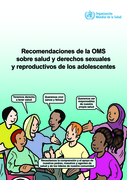
En este documento se ofrece, en un formato de fácil consulta, el panorama general de las cuestiones relativas a la salud y los derechos sexuales y reproductivos que pueden afectar a los derechos humanos, la salud y el bienestar de los adolescentes (de edades comprendidas entre los 10 y los 19 años
...
) y las directrices pertinentes de la Organización Mundial de la Salud (OMS) para abordar dichas cuestiones. Este documento permite acceder al amplio conjunto de directrices de la OMS al respecto y constituye un útil recurso para la labor de promoción, formulación de políticas, investigación y diseño de programas y proyectos. Tiene por finalidad apoyar la aplicación de la Estrategia Mundial para la Salud de la Mujer, el Niño y el Adolescente 2016-2030 (1) y está armonizado con las medidas mundiales aceleradas en favor de la salud de los adolescentes (AA HA!) de la OMS y el marco operativo de la OMS sobre salud sexual y su relación con la salud reproductiva (2, 3).
more
Se calcula que en 2015 había en el mundo 17,8 millones de mujeres de 18 años o mayores infectadas por el VIH, cifra que equivale al 51% de los adultos que viven con VIH. Las adolescentes y las jóvenes se ven especialmente afectadas; en 2015 constituían el 60% de los individuos entre 15 a 24 año
...
s de edad que vivían con el VIH, representando también el 58% de las infecciones por el VIH de adquisición reciente en los jóvenes de ese grupo de edad. En muchos países las mujeres que viven con el VIH carecen de acceso equitativo a servicios de salud de buena calidad, y enfrentan muchas formas de estigma y discriminación que se entrecruzan. Más aun, estas mujeres son desproporcionadamente vulnerables a la violencia, en particular las violaciones de sus derechos sexuales y reproductivos.
more
Estima-se que 17,8 milhões de mulheres em todo o mundo com 18 anos ou mais viviam com o VIH em 2015, o equivalente a 51% dos adultos que viviam com o VIH. As raparigas adolescentes e as mulheres jovens são particularmente afectadas; em 2015 representavam 60 por cento dos indivíduos com idades com
...
preendidas entre os 15-24 anos que viviam com o VIH, e 58 por cento das infecções por VIH recentemente adquiridas entre a população jovem deste grupo etário. Em muitos países, as mulheres que vivem com o VIH não têm acesso equitativo a serviços de saúde de boa qualidade e enfrentam muitas formas de estigma e discriminação entrecruzadas. Além disso, estas mulheres são desproporcionadamente vulneráveis à violência, incluindo as violações dos seus direitos sexuais e reprodutivos.
more
Whole-genome sequencing (WGS) provides a vast amount of information and the highest possible resolution for pathogen subtyping. The application of WGS for global surveillance can provide information on the early emergence and spread of AMR and further inform timely policy development on AMR control.
...
Sequencing data emanating from AMR surveillance may provide key information to guide the development of rapid diagnostic tools for better and more rapid characterization of AMR, and thus complement phenotypic methods. This document addresses the applications of WGS for AMR surveillance, including the benefits and limitations of current WGS technologies
more
Conflict, climate crisis and COVID-19 pose great threats to the health of women and children.
AGOSTO – DICIEMBRE 2020
La evolución de la pandemia COVID-19 desde el mes de marzo que se reportó el primer caso ha impactado muy fuertemente al sistema de salud pública y privada del país debido principalmente al número de casos y personas fallecidas.
The publication provides an overview and analysis of international instruments that set standards related to the use of antimicrobials across the human, animal and plant sectors, and their release into the environment. The purpose of the document is to identify existing instruments and standards in
...
order to guide both their implementation and to inform discussions and direction for future international instruments related to antimicrobial use.
more
The WHO Guidelines on physical activity and sedentary behaviour provide evidence-based public health recommendations for children, adolescents, adults and older adults on the amount of physical activity (frequency, intensity and duration) required to offer significant health benefits and mitigate he
...
alth risks. For the first time, recommendations are provided on the associations between sedentary behaviour and health outcomes, as well as for subpopulations, such as pregnant and postpartum women, and people living with chronic conditions or disability.
more
