
Filter
2759
Text search:
tuberculosis
burden
Featured
245
771
Language
2622
61
54
47
18
16
15
11
5
3
3
2
2
2
1
1
1
1
1
1
1
1
1
1
1
1
1
1
1
1
1
Document type
1733
471
263
94
85
43
36
19
6
5
1
Countries
121
115
90
87
82
64
61
55
51
51
48
47
44
43
43
40
40
39
38
38
33
33
31
30
28
27
25
19
16
16
16
15
15
14
11
11
10
10
10
9
9
9
8
8
7
6
6
6
6
6
6
6
6
5
5
5
5
5
4
4
4
4
4
4
4
4
3
3
3
3
3
3
3
3
2
2
2
2
2
2
2
2
2
2
2
2
1
1
1
1
1
1
1
1
1
1
1
1
1
1
1
1
1
1
1
1
1
1
1
1
1
1
1
Authors & Publishers
313
191
160
114
106
74
46
46
45
35
26
24
22
20
19
16
15
15
15
15
14
14
13
13
13
13
12
12
12
12
11
11
11
11
10
9
9
9
9
9
9
8
8
8
8
8
8
8
7
7
7
7
7
7
7
7
7
7
7
7
7
7
7
7
6
6
6
6
6
6
6
6
6
6
6
5
5
5
5
5
5
5
5
5
5
5
5
5
5
5
5
5
5
5
5
4
4
4
4
4
4
4
4
4
4
4
4
4
4
4
4
4
4
4
4
4
4
4
4
4
4
4
4
4
4
4
4
4
4
4
4
4
3
3
3
3
3
3
3
3
3
3
3
3
3
3
3
3
3
3
3
3
3
3
3
3
3
3
3
3
3
3
3
3
3
3
3
3
3
3
3
3
3
3
3
3
3
3
3
3
3
3
3
3
3
3
3
3
3
3
2
2
2
2
2
2
2
2
2
2
2
2
2
2
2
2
2
2
2
2
2
2
2
2
2
2
2
2
2
2
2
2
2
2
2
2
2
2
2
2
2
2
2
2
2
2
2
2
2
2
2
2
2
2
2
2
2
2
2
2
2
2
2
2
2
2
2
2
2
2
2
2
2
2
2
2
2
2
2
2
2
2
2
2
2
2
2
2
2
2
2
2
2
2
2
2
2
2
2
2
2
2
2
2
2
2
2
2
2
2
2
2
2
2
2
2
2
2
2
2
2
2
2
2
2
2
2
2
2
2
2
2
2
2
2
2
2
2
2
2
2
2
2
2
2
2
2
2
2
2
2
2
2
2
2
2
2
2
2
2
2
2
2
2
2
2
2
2
2
2
2
2
1
1
1
1
1
1
1
1
1
1
1
1
1
1
1
1
1
1
1
1
1
1
1
1
1
1
1
1
1
1
1
1
1
1
1
1
1
1
1
1
1
1
1
1
1
1
1
1
1
1
1
1
1
1
1
1
1
1
1
1
1
1
1
1
1
1
1
1
1
1
1
1
1
1
1
1
1
1
1
1
1
1
1
1
1
1
1
1
1
1
1
1
1
1
1
1
1
1
1
1
1
1
1
1
1
1
1
1
1
1
1
1
1
1
1
1
1
1
1
1
1
1
1
1
1
1
1
1
1
1
1
1
1
1
1
1
1
1
1
1
1
1
1
1
1
1
1
1
1
1
1
1
1
1
1
1
1
1
1
1
1
1
1
1
1
1
1
1
1
1
1
1
1
1
1
1
1
1
1
1
1
1
1
1
1
1
1
1
1
1
1
1
1
1
1
1
1
1
1
1
1
1
1
1
1
1
1
1
1
1
1
1
1
1
1
1
1
1
1
1
1
1
1
1
1
1
1
1
1
1
1
1
1
1
1
1
1
1
1
1
1
1
1
1
1
1
1
1
1
1
1
1
1
1
1
1
1
1
1
1
1
1
1
1
1
1
1
1
1
1
1
1
1
1
1
1
1
1
1
1
1
1
1
1
1
1
1
1
1
1
1
1
1
1
1
1
1
1
1
1
1
1
1
1
1
1
1
1
1
1
1
1
1
1
1
1
1
1
1
1
1
1
1
1
1
1
1
1
1
1
1
1
1
1
1
1
1
1
1
1
1
1
1
1
1
1
1
1
1
1
1
1
1
1
1
1
1
1
1
1
1
1
1
1
1
1
1
1
1
1
1
1
1
1
1
1
1
1
1
1
1
1
1
1
1
1
1
1
1
1
1
1
1
1
1
1
1
1
1
1
1
1
1
1
1
1
1
1
1
1
1
1
1
1
1
1
1
1
1
1
1
1
1
1
1
1
1
1
1
1
1
1
1
1
1
1
1
1
1
1
1
1
1
1
1
1
1
1
1
1
1
1
1
1
1
1
1
1
1
1
1
1
1
1
1
1
1
1
1
1
1
1
1
1
1
1
1
1
1
1
1
1
1
1
1
1
1
1
1
1
1
1
1
1
1
1
1
1
1
1
1
1
1
1
1
1
1
1
1
1
1
1
1
1
1
1
1
1
1
1
1
1
1
1
1
1
1
1
1
1
1
1
1
1
1
1
1
1
1
1
1
1
1
1
1
1
1
1
1
1
1
1
1
1
1
1
1
1
1
1
1
1
1
1
1
1
1
1
1
1
1
1
1
1
1
1
1
1
1
1
1
1
1
1
1
1
1
1
1
1
1
1
1
1
1
1
1
1
1
1
1
1
1
1
1
1
1
1
1
1
1
1
1
1
1
1
1
1
1
1
1
1
1
1
1
1
1
1
1
1
1
1
1
1
1
1
1
1
1
1
1
1
1
1
1
1
1
1
1
1
1
1
1
1
1
1
1
1
1
1
1
1
1
1
1
1
1
1
1
1
1
1
1
1
1
1
1
1
1
1
1
1
1
1
1
1
1
1
1
1
1
1
1
1
1
1
1
1
1
1
1
1
1
1
1
1
1
1
1
1
1
1
1
1
1
1
1
1
1
1
1
1
1
1
1
1
1
1
1
1
1
1
1
1
1
1
1
1
1
1
1
1
1
1
1
1
1
1
1
1
1
1
1
1
1
1
1
1
1
1
1
1
1
1
1
1
1
1
1
1
1
1
1
1
1
1
1
1
1
1
1
1
1
1
1
1
1
1
1
1
1
1
1
1
1
1
1
1
1
1
1
1
1
1
1
1
1
1
1
1
1
1
1
1
1
1
1
1
1
1
1
1
1
1
1
1
1
1
1
1
1
1
1
1
1
1
1
1
1
1
1
1
1
1
1
1
1
1
1
1
1
1
1
1
1
1
1
1
1
1
1
1
1
1
1
1
1
1
1
1
1
1
1
1
1
1
1
1
1
1
1
1
1
1
1
1
1
1
1
1
1
1
1
1
1
1
1
1
1
1
1
1
1
1
1
1
1
1
1
1
1
1
1
1
1
1
1
1
1
1
1
1
1
1
1
1
1
1
1
1
1
1
1
1
1
1
1
1
1
1
1
1
1
1
1
1
1
1
1
1
1
1
1
1
1
1
1
1
1
1
1
1
1
1
1
1
1
1
1
1
1
1
1
1
1
1
1
1
1
1
1
1
1
1
1
1
1
1
1
1
1
1
1
1
1
1
1
1
1
1
1
1
1
1
1
1
1
1
1
1
1
1
1
1
1
1
1
1
1
1
1
1
1
1
1
1
1
1
1
1
1
1
1
1
1
1
1
1
1
1
1
1
1
1
1
1
1
1
1
1
1
1
1
1
1
1
1
1
1
1
1
1
1
1
1
1
1
1
1
1
1
1
1
1
1
1
1
1
1
1
1
1
1
1
1
1
1
1
1
1
1
1
1
1
1
1
1
1
1
1
1
1
1
1
1
1
1
1
1
1
1
1
1
1
1
1
1
1
1
1
1
1
1
1
1
1
1
1
1
1
1
1
1
1
1
1
1
1
1
1
1
1
1
1
1
1
1
1
1
1
1
1
1
1
1
1
1
1
1
1
1
1
1
1
1
1
1
1
1
1
1
1
1
1
1
1
1
1
1
1
1
1
1
1
1
1
1
1
1
1
1
1
1
1
1
1
1
1
1
1
1
1
1
1
1
1
1
1
1
1
1
1
1
1
1
1
1
1
1
1
1
1
1
1
1
1
1
1
1
1
1
1
1
1
1
1
1
1
1
1
1
1
1
1
1
1
1
1
1
1
1
1
1
1
1
1
1
1
1
1
1
1
1
1
1
1
1
1
1
1
1
1
1
1
1
1
1
1
1
1
1
1
1
1
1
1
1
1
1
1
1
1
1
1
1
1
1
1
1
1
1
1
1
1
1
1
1
1
1
1
1
1
1
1
1
1
1
1
1
1
1
1
1
1
1
1
1
1
1
1
1
1
1
1
1
1
1
1
1
1
1
1
1
1
1
1
1
1
1
1
1
1
1
1
1
1
1
1
1
1
1
1
1
1
1
1
1
1
1
1
1
1
1
1
1
1
1
1
1
1
1
1
1
1
1
1
1
1
1
1
1
1
1
1
1
1
1
1
1
1
1
1
1
1
1
1
1
1
1
1
1
1
1
1
1
1
1
1
1
1
1
1
1
1
1
1
1
1
1
1
1
1
1
1
1
1
1
1
1
1
1
1
1
1
1
1
1
1
1
1
1
1
1
1
1
1
1
1
1
1
1
1
1
1
1
1
1
1
1
1
1
1
1
1
1
1
1
1
1
1
1
1
1
1
1
1
1
1
1
1
1
1
1
1
1
1
1
1
1
1
1
1
1
1
1
1
1
1
1
1
1
1
1
1
1
1
1
1
1
1
1
1
1
1
1
1
1
1
1
1
1
1
1
1
1
1
1
1
1
1
1
1
1
1
1
1
1
1
1
1
1
1
1
1
1
1
1
1
1
1
1
1
1
1
1
1
1
1
1
1
1
1
1
1
1
1
1
1
1
1
1
1
1
1
1
1
1
1
1
1
1
1
1
1
1
1
1
1
1
1
1
1
1
1
1
1
1
1
1
1
1
1
1
1
1
1
1
1
1
1
1
1
1
1
1
1
1
1
1
1
1
1
1
1
1
1
1
1
1
1
1
1
1
1
1
1
1
1
1
1
1
1
1
1
1
1
1
1
1
1
1
1
1
1
1
1
1
1
1
1
1
1
1
1
1
1
1
1
1
1
1
1
1
1
1
1
1
1
1
1
1
1
1
1
1
1
1
1
1
1
1
1
1
1
1
1
1
1
1
1
1
1
1
1
1
1
1
1
1
1
1
1
1
1
1
1
1
1
1
1
1
1
1
1
1
1
1
1
1
1
1
1
1
1
1
1
1
1
1
1
1
1
1
1
1
1
1
1
1
1
1
1
1
1
1
1
1
1
1
1
1
1
1
1
1
1
1
1
1
1
1
1
1
1
1
1
1
1
1
1
1
1
1
1
1
1
1
1
1
1
1
1
1
1
1
1
1
1
1
1
1
1
1
1
1
1
1
1
1
1
1
1
1
1
1
1
1
1
1
1
1
1
1
1
1
1
1
1
1
1
1
1
1
1
1
1
1
1
1
1
1
1
1
1
1
1
1
1
1
1
1
1
1
1
1
1
1
1
1
1
1
1
1
1
1
1
1
1
1
1
1
1
1
1
1
1
1
1
1
1
1
1
1
1
1
1
1
1
1
1
1
1
1
1
1
1
1
1
1
1
1
1
1
1
1
1
1
1
1
1
1
1
1
1
1
1
1
1
1
1
1
1
1
1
1
1
1
1
1
1
1
1
1
1
1
1
1
1
1
1
1
1
1
1
1
1
1
1
1
1
1
1
1
1
1
1
1
1
1
1
1
1
1
1
1
1
1
1
1
1
1
1
1
1
1
1
1
1
1
1
1
1
1
1
1
1
1
1
1
1
1
1
1
1
1
1
1
1
1
1
1
1
1
1
1
1
1
1
1
1
1
1
1
1
1
1
1
1
1
1
1
1
1
1
1
1
1
1
1
1
1
1
1
1
1
1
1
1
1
1
1
1
1
1
1
1
1
1
1
1
1
1
1
1
1
1
1
1
1
1
1
1
1
1
1
1
1
1
1
1
1
1
1
1
1
1
1
1
1
1
1
1
1
1
1
1
1
1
1
1
1
1
1
1
1
1
1
1
1
1
1
1
1
1
1
1
1
1
1
1
1
1
1
1
1
1
1
1
1
1
1
1
1
1
1
1
1
1
1
1
1
1
1
1
1
1
1
1
1
1
1
1
1
1
1
1
1
1
1
1
1
1
1
1
Publication Years
599
1907
245
7
1
Category
1121
222
168
73
55
24
21
1
Toolboxes
555
412
120
118
72
68
57
51
49
47
47
37
34
32
30
24
21
18
10
3
2
2
2
1
1
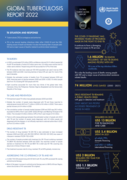
Global Tuberculosis Report 2022 Factsheet
recommended
The World Health Organization Global TB Report provides a comprehensive and up-to-date assessment of the TB epidemic, and progress in the response, at global, regional and country levels.
The 2022 edition features data on disease trends and the response to the epidemic from 215 countries and area
...
s, including all 194 World Health Organization (WHO) Member States. It provides a comprehensive and up-to-date assessment of the TB epidemic, progress in the response at global, regional and country levels, as well as on the impact of the COVID-19 pandemic on TB services.
TB remains one of the top infectious killers in the world. This year’s report presents data on an increase in the number of people falling ill with TB and drug resistant TB for the first time in many years. Increases were also reported on the number of TB deaths, highlighting the severe impact of the COVID-19 pandemic and other crises on the TB response that has reversed years of progress. It also presents the status of progress towards targets set at the first-ever United Nations General Assembly high-level meeting on TB in 2018 as well as the targets of the WHO End TB Strategy and the Sustainable Development Goals.
more
Global tuberculosis report 2022
recommended
The WHO Global Tuberculosis Report 2022 provides a comprehensive and up-to-date assessment of the TB epidemic, and of progress in prevention, diagnosis and treatment of the disease, at global, regional and country levels. This is done in the context
...
of global TB commitments, strategies and targets.
The 2022 edition of the report is as usual, based primarily on data gathered by WHO from national ministries of health in annual rounds of data collection. In 2022, 202 countries and territories with more than 99% of the world’s population and TB cases reported data
more
Three classess of tests are now recommended in the latest consolidated guideles on tests for tuberculosis infection. It includes for the first-time a new class of Mycobacterium tuberculosis antigen-
...
based skin tests (TBSTs), and the two existing classes of tests: the tuberculin skin test (TST) and the interferon-gamma release assays (IGRAs).
IGRAs and TBSTs use Mycobacterium tuberculosis complex specific antigens and represent a significant advancement to TST which has been used for over half a century.
more
The Practical manual on laboratory strengthening, 2022 update provides practical guidance on implementation of WHO recommendations and best practices for TB laboratory strengthening. It is an updated version of the GLI Practical Guide to Laboratory Strengthening published in 2017 and provides the la
...
test practical guidance on use of newly recommended diagnostics as well as guidance in key technical areas, including quality assurance and quality management systems, specimen collection and registration, procurement and supply-chain management, diagnostic connectivity, biosafety, data management, human resources, strategic planning, and model algorithms. The key changes are:
inclusion of recent or updated WHO recommendations for tests to diagnose TB and detect drug resistance;
alignment with the latest WHO critical concentrations for phenotypic drug-susceptibility testing (DST) and the new definitions of pre-XDR-TB and XDR-TB;
updated information on building quality-assured TB testing and management capacity using the Stepwise Laboratory Quality Improvement Process Towards Accreditation (SLIPTA) approach (Score-TB package1);
updated information on assessing, analysing and optimising TB diagnostic networks; and
updated information on the use of next-generation sequencing (NGS) to detect mutations associated with drug resistance for surveillance purposes.
The document also provides references to resources and tools relevant for work on laboratory strengthening.
more
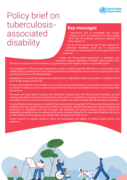
People affected by impairments and disabilities associated with TB are even more likely to belong to marginalized segments of society and are more likely to have their human rights unprotected. The challenges faced by people affected by TB include the consequences of impairment and disability associ
...
ated with the disease, its treatment as well as with the stigma and discrimination applied to people affected by TB. There is now compelling evidence that the disease and its treatment affect quality of life and life expectancy even after successful treatment.
The WHO Global Tuberculosis Programme has produced the first policy brief on TB-associated disability, building on the increasing evidence in recent years on the unaddressed needs of people with TB who experience impairment and disability while on TB treatment and after completing TB treatment.
more
The WHO Global tuberculosis report 2024 provides a comprehensive and up-to-date assessment of the TB epidemic, and of progress in prevention, diagnosis and treatment of the disease, at global, regional and country levels. This is done in the context
...
of global TB commitments, strategies and targets.
more
Malawi is a landlocked country with a surface area of 118,484 km2. Administratively, the country is divided into three regions, namely the Northern, Central and Southern regions. The country has 28 districts, which are further divided into traditional authorities (TA) ruled by chiefs. The TAs are su
...
b-divided into villages, which form the smallest administrative units. The Village Development Committees (VDCs) under the TAs are responsible for development activities. Politically, each district is divided into constituencies that are represented by Members of Parliament (MPs) in the National Assembly for purposes of legislations. Constituencies are further divided into wards which are represented by a ward councillor at district assembly.
more
PLOS ONE 10(12): e0144040. doi:10.1371/journal.pone.0144040
Journal of Tuberculosis Research, 2016, 4, 1-8
Published Online March 2016 in SciRes. http://www.scirp.org/journal/jtr
http://dx.doi.org/10.4236/jtr.2016.41001
Diagnosis and Treatment Outcomes of Tuberculosis in Relation to Gender and HIV Status in South Benin
Journal of Tuberculosis Research, 2017, 5, 189-200
Background: In Benin, little is known about the influence of both gender and
HIV-status on diagnostic patterns and treatment outcomes of Tuberculosis
...
(TB) patients. Objective: To assess whether differences in gender and HIV
status affect diagnostic patterns and treatment outcomes of TB patients. Methods:
Retrospective cohort study of patients registered in 2013 and 2014 in
the three largest TB Basic Management Units in south Benin. Results: Of 2694
registered TB patients, 1700 (63.1%) were male. Case notification rates were
higher in males compared with females (96 vs 53/100,000 inhabitants). The
male to female ratio was 1:1 in HIV positive patients, but was 2:1 among HIV
negative cases. In HIV-positive patients, there were no differences in TB types
between men and women. In HIV-negative patients, there were significantly
higher proportions of females with clinically diagnosed pulmonary TB (p =
0.04) and extrapulmonary TB (p < 0.001). Retreatment TB was 4.65 times
higher amongst males compared with females. For New bacteriologically confirmed
pulmonary TB, no differences were observed in treatment outcomes
between genders in the HIV positive group; but significantly more unfavorable
outcomes were reported among HIV negative males, with higher rates of
failure (p < 0.001) and loss-to-follow up (p = 0.02). Conclusion: The study
has shown that overall TB notification rates were higher in males than in females
in south Benin, with more females co-infected with HIV. Unfavorable outcomes were more common in HIV-negative males.
more
World's largest Science, Technology & Medicine Open Access book publisher
Chapter 7 from the book People's Movements in the 21st Century - Risks, Challenges and Benefits

Epidemiology of Primary Multidrug-Resistant Tuberculosis, Vladimir Region, Russia
J. V. Ershova, G. V. Volchenkov, D. A. Kaminski, et al.
Centers for Disease Control and Prevention
(2015)
C_CDC
Emerging Infectious Diseases; Vol. 21, No. 11, November 2015
UGANDA NATIONAL TUBERCULOSIS AND LEPROSY CONTROL PROGRAMME
5 May 2021
This Information Note is intended to assist national TB programmes and health personnel worldwide to maintain essential tuberculosis (TB) services during the COVID-19 pandemic and in the recovery phase. It is important that recent progre
...
ss made in TB prevention and care is not reversed by COVID-19. The WHO Global TB Programme, along with WHO regional and country offices, developed this note in response to questions received from Member States and other partners since the start of the pandemic. The note includes references to other published WHO information products relevant to TB practitioners. WHO continues to monitor the situation closely for any changes that may influence this note and will issue updates should any factors change.
more
This Framework offers a coherent approach for eliminating tuberculosis (TB) in low-incidence countries. It is designed to guide national policy-makers and those responsible for technical aspects of the national TB response in accelerating efforts to
...
wards elimination. The document will also be informative for public health surveillance officers, practitioners and nongovernmental and civil society partners working on natioal TB care and prevention and serving the populations most vulnerable to TB.
more
