
Filter
270
Text search:
indonesian
Featured
22
76
Language
Document type
188
30
24
13
4
3
2
2
2
1
1
Countries / Regions
100
11
9
8
6
6
5
4
3
3
3
3
3
3
3
3
3
2
2
2
2
2
2
2
2
2
2
2
2
1
1
1
1
1
1
1
1
1
1
1
1
1
1
1
1
1
1
1
1
1
1
1
1
1
1
1
1
1
1
1
1
1
1
1
1
1
Authors & Publishers
Publication Years
Category
117
20
16
11
10
7
2
Toolboxes
20
17
16
14
14
13
12
8
7
6
6
5
5
5
3
3
2
2
2
1
1
1
Growing evidence indicates that large proportions of children around the world experience physical, sexual and emotional violence every year, with enormous implications for human rights, public health and economic and social development.1 Over the last five years, national governments and Together f
...
Q3: What approaches are available to enable non-specialized health care providers to identify children with intellectual disabilities, including intellectual disabilities due to specific causes?
Asia-Pacific Human Development Report
Reporting on Climate Change and Sustainable Development in Asia and the Pacific: A Handbook for Journalists.
UNESCO Series on Journalism education.
It explores the essential aspects of climate change, including its injustices to vulnerable communities, especially women and girls and least develope
...
No se puede subestimar la importancia de crecer en un ambiente familiar nutritivo y de apoyo. Criar a niños en un ambiente cálido y amoroso los sitúa en una trayectoria de desarrollo positiva para el éxito en su vida posterior. Por el contrario, los niños criados con parentalidad inconsistente
...
A guide to promote health systems strengthening to achieve universal health coverage.
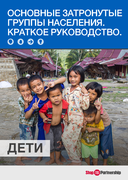
Очень часто дети это уязвимая под-группа внутри уже уязвимых групп населения. Поэтому необходимо, чтобы политики, гражданское общество и медицинские работники без
...
A new report by the world’s largest humanitarian network warns that the number of people needing humanitarian assistance every year as a result of climate-related disasters could double by 2050. It estimates that the number of people in need of humanitarian assistance as a result of storms, droug
...
Public Health Factsheet
Accessed: 29.09.2019
Defending Rights
Breaking Barriers
Reaching People with HIV Services
Global Aids Update 2019
Background paper prepared for theEducation for All Global Monitoring Report 2012 Youth and skills: Putting education to work
2012/ED/EFA/MRT/PI/15
Technical Brief
Training Manual
Guidance for Asia Pacific National Societies.
This document provides guidance for Asia Pacific National Societies on how to include migrants and displaced people in COVID-19 preparedness and response activities.
A brief guide for those using social media in humanitarian organizations

Date issued: 14 April 2020
The Global Fund is committed to ensuring that input from those closest to and living with HIV, tuberculosis and malaria are included in every funding request to the Global Fund. Their input is critical to ensuring that programs are effective and designed to help those m
...
21 August 2020
This guidance provides specific considerations for the use of non-medical masks, also known as fabric masks, by children as a means for source control in the context of the current COVID-19 pandemic. It also advises on the use of medical masks for children under certain conditions.
