
Filter
853
Text search:
disruptions
Featured
81
123
Language
Document type
326
249
109
73
39
24
16
10
3
2
1
1
Countries
78
33
23
22
20
19
18
18
16
16
15
14
14
13
12
12
12
12
11
11
10
9
9
8
8
8
7
7
7
6
6
6
6
6
6
6
5
5
5
5
5
4
4
4
4
3
3
3
3
3
3
3
3
2
2
2
2
2
2
2
2
1
1
1
1
1
1
1
1
1
1
1
1
1
1
1
1
1
1
1
1
1
1
1
1
1
1
Authors & Publishers
Publication Years
Category
260
39
36
34
33
10
1
1
Toolboxes
257
78
71
65
57
31
27
21
21
20
18
18
14
11
11
7
4
4
3
3
2
2
1
1
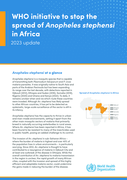
Anopheles stephensi is a mosquito species that is capable of transmitting both Plasmodium falciparum and P. vivax malaria parasites. Unlike the other main mosquito vectors of malaria, it thrives in urban and man-made environments. Originally native to parts of South Asia and the Arabian Peninsula, A
...
The Advancing Climate-Resilient Education Technical Guidance builds on the USAID 2022–2030 Climate Strategy and the 2018 USAID Education Policy to support USAID Missions and partners who seek to integrate climate action and awareness into education programs and are committed to achieving climate-r
...
Significant progress has been made in the eradication of three priority diseases in the African Region, as a result of extensive collaboration between the Regional Office, WHO country offices and countries. For example, in August 2020, the region was certified free of wild poliovirus. In the area of
...
Unmet mental health needs in the Region of the Americas are a leading source of morbidity and mortality, which result in tremendous health, social, and economic consequences. The COVID-19 pandemic has exacerbated the mental health crisis in the Region, necessitating urgent action at the highest leve
...
The "Assessing National Capacity for the Prevention and Control of Noncommunicable Diseases: Report of the 2021 Global Survey" by WHO examines the global state of readiness and infrastructure for managing noncommunicable diseases (NCDs) across countries. Based on the 2021 survey, it analyzes nationa
...
Women, girls and marginalized groups who are largely dependent on natural resources for livelihoods are among the hardest hit by extreme weather patterns. These weather patterns limit their access to food, water, shelter, education and access to essential health services, including those that addres
...
PEPFAR Malawi’s Country Operational Plan 2022 (COP22) embodies joint priorities from national and subnational dialogues building on the 2020-2025 National Strategic Plan for HIV/AIDS. The interagency team has developed a person-centered, district-tailored and Malawi Population-Based HIV Impact Ass
...
Three full years have passed since the launch of the road
map for neglected tropical diseases 2021–2030. Data on
progress begin to provide insights into the prospects of
attaining the 2030 targets.
Step-by-step risk management guidance for drinking-water supplies in small communities.

A Guide for UNICEF Staff
The present book deals not only with emergency response, but also with measures designed to reduce the impact of disasters on environmental health infrastructure, such as water supply and sanitation facilities. It also aims to strengthen the ability of people to withstand the disruption of their acc
...
Specific action sheets offer useful guidance on mental health and psychosocial support and cover the following areas coordination assessment monitoring and evaluation protection and human rights standards human resources community mobilisation and support health services education dissemination of i
...
2nd edition. Essential guideline for humanitarian assistance
In an effort to improve the capabilities and accountability of humanitarian and economic practitioners, the SEEP (Small Enterprise Education and Promotion) Network's Minimum Economic Recovery Standards focus on minimum industry standards for facilitating economic recovery in crisis situations.
Th
...
