
Filter
288
Text search:
Zoonoses
Featured
18
37
Language
Document type
101
82
48
23
21
5
2
2
2
1
1
Countries / Regions
31
14
6
4
4
4
4
3
3
3
3
3
3
3
3
3
2
2
2
2
2
2
2
2
2
1
1
1
1
1
1
1
1
1
1
1
1
1
1
1
1
1
1
1
1
1
1
Authors & Publishers
Publication Years
Category
62
27
15
11
8
4
4
Toolboxes
76
40
37
33
26
12
12
5
4
4
4
1
1
1
A rapid review of evidence on the managing the risk of disease emergence in the wildlife trade - World Animal Health Organization (OIE)
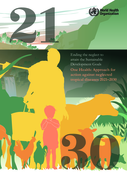
This companion document to Ending the neglect to attain the Sustainable Development Goals: a road map for neglected tropical diseases 2021-2030 ("the road map") aims to support a range of stakeholders - including countries in which neglected tropical diseases (NTDs) are endemic, international organi
...
Cette publication présente le Programme sur la santé, l’environnement et les changements climatiques pour les Amériques 2021-2030. Le Programme est un appel à l’action au secteur de la santé pour qu’il prenne l’initiative d’agir sur les déterminants environnementaux de la santé dans
...
Esta publicação apresenta a Agenda para as Américas sobre Saúde, Meio Ambiente e Mudança Climática 2021–2030 (a Agenda). Esta Agenda é um apelo ao setor da saúde para que se posicione na vanguarda da abordagem aos determinantes ambientais da saúde nas Américas. A Organização Pan-Americ
...
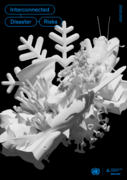
Interconnected Disaster Risks is a new science-based report for the general public from United Nations University – Institute for Environment and Human Security. It was first published in 2021, and is set to become an annual report.
Some observers have described the coronavirus pandemic as an 'Anthropocene disease,' thereby highlighting its connection with this new ecological era that is characterised by the considerable pressure human activities are exerting on ecosystems and the consequences on public health, society and the
...
By almost any measure, human health is better now than at any time in history. Life expectancy has soared from 47 years in 1950–1955, to 69 years in 2005–2010, and death rates in children younger than 5 years of age have decreased substantially, from 214 per thousand live births in 1950–1955,
...

The purpose of this publication is to to provide a practical, stepwise approach to the implementation of the national action plans on AMR within the human health sector; and to provide a process and collation of existing WHO tools to prioritize, cost, implement, monitor and evaluate national action
...
Within an Australian context, the medium to long-term health impacts of climate change are likely to be wide, varied and amplify many existing disorders and health inequities. How the health system responds to these challenges will be best considered in the context of existing health facilities and
...

While “sustainability” has become a central aspect of social action and responsibility around the world, its complex and multi-di-
mensional nature requires further explanation.

The 2021 WHO health and climate change global survey report provides a valuable snapshot of the overall progress governments have made in addressing the health risks of climate change. The findings on key health and climate change indicators aim to empower policy makers to: make informed decisions o
...
Taking a multisectoral, One Health approach is necessary to address complex health threats at the human-animal-environment interface, such as rabies, zoonotic influenza, anthrax, and Rift Valley fever. Such zoonotic diseases continue to have major impacts on health, livelihoods, and economies, and c
...
This paper explores access to water, sanitation, and health in pastoral communities in northern Tanzania. It argues that the concept of gender, used on its own, is not enough to understand the complexities of sanitation, hygiene, water, and health. It explores pastoralists’ views and perspectives
...
Wet markets have been implicated in multiple zoonotic outbreaks, including COVID-19. They are also a conduit for legal and illegal trade in wildlife, which threatens thousands of species. Yet wet markets supply food to millions of people around the world, and differ drastically in their physical com
...
Climate change, increasing population densities, and intensified globalisation in trade, travel and migration are among the most important factors shaping the 21st century. Each impacts upon population health and the risk of infectious disease, particularly those originating at the human-animal-envi
...
Hendra virus (HeV) continues to pose a serious public health concern as spillover events occur sporadically. Terminally ill horses can exhibit a range of clinical signs including frothy nasal discharge, ataxia or forebrain signs. Early signs, if detected, can include depression, inappetence, colic o
...
There is a broad consensus nowadays that the Earth is warming up as a result of greenhouse gas emissions caused by anthropogenic activities. It is also clear that current trends in the fields of energy, development and population growth will lead to continuous and ever more dramatic climate change.
...
