
Filter
610
Text search:
WHO,
UNFPA,
UNICEF,
et
al.
Featured
Recommendations
50
New Publications
201
Language
Document type
No document type
398
Studies & Reports
90
Guidelines
64
Manuals
22
Training Material
13
Strategic & Response Plan
12
Fact sheets
5
Situation Updates
3
Resource Platforms
1
Infographics
1
Online Courses
1
Countries / Regions
Sierra Leone
22
Ethiopia
21
Nigeria
19
Nepal
19
Myanmar / Burma
19
Liberia
18
Malawi
16
Kenya
15
Bangladesh
15
Global
15
Zambia
14
Tanzania
11
Uganda
9
Senegal
8
Zimbabwe
8
Congo, Democratic Republic of
7
Ghana
7
Haiti
7
Rwanda
7
Asia
7
Cambodia
6
India
5
Syria
5
Namibia
5
Latin America and the Carribbean
5
Africa
5
Russia
5
South Africa
4
Brazil
4
Ukraine
4
Lesotho
4
South–East Asia Region
4
Philippines
3
Somalia
3
Pakistan
3
South Sudan
3
Indonesia
3
Benin
3
Middle East and North Africa
3
Eastern Europe
3
Guinea
2
Afghanistan
2
Lebanon
2
Thailand
2
Papua New Guinea
2
Eswatini/ Swaziland
2
Mexico
2
Yemen
2
West and Central Africa
2
Western and Central Europe
2
Albania
2
Laos
2
Cameroon
1
Iraq
1
Jordan
1
Germany
1
Turkey
1
China
1
Malaysia
1
Mozambique
1
Central African Republic
1
Peru
1
Hungary
1
Colombia
1
Botswana
1
Bolivia
1
Sri Lanka
1
East and Southern Africa
1
Western Pacific Region
1
Eastern Europe and Central Asia
1
Paraguay
1
Venezuela
1
Poland
1
Southern Africa
1
Timor Leste/ East Timor
1
Romania
1
Moldova
1
Slovakia
1
Uzbekistan
1
Georgia
1
Vietnam
1
Turkmenistan
1
Japan
1
Authors & Publishers
Publication Years
Category
Countries
279
Women & Child Health
124
Clinical Guidelines
40
Key Resources
18
Public Health
13
Capacity Building
11
Pharmacy & Technologies
3
Toolboxes
HIV
79
COVID-19
34
Caregiver
27
Mental Health
22
Conflict
15
Global Health Education
15
Ebola
13
Disability
10
Health Financing Toolbox
10
Refugee
6
Pharmacy
5
Zika
4
Planetary Health
4
Natural Hazards
3
TB
3
AMR
3
Rapid Response
2
Polio
1
This document outlines why and how nurses and midwives are important, not only for individual health optimization but also to achieve the thematic priorities of For the Future. More specifically, it provides case studies to showcase the amazing work that nurses and midwives across the Region are doi
...

Review of International, Regional and National Policies and Legal Frameworks that Promote Migrants and Mobile Populations' Access to Health and Malaria Services in the Greater Mekong Subregion (Cambodia, Lao People's Democratic Republic, Myanmar, Thailand and Viet Nam)
Migrants and mobile popul ...
Migrants and mobile popul ...
This country snapshot provides an overview of national data relating to sexual and reproductive health and rights (SRHR) throughout the life course. Realization of SRHR requires provision of comprehensive, people-centred services, that address the different elements of SRHR, and which are supported
...
Guidelines on post-exposure prophylaxis for HIV and the use of co-trimoxazole prophylaxis for HIV-related infections among adults, adolescents, and children: recommendations for a public health approach : December 2014 supplement to the 2013 Consolidated guidelines on the use of antiretroviral drugs
...
A Systematic Review, Country Case Studies, and Recommendations for Integration into National Health Systems
Alliance Report
Participation of community health workers (CHWs) in the provision of primary health care has been experienced all over the world for several decades, and there is an amount
...
The well-being of children in sub-Saharan Africa is under siege from all directions since the advent of the COVID-19 pandemic. The region is now suffering its first-ever economic recession, pushing about 50 million people into extreme poverty, a majority of whom are children.
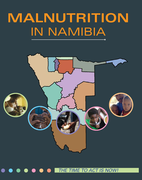
This report details the nutrition situation in Namibia. It provides information on what needs to be done! The situation calls for a consorted action. Nutrition is everyone’s business.The establishment of the National Alliance for Improved Nutrition (NAFIN) is a positive response to this urgency. N
...
(Last Update: July 2022)
· Relevant interventions
· HIV country profiles
· Adolescents country profiles

The primary audience for the guideline is policy makers and health programme managers of MNCH and immunization programmes in ministries of health where decisions are made and policies created on the use and implementation of homebased records.
The guideline is also aimed at health providers
...
The primary audience for the guideline is health programme managers, including governmental and non-governmental organizations, and policy makers who are responsible for designing maternal, newborn and child health programmes, primarily in low-incom
...
