
Filter
532
Text search:
S.
Scott
Featured
Recommendations
58
New Publications
104
Language
Document type
No document type
288
Studies & Reports
125
Guidelines
70
Manuals
24
Strategic & Response Plan
9
Fact sheets
6
Training Material
5
Situation Updates
3
Infographics
2
Countries / Regions
Global
26
India
13
Africa
13
Kenya
11
Western and Central Europe
11
Russia
11
Lesotho
9
Ethiopia
8
Syria
8
Latin America and the Carribbean
8
Germany
6
South Africa
6
Eastern Europe
6
Liberia
5
Senegal
5
Congo, Democratic Republic of
5
Nepal
5
Malawi
5
Ukraine
5
Sierra Leone
4
Nigeria
4
Philippines
4
Zambia
4
Indonesia
4
Brazil
4
Yemen
4
Middle East and North Africa
4
Ghana
3
Uganda
3
Zimbabwe
3
Somalia
3
Tanzania
3
Myanmar / Burma
3
West and Central Africa
3
South–East Asia Region
3
Asia
3
Venezuela
3
Burkina Faso
2
USA
2
South Sudan
2
Chad
2
Rwanda
2
Eswatini/ Swaziland
2
Eastern Europe and Central Asia
2
Paraguay
2
Italy
2
Tajikistan
2
Guinea
1
Côte d’Ivoire / Ivory Coast
1
Saudi Arabia
1
Cameroon
1
Haiti
1
Iraq
1
Jordan
1
Afghanistan
1
Thailand
1
Bangladesh
1
Sudan
1
Central African Republic
1
Argentina
1
Peru
1
Colombia
1
Mexico
1
Chile
1
East and Southern Africa
1
Southern Africa
1
Laos
1
Canada
1
Vietnam
1
France
1
United Kingdom
1
Spain
1
Belarus
1
Authors & Publishers
Publication Years
Category
Countries
123
Public Health
42
Clinical Guidelines
42
Women & Child Health
32
Key Resources
16
Pharmacy & Technologies
3
Capacity Building
2
Toolboxes
Mental Health
100
Planetary Health
49
COVID-19
36
TB
25
AMR
25
Disability
24
Caregiver
23
NTDs
22
HIV
20
Rapid Response
15
Global Health Education
14
Ebola
9
Natural Hazards
7
NCDs
7
Refugee
6
Conflict
5
Zika
5
Specific Hazards
5
Social Ethics
3
Pharmacy
3
Health Financing Toolbox
3
Polio
2
Plos Current Outbreaks November 21, 2014
This document should be used in conjunction with the WHO checklist for influenza preparedness planning published by the World Health Organization in 2005. Available in English; Chinese; French
Lancet Glob Health 2015; 385: e387–95. Open Access
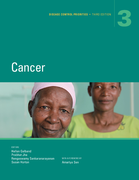
Cancer
recommended
This volume presents the complex patterns of cancer incidence and death around the world and evidence on effective and cost-effective ways to control cancers. The Disease Control Priorities Volume 3 evaluation of cancer will indicate where cancer treatment is ineffective and wasteful, and offer alte
...
Disease Control Priorities, 3rdEdition: Volume 4.
Mental, neurological, and substance use disorders are common, highly disabling, and associated with significant premature mortality. The impact of these disorders on the social and economic well-beingof individuals, families, and societies is large
...

Submission by the WHO Collaborating Centre on training and policy on opioid availability and WHO collaborating Centre for community participation in palliative care and long term care To the Indian Nursing Council for consideration to be included in the Undergraduate Nursing education curriculum
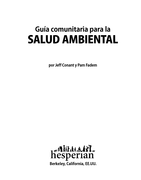
With hundreds of illustrations and clear instructions, A Community Guide to Environmental Health helps health promoters, development workers, environmental activists, and community leaders take charge of their environmental health in villages and cities alike. Also available in Arabic, Spanish, Chin
...
Автоматизированная технология амплификации нуклеиновых кислот в режиме реального времени для быстрого и одновременного выявления туберкулеза и устойчивости к р
...
These guidelines present evidence-based recommendations and best practice statements on use of medically important antimicrobials in food-producing animals, based on the WHO list of critically important antimicrobials for human medicine (WHO CIA List). These guidelines aim primarily to help preserve
...
Capacity Project Gender Research Brief | In Lesotho, as in many other countries, the HIV and AIDS care burden falls on the shoulders of women and girls in unpaid, invisible household and community work. This gender inequity in HRH needs to be addressed to ensure fair and sustainable responses to the
...
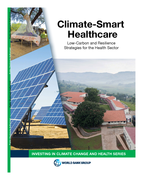
Climate change is damaging human health now and is projected to have a greater impact in the future. Low- and middle-income countries are seeing the worst effects as they are most vulnerable to climate shifts and least able to adapt given weak health systems and poor infrastructure. Low-carbon appro
...
