
Filter
1879
Filtered Results: 1879
Text search:
National
Tuberculosis
Centre,
Global
Fund
Featured
Recommendations
165
New Publications
554
Language
Document type
No document type
1251
Studies & Reports
284
Guidelines
162
Manuals
76
Strategic & Response Plan
64
Situation Updates
16
Training Material
11
Fact sheets
8
Resource Platforms
4
Infographics
3
Countries / Regions
India
85
Western and Central Europe
63
Kenya
55
Uganda
49
Global
48
Nigeria
45
Zambia
42
Nepal
40
Tanzania
40
South Africa
39
Malawi
39
Ethiopia
38
Eastern Europe
35
Rwanda
34
Bangladesh
33
Myanmar / Burma
33
Ghana
31
Africa
31
Namibia
29
Ukraine
29
Sierra Leone
27
Asia
22
Liberia
21
Lesotho
20
Cambodia
19
Latin America and the Carribbean
17
South–East Asia Region
16
Mozambique
14
Zimbabwe
13
Indonesia
13
Russia
12
South Sudan
10
Botswana
10
Senegal
9
East and Southern Africa
9
Albania
9
Congo, Democratic Republic of
8
Cameroon
8
Haiti
8
Moldova
8
Syria
7
Argentina
7
West and Central Africa
7
Tajikistan
7
Burkina Faso
6
Philippines
6
Pakistan
6
Eastern Europe and Central Asia
6
Georgia
6
Thailand
5
North Macedonia
5
Guinea
4
Sudan
4
Central African Republic
4
Eswatini/ Swaziland
4
Middle East and North Africa
4
Somalia
3
Jordan
3
Germany
3
Lebanon
3
Papua New Guinea
3
Benin
3
Colombia
3
Yemen
3
Western Pacific Region
3
Laos
3
Timor Leste/ East Timor
3
Mali
2
Morocco
2
Saudi Arabia
2
Chad
2
Brazil
2
Hungary
2
El Salvador
2
Madagascar
2
Armenia
2
Southern Africa
2
Romania
2
Vietnam
2
Turkmenistan
2
Iraq
1
Afghanistan
1
Gambia
1
China
1
Peru
1
Serbia
1
Burundi
1
Ecuador
1
Greece
1
Angola
1
Mexico
1
Sri Lanka
1
Paraguay
1
Bhutan
1
Poland
1
Mongolia
1
Bulgaria
1
Slovakia
1
Iran
1
Uzbekistan
1
Kyrgyzstan
1
North America
1
Uruguay
1
Jamaica
1
Denmark
1
Maldives
1
Tunisia
1
Norway
1
Portugal
1
Authors & Publishers
Publication Years
Category
Countries
781
Clinical Guidelines
143
Public Health
93
Women & Child Health
63
Key Resources
53
Pharmacy & Technologies
21
Capacity Building
19
Toolboxes
HIV
307
TB
289
AMR
88
COVID-19
75
Mental Health
53
Global Health Education
38
Conflict
34
Rapid Response
34
Caregiver
34
Planetary Health
33
Pharmacy
29
Health Financing Toolbox
27
Disability
25
Refugee
23
NTDs
22
Ebola
20
NCDs
16
Polio
13
Natural Hazards
11
Cholera
2
Specific Hazards
2
South Sudan
1
Social Ethics
1
This manual is designed primarily to assist managers of national malaria programmes and national reference laboratory responsible for quality assurance of malaria microscopy control. The information...
To understand the national situation, Ethiopia did a situation assessment, launched its first strategy in 2011, and took action to contain AMR, as detailed in the blue boxes found throughout this strategy. This updated version of the strategy was in...
Policy Note #3: Myanmar Health Systems in Transition Policy Notes Series
A network of basic health facilities has been established in each of the 330 townships, covering both rural and urban areas. For the vast majority of Myanmar’s people, particularly the 70% who reside in rural areas, the ...
A network of basic health facilities has been established in each of the 330 townships, covering both rural and urban areas. For the vast majority of Myanmar’s people, particularly the 70% who reside in rural areas, the ...
Antimicrobial resistant (AMR) organisms are increasing globally, threatening to render existing treatments ineffective against many infectious diseases. In Africa, AMR has already been documented to be a problem for HIV and the pathogens that cause malaria, ..., typhoid, cholera, meningitis, gonorrhea, and dysentery. Recognizing the urgent need for action, the World Health Assembly adopted the Global Action Plan on Antimicrobial Resistance in May 2015. In accordance with the Global Action Plan and to meet needs specific to Africa, Africa CDC will establish the Anti-Microbial Resistance Surveillance Network (AMRSNET). AMRSNET is a network of public health institutions and leaders from human and animal health sectors who will collaborate to measure, prevent, and mitigate harms from AMR organisms.
High salt consumption is an important determinant of high blood pressure and reducing it would improve health outcomes by lowering cardiovascular disease and therefore death rates. Reducing salt intake has been identified as one of the most effective public health measures and is one of the leading ...
The importance of robust mortality surveillance systems cannot be overstated in an era marked by increasing global health challenges where health threats loom large and population dynamics continue to evolve. Accurate and timely mortality data is es...
These consolidated guidelines on HIV testing services (HTS) bring together existing and new guidance on HTS across different settings and populations.
The World Health Organization (WHO) first released consolidated guidelines on HTS in 2015, in response to requests from Member States, ... programme managers and health workers for support to achieve the United Nations (UN) 90–90–90 global HIV targets – and specifically the first target of diagnosing 90% of all people with HIV. In 2016, based on new evidence, WHO released a supplement to address important new HIV testing approaches – HIV self-testing (HIVST) and provider-assisted referral.
Since the release of 2015 and 2016 HTS guidelines, new issues and more evidence have emerged. To address this, WHO has updated guidance on HIV testing services. In this guideline, WHO updates recommendation on HIVST and provides new recommendations on social network-based HIV testing approaches and western blotting (see box, next page). This guideline seeks to provide support to Member States, programme managers, health workers and other stakeholders seeking to achieve national and international goals to end the HIV epidemic as a public health threat by 2030.
These guidelines also provide operational guidance on HTS demand creation and messaging; implementation considerations for priority populations; HIV testing strategies for diagnosis HIV; optimizing the use of dual HIV/syphilis rapid diagnostic tests; and considerations for strategic planning and rationalizing resources such as optimal time points for maternal retesting
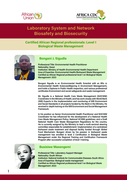
The Africa Centres for Disease Control and Prevention (Africa CDC) Biosafety and Biosecurity Initiative was launched by the Africa CDC in April 2019 with the aim of strengthening the African Union (AU) Member States’ biosafety and biosecurity systems and enabling them to comply with ... and international requirements for biosafety and biosecurity including the International Health Regulations (IHR) (2005), the Biological Weapons Convention (BWC), and United Nations Security Council Resolution (UNSCR) 1540 and the multi-country Global Health Security Agenda (GHSA). The World Health Organization (WHO) Joint External Evaluation (JEE) and the Global Health Security Index report confirmed the known capacity gaps in biosafety and biosecurity among Africa Union Member (AU).
The regional consultations by Africa CDC conducted between 2019-2021 highlighted the deficiency or limited availability of standardized and regionally recognized training programs in the continent, limiting biosafety and biosecurity capacity building efforts in the region. In response, Africa CDC working with AU Member States developed a home grown, implementable and accessible professional training and certification program that is both recognized and endorsed by AU Member States. The Regional Training and Certification Program for Biosafety and Biosecurity Professionals, for African Biosafety and Biosecurity Professionals (RTCP-BBP) has four (4) areas of specialization, namely
Selection, Installation, Maintenance and Certification of Biological Safety Cabinets
Biorisk Management
Design and Maintenance of Facilities Handling High Risk Pathogens (Biocontainment Engineering)
Biological Waste management

Food and nutrition security in the Democratic Republic of the Congo is subject to the relentless impact of conflict, epidemics and climate events that have persisted in the country for decades, further compounded by the global COVID-19 pandemic. Lac...
Health system resilience is not an inevitable byproduct of any investment in health but must be intentionally programmed and developed with necessary input, investment and contextualization. This technical product aims to guide national, subnational...
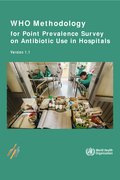
Version 1.1. The WHO protocol has been adapted to resource-limited settings and builds on existing methodologies from the European Centre for Disease Prevention and Control (ECDC), the Global PPS pr...
The Infection Prevention and Control (IPC) Guidelines aim to support healthcare workers improve quality and safety health care. The Guidelines further aim to promote and facilitate the overall goal of IPC by providing evidence-based recommendations on the critical aspects of IPC, focusing on the ...amental principles and priority action areas. All health service organizations should consider the risk of healthcare-associated infection(s) (HAI) and antimicrobial resistance (AMR) transmission to implement these recommendations. The IPC Guidelines also set national standards for the prevention and control of HAIs and to ensure compliance to the National Quality Standards.

The Compendium of data and evidence-related tools for use in TB planning and programming was developed as a companion document to the People-centred framework for tuberculosis programme planning and prioritization – user guide, pu...
Report of the WHO/Bill & Melinda Gates Foundation Consultation. The Consultation was organized back-to-back with the first annual meeting of the International Coordinating Group of the BMGF-funded project for human and dog rabies elimination in deve...
This report reviews the latest evidence on what works to reduce HIV-related stigma and discrimination through key programmes to reduce stigma and discrimination and increase access to justice in the six settings of focus for the Global Partnership. ...
Available in Arabic, Chinese, English, French, Russian and Spanish. You can download a summary of the main report and background documents!
The report demonstrates that the current system—at both national and international levels— was not adeq...
Has the world worked together to tackle the coronavirus? July 2021. This research paper assesses how the global community has responded to calls for greater solidarity in tackling the COVID-19 pandemic, and presents the insights of key stakeholders ...

This country cooperation strategy (CCS) outlines how the World Health Organization (WHO) will work with the Lao People’s Democratic Republic over the next five years (2024–2028), supporting the implementation of the five-year health sector development plans and the Health Sector Reform Strategy ...
WHO, in partnership with the International Society for Prosthetics and Orthotics (ISPO) and the United States Agency for International Development (USAID), has published global standards for prosthetics and orthotics. Its aim is to ensure that prost...
This publication’s primary purpose is to provide a compilation of actions to address malnutrition in all its forms, in a concise and user-friendly format to help in decision-making processes for integration of nutrition interventions in national h...
