Filter
478
Text search:
Ebola
must
Go
Featured
Recommendations
43
New Publications
157
Language
Document type
No document type
257
Studies & Reports
91
Guidelines
56
Manuals
36
Strategic & Response Plan
21
Fact sheets
9
Training Material
5
Situation Updates
2
Infographics
1
Countries / Regions
Sierra Leone
73
Liberia
71
Global
30
Guinea
26
Nigeria
16
Congo, Democratic Republic of
16
Uganda
11
Rwanda
10
Kenya
9
West and Central Africa
9
Ghana
8
Bangladesh
6
Western and Central Europe
6
Myanmar / Burma
5
East and Southern Africa
5
Latin America and the Carribbean
5
Ethiopia
4
Nepal
4
Syria
4
South Africa
4
Middle East and North Africa
4
Senegal
3
India
3
South Sudan
3
Tanzania
3
Malawi
3
Ukraine
3
Africa
3
Mali
2
Côte d’Ivoire / Ivory Coast
2
Niger
2
Zimbabwe
2
Haiti
2
Zambia
2
Cambodia
2
Mozambique
2
Central African Republic
2
Angola
2
South–East Asia Region
2
Eastern Europe and Central Asia
2
Vietnam
2
Burkina Faso
1
USA
1
Saudi Arabia
1
Cameroon
1
Pakistan
1
Jordan
1
Afghanistan
1
Germany
1
Lebanon
1
Chad
1
China
1
Sudan
1
Namibia
1
Colombia
1
Botswana
1
Yemen
1
Western Pacific Region
1
Asia
1
Venezuela
1
Eastern Europe
1
Laos
1
Moldova
1
Authors & Publishers
Publication Years
Category
Countries
107
Key Resources
23
Public Health
20
Clinical Guidelines
19
Women & Child Health
19
Capacity Building
7
Pharmacy & Technologies
6
Annual Report MEDBOX
1
General Guidelines
1
Toolboxes
Ebola
140
COVID-19
96
Rapid Response
28
Mental Health
20
Global Health Education
18
Conflict
15
Planetary Health
14
HIV
12
Health Financing Toolbox
10
AMR
9
Caregiver
9
Refugee
7
Disability
6
Natural Hazards
6
Specific Hazards
5
Pharmacy
4
TB
3
Polio
2
Social Ethics
2
NTDs
2
Cholera
1
Zika
1
January 2020 to December 2021

WHO needs US$2.54 billion to provide life-saving assistance to millions of people around the world facing health emergencies. WHO’s Health Emergency Appeal is a consolidation of WHO’s priorities and financial requirements for 2023 to carry out health interventions in emergency and humanitarian r
...
A global Pandemic, Preparedness and Response (RRR) architecture
A year ago, the second Special Session of the World Health Assembly (WHASS) unanimously agreed to start a diplomatic process for a new binding instrument aimed at ensuring the international community is better prepared for the next health emergencies. The establishment of an Intergovernmental Negoti
...
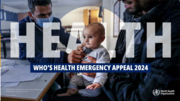
In 2024, we need US$1.5 billion to provide live-saving health care to millions of people in emergencies. An alarming combination of conflict, climate-related threats and increasing economic hardship mean an estimated 166 million people require health assistance.

In Control. A Practical Handbook for Professionals Working in Health Emergencies Internationally
recommended
In Control imparts knowledge, provokes reflection and triggers curiosity. The first half of the book provides an overview of the organisations, principles, frameworks and themes that every professional deploying to health emergencies should be aware of. The second half of the book provides practical
...

In Control: A Practical Handbook for Professionals Working in Health Emergencies Internationally RKI
The greatest risk to persons engaging in international medical emergency response is poor preparation.
The In Control handbook hopes to provide a remedy.
At the time of writing, we are living through the Coronavirus (COVID-19) pandemic, a health emergency that disregards physical borders, brin
...
Public health emergencies, including pandemics, highlight the need for health systems and services that are prepared, resilient and ready to respond to health security threats. Endorsed by Member States in 2023, the Asia Pacific Health Security Action Framework (APHSAF) is designed to engage m
...
Laboratory biosafety manual
recommended
4th edition
The WHO Laboratory Biosafety Manual (LBM) has been in broad use at all levels of clinical and public health laboratories, and other biomedical sectors globally, serving as a de facto global standard that presents best practices and sets trends in biosafety.
LBM encouraged countries t
...
The Country Cooperation Strategy (CCS) is a document to guide WHO’s work in countries. CCS is a medium-term vision for WHO’s technical cooperation with a given Member State, and supports the country's national health policy, strategy or plan. The CCS time frame is flexible to align with national
...
NEPAL CHILDREN’S EARTHQUAKE RECOVERY CONSULTATION - To better understand the consequences of the Nepal Earthquake for children, four child-centred agencies, in coordination with the Ministry of Federal Affairs and Local Development (MoFALD) and the Central Child Welfare Board (CCWB), conducted a C
...
Guidance | Preparedness - Response and early recovery - Recovery and reconstruction