
Filter
2857
Text search:
disability
rights
Featured
261
644
Language
2681
120
93
53
42
28
23
20
10
8
7
7
6
6
5
5
4
4
4
4
4
4
4
4
4
4
3
3
3
3
3
3
3
3
3
3
2
2
2
2
2
2
2
2
2
2
2
2
1
1
1
1
1
1
1
1
1
1
1
1
1
1
Document type
1771
429
264
166
115
45
33
18
7
5
3
1
Countries
147
97
68
67
61
50
49
49
45
44
43
42
42
42
39
36
35
30
25
24
24
24
23
23
22
22
22
20
19
18
18
17
17
16
15
14
13
13
12
12
11
11
10
10
10
10
9
9
9
8
8
7
7
7
7
6
6
6
6
6
6
6
6
6
5
5
5
4
4
4
4
4
4
3
3
3
3
3
2
2
2
2
2
2
2
2
2
2
2
2
2
2
2
2
2
2
2
2
2
1
1
1
1
1
1
1
1
1
1
1
1
1
1
1
1
1
1
1
1
1
1
1
1
1
1
1
1
1
1
1
1
Authors & Publishers
416
157
116
102
79
69
69
49
38
35
31
29
23
21
21
21
20
17
17
17
15
15
13
13
12
12
11
11
11
11
11
10
10
10
9
9
9
9
9
9
9
9
9
9
9
8
8
8
8
8
7
7
7
7
6
6
6
6
6
6
5
5
5
5
5
5
5
5
5
5
5
5
5
5
5
5
5
5
5
4
4
4
4
4
4
4
4
4
4
4
4
4
4
4
4
4
4
4
4
4
4
4
4
4
4
4
4
4
4
4
4
4
4
4
4
4
3
3
3
3
3
3
3
3
3
3
3
3
3
3
3
3
3
3
3
3
3
3
3
3
3
3
3
3
3
3
3
3
3
3
3
3
3
3
3
3
3
3
3
3
3
3
3
3
3
3
3
3
2
2
2
2
2
2
2
2
2
2
2
2
2
2
2
2
2
2
2
2
2
2
2
2
2
2
2
2
2
2
2
2
2
2
2
2
2
2
2
2
2
2
2
2
2
2
2
2
2
2
2
2
2
2
2
2
2
2
2
2
2
2
2
2
2
2
2
2
2
2
2
2
2
2
2
2
2
2
2
2
2
2
2
2
2
2
2
2
2
2
2
2
2
2
2
2
2
2
2
2
2
2
2
2
2
2
2
2
2
2
2
2
2
2
2
2
2
2
2
2
2
2
2
2
2
2
2
2
2
2
2
2
2
2
2
2
2
2
2
2
2
2
2
2
2
1
1
1
1
1
1
1
1
1
1
1
1
1
1
1
1
1
1
1
1
1
1
1
1
1
1
1
1
1
1
1
1
1
1
1
1
1
1
1
1
1
1
1
1
1
1
1
1
1
1
1
1
1
1
1
1
1
1
1
1
1
1
1
1
1
1
1
1
1
1
1
1
1
1
1
1
1
1
1
1
1
1
1
1
1
1
1
1
1
1
1
1
1
1
1
1
1
1
1
1
1
1
1
1
1
1
1
1
1
1
1
1
1
1
1
1
1
1
1
1
1
1
1
1
1
1
1
1
1
1
1
1
1
1
1
1
1
1
1
1
1
1
1
1
1
1
1
1
1
1
1
1
1
1
1
1
1
1
1
1
1
1
1
1
1
1
1
1
1
1
1
1
1
1
1
1
1
1
1
1
1
1
1
1
1
1
1
1
1
1
1
1
1
1
1
1
1
1
1
1
1
1
1
1
1
1
1
1
1
1
1
1
1
1
1
1
1
1
1
1
1
1
1
1
1
1
1
1
1
1
1
1
1
1
1
1
1
1
1
1
1
1
1
1
1
1
1
1
1
1
1
1
1
1
1
1
1
1
1
1
1
1
1
1
1
1
1
1
1
1
1
1
1
1
1
1
1
1
1
1
1
1
1
1
1
1
1
1
1
1
1
1
1
1
1
1
1
1
1
1
1
1
1
1
1
1
1
1
1
1
1
1
1
1
1
1
1
1
1
1
1
1
1
1
1
1
1
1
1
1
1
1
1
1
1
1
1
1
1
1
1
1
1
1
1
1
1
1
1
1
1
1
1
1
1
1
1
1
1
1
1
1
1
1
1
1
1
1
1
1
1
1
1
1
1
1
1
1
1
1
1
1
1
1
1
1
1
1
1
1
1
1
1
1
1
1
1
1
1
1
1
1
1
1
1
1
1
1
1
1
1
1
1
1
1
1
1
1
1
1
1
1
1
1
1
1
1
1
1
1
1
1
1
1
1
1
1
1
1
1
1
1
1
1
1
1
1
1
1
1
1
1
1
1
1
1
1
1
1
1
1
1
1
1
1
1
1
1
1
1
1
1
1
1
1
1
1
1
1
1
1
1
1
1
1
1
1
1
1
1
1
1
1
1
1
1
1
1
1
1
1
1
1
1
1
1
1
1
1
1
1
1
1
1
1
1
1
1
1
1
1
1
1
1
1
1
1
1
1
1
1
1
1
1
1
1
1
1
1
1
1
1
1
1
1
1
1
1
1
1
1
1
1
1
1
1
1
1
1
1
1
1
1
1
1
1
1
1
1
1
1
1
1
1
1
1
1
1
1
1
1
1
1
1
1
1
1
1
1
1
1
1
1
1
1
1
1
1
1
1
1
1
1
1
1
1
1
1
1
1
1
1
1
1
1
1
1
1
1
1
1
1
1
1
1
1
1
1
1
1
1
1
1
1
1
1
1
1
1
1
1
1
1
1
1
1
1
1
1
1
1
1
1
1
1
1
1
1
1
1
1
1
1
1
1
1
1
1
1
1
1
1
1
1
1
1
1
1
1
1
1
1
1
1
1
1
1
1
1
1
1
1
1
1
1
1
1
1
1
1
1
1
1
1
1
1
1
1
1
1
1
1
1
1
1
1
1
1
1
1
1
1
1
1
1
1
1
1
1
1
1
1
1
1
1
1
1
1
1
1
1
1
1
1
1
1
1
1
1
1
1
1
1
1
1
1
1
1
1
1
1
1
1
1
1
1
1
1
1
1
1
1
1
1
1
1
1
1
1
1
1
1
1
1
1
1
1
1
1
1
1
1
1
1
1
1
1
1
1
1
1
1
1
1
1
1
1
1
1
1
1
1
1
1
1
1
1
1
1
1
1
1
1
1
1
1
1
1
1
1
1
1
1
1
1
1
1
1
1
1
1
1
1
1
1
1
1
1
1
1
1
1
1
1
1
1
1
1
1
1
1
1
1
1
1
1
1
1
1
1
1
1
1
1
1
1
1
1
1
1
1
1
1
1
1
1
1
1
1
1
1
1
1
1
1
1
1
1
1
1
1
1
1
1
1
1
1
1
1
1
1
1
1
1
1
1
1
1
1
1
1
1
1
1
1
1
1
1
1
1
1
1
1
1
1
1
1
1
1
1
1
1
1
1
1
1
1
1
1
1
1
1
1
1
1
1
1
1
1
1
1
1
1
1
1
1
1
1
1
1
1
1
1
1
1
1
1
1
1
1
1
1
1
1
1
1
1
1
1
1
1
1
1
1
1
1
1
1
1
1
1
1
1
1
1
1
1
1
1
1
1
1
1
1
1
1
1
1
1
1
1
1
1
1
1
1
1
1
1
1
1
1
1
1
1
1
1
1
1
1
1
1
1
1
1
1
1
1
1
1
1
1
1
1
1
1
1
1
1
1
1
1
1
1
1
1
1
1
1
1
1
1
1
1
1
1
1
1
1
1
1
1
1
1
1
1
1
1
1
1
1
1
1
1
1
1
1
1
1
1
1
1
1
1
1
1
1
1
1
1
1
1
1
1
1
1
1
1
1
1
1
1
1
1
1
1
1
1
1
1
1
1
1
1
1
1
1
1
1
1
1
1
1
1
1
1
1
1
1
1
1
1
1
1
1
1
1
1
1
1
1
1
1
1
1
1
1
1
1
1
1
1
1
1
1
1
1
1
1
1
1
1
1
1
1
1
1
1
1
1
1
1
1
1
1
1
1
1
1
1
1
1
1
1
1
1
1
1
1
1
1
1
1
1
1
1
1
1
1
1
1
1
1
1
1
1
1
1
1
1
1
1
1
1
1
1
1
1
1
1
1
1
1
1
1
1
1
1
1
1
1
1
1
1
1
1
1
1
1
1
1
1
1
1
1
1
1
1
1
1
1
1
1
1
1
1
1
1
1
1
1
1
1
1
1
1
1
1
1
1
1
1
1
1
1
1
1
1
1
1
1
1
1
1
1
1
1
1
1
1
1
1
1
1
1
1
1
1
1
1
1
1
1
1
1
1
1
1
1
1
1
1
1
1
1
1
1
1
1
1
1
1
1
1
1
1
1
1
1
1
1
1
1
1
1
1
1
1
1
1
1
1
1
1
1
1
1
1
1
1
1
1
1
1
1
1
1
1
1
1
1
1
1
1
1
1
1
1
1
1
1
1
1
1
1
1
1
1
1
1
1
1
1
1
1
1
1
1
1
1
1
1
1
1
1
1
1
1
1
1
1
1
1
1
1
1
1
1
1
1
1
1
1
1
1
1
1
1
1
1
1
1
1
1
1
1
1
1
1
1
1
1
1
1
1
1
1
1
1
1
1
1
1
1
1
1
1
1
1
1
1
1
1
1
1
1
1
1
1
1
1
1
1
1
1
1
1
1
1
1
1
1
1
1
1
1
1
1
1
1
1
1
1
1
1
1
1
1
1
1
1
1
1
1
1
1
1
1
1
1
1
1
1
1
1
1
1
1
1
1
1
1
1
1
1
1
1
1
1
1
1
1
1
1
1
1
1
1
1
1
1
1
1
1
1
1
1
1
1
1
1
1
1
1
1
1
1
1
1
1
1
1
1
1
1
1
1
1
1
1
1
1
1
1
1
1
1
1
1
1
1
1
1
1
1
1
1
1
1
1
1
1
1
1
1
1
1
1
1
1
1
1
1
1
1
1
1
1
1
1
1
1
1
1
1
1
1
1
1
1
1
1
1
1
1
1
1
1
1
1
1
1
1
1
1
1
1
1
1
1
1
1
1
1
1
1
1
1
1
1
1
1
1
1
1
1
1
1
1
1
1
1
1
1
1
1
1
1
1
1
1
1
1
1
1
1
1
1
1
1
1
1
1
1
1
1
1
1
1
1
1
1
1
1
1
1
1
1
1
1
1
1
1
1
1
1
1
1
1
1
1
1
1
1
1
1
1
1
1
1
1
1
1
1
1
1
1
1
1
1
1
1
1
1
1
1
1
1
1
1
1
1
1
1
1
1
1
1
1
1
1
1
1
1
1
1
1
1
1
1
1
1
1
1
1
1
1
1
1
1
1
1
1
1
1
1
1
1
1
1
1
1
1
1
1
1
1
1
1
1
1
1
1
1
1
1
1
1
1
1
1
1
1
1
1
1
1
1
1
1
1
1
1
1
1
1
Publication Years
1
748
1811
285
11
1
Category
914
217
207
195
89
47
11
5
2
Toolboxes
560
407
172
119
113
86
78
73
62
61
58
52
34
33
20
18
16
14
12
10
7
2
1
This resource presents "the minimum level of educational quality and access in emergencies through to recovery. The aim of the handbook is to enhance the quality of educational preparedness, response and recovery; to increase access to safe and relevant learning opportunities for all learners, regar
...
dless of their age, gender or abilities; and to ensure accountability and strong coordination in the provision of education in emergencies through to recovery...The INEE Minimum Standards are organised in five domains: Foundation standards; Access and learning environment; Teaching and learning; Teachers and other education; personnel; Education policy". Available in different languages: English, French, Arabic, Azerbajani, Bangla, Indonesia, Bosnian, Coratian, Serbian, Burmese, Chinese, Dari, Japanese, Nepali, Pashto, Portugese, Russian, Spanish, Turkish, Urdu, Vietnamese
more

Rwanda’s fourth health sector strategic plan (HSSP4) is meant to provide the health sector with a Strategic Plan that will highlight its commitments and priorities for the coming 6 years. It will be fully integrated in the overall economic development plan of the Government. HSSP4 will fulfill the
...
country’s commitment expressed in the national constitution, National Strategy for Transformation (NST) and the aspirations of the Health Sector Policy 2015. The strategies herein adhere to the Universal Health Coverage (UHC) principles towards realisation of the Sustainable Development Goals (SDGs). HSSP4 therefore lays a foundation for Vision 2050 (“The Rwanda We Want”), which will transform Rwanda into a high-income country by 2050. HSSP4 anticipates the epidemiological transition of the country, the increase in population and life expectancy and the expected increase of the health needs of the elderly, notably in Non Communicable Diseases (NCDs). HSSP4 also anticipates a decrease in external financial inflows, hence it is imperative to build secure / resilient health systems.
more

During the implementation of the National Strategic Plan 2009–2012 on HIV and AIDS, Rwanda has continued its progress towards universal access to HIV and AIDS services. The new HIV and AIDS National Strategic Plan July 2013–June 2018 (thereafter referred to as ‘the NSP’) presented here is se
...
t on pursuing the same objective, with inspiration from the global targets of “zero new HIV infections, zero HIV-related deaths and zero stigma and discrimination due to HIV”.
more
The Monitoring Report, which covers the first two months of the response from 25 August to 31 October, highlights the work of the Government of Bangladesh, in cooperation with humanitarian partners who are working to provide relief services for the refugee population and Bangladeshi host communities
...
. Of the 1.2 million people in need, around half have been reached with assistance. The Report also explains the challenges and gaps that remain. The risk of disease outbreak is high, and the impact of a cyclone or heavy rain would be massive. There is not enough land to provide adequate living conditions for the more than 830,000 refugees that now crowd Cox’s Bazar.
more

The objective of the evaluation is to understand whether the CHW program has achieved its intended objectives, thus contributing to the overarching objectives defined in the HSSP III of improving the health status of the population by “Ensuring universal accessibility of quality health services fo
...
r all Rwandans”.
This evaluation has focused on CHWs, who are selected, trained and deployed by the MoH to deliver a defined set of tasks at community level. CHWs are the central element of the Community Health Policy and of the community health strategy plan (CHSP) of the MoH.
more

The National Strategic Plan for HIV/AIDS and STIs 2017-2024 spells out the objectives and targets that we have jointly committed to achieve. The plan describes the strategies and activities that will need to be implemented on the ground across India's 36 States and Union Territories with the help of
...
AIDS Control Societies, District AIDS Prevention and Control Units, Regional Institutes, communities, development partners and the private sector. We must urgently scale up our efforts to avert new HIV infections and provide care and treatment to people living with HIV to materialise our commitment of ending AIDS in India by 2030.
more

Addressing Forced Displacement through Development Planning and Co-operation: Guidance for Donor Policy Makers and Practitioners
Mwangi, Annabel; Gamez, Laura et al.
Organisation for Economic Co-operation and Development (OECD)
(2017)
C1
OECD Development Policy Tools
Recognising that donor policies and responses constantly evolve, this guidance recommends that donors operating in situations of forced displacement prioritise three broad areas of work, where they can best contribute to existing capacities at the national, regiona ... l and global levels. more
Recognising that donor policies and responses constantly evolve, this guidance recommends that donors operating in situations of forced displacement prioritise three broad areas of work, where they can best contribute to existing capacities at the national, regiona ... l and global levels. more

To complement the Global Strategy progress reporting, this report provides a detailed look at country leadership and action toward the Every Newborn National Milestones by 2020. Countries have taken the initiative to show the way forward and have demonstrated significant progress. As part of monitor
...
ing this progress, countries have adopted the Every Newborn Tracking Tool. This report presents a compilation of the data collated by the Every Newborn Tracking Tool in 2016, when 51 countries adopted the tool; it also spotlights examples of specific country activity for each National Milestone. Finally, Global Milestones for 2020 were part of the Every Newborn Action Plan to guide global and regional work in support of country efforts and this report highlights relevant progress towards those Global Milestones.
more

A companion to the Child Friendly Schools Manual
WASH in Schools aims to improve the health and learning performance of school-aged children – and, by extension, that of their families – by reducing the incidence of water and sanitation-related diseases. Every child friendly school r ... equires appropriate WASH initiatives that keep the school environment clean and free of smells and inhibit the transmission of harmful bacteria, viruses and parasites. more
WASH in Schools aims to improve the health and learning performance of school-aged children – and, by extension, that of their families – by reducing the incidence of water and sanitation-related diseases. Every child friendly school r ... equires appropriate WASH initiatives that keep the school environment clean and free of smells and inhibit the transmission of harmful bacteria, viruses and parasites. more

Report on Main Findings
The review encompasses three complementary components: 1) a review of published literature 2000-2015 on NCDs and their risk factors; 2) qualitative interviews with key actors engaged in NCD research in Myanmar; and 3) additional reviews of Myanmar ethical committee inqui ... ries and postgraduate research on NCDs in Myanmar. This report outlines the key findings from the three components including a synthesis of the key outcomes from the literature review and qualitative interviews, and an assessment of the gaps in the evidence against a framework of evidence needs. more
The review encompasses three complementary components: 1) a review of published literature 2000-2015 on NCDs and their risk factors; 2) qualitative interviews with key actors engaged in NCD research in Myanmar; and 3) additional reviews of Myanmar ethical committee inqui ... ries and postgraduate research on NCDs in Myanmar. This report outlines the key findings from the three components including a synthesis of the key outcomes from the literature review and qualitative interviews, and an assessment of the gaps in the evidence against a framework of evidence needs. more

(Health Systems in Transition, Vol. 4, No. 3, 2014)
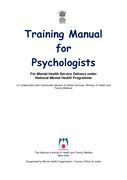
Manual of Mental Health for Psychologists
Uday K. Sinha, Devvarta Kumar, Naveen Grover, Jai Prakash, Gouri Shankar Kaloiya
National Health Ministry for Health and Family Welfare; Ministry of Health and Family Welfare, India; WHO
(2016)
C1
For Mental Health Service Delivery under National Mental Health Programme


Blueprint for a Public Health and Safety Approach to Drug Policy
Tracy Pugh, Julie Netherland, Ruth Finkelstein
The New York Academy of Medicine, Drug Policy Alliance
(2013)
C2
"Some of the problems with our current drug policies stem from the fact that these policies have been largely bifurcated between two different and often contradictory approaches. One treats drug use as a crime that cannot be tolerated and should be punished; the other views addiction as a chronic re
...
lapsing health or behavioral condition requiring ongoing treatment and support. Neither of these views is all encompassing—it should be recognized that there are patterns of drug use that do not result in significant harm or health problems and therefore require no intervention. The public health approach presented here takes the view that our focus should be on the harm caused by drug use and the harm caused by our policy responses to it. We have focused specifically on illicit drugs, not because they are by themselves more harmful (in fact, tobacco causes more morbidity and mortality than any illicit drug), but because it has become increasingly clear that our current policies to manage illicit drugs are failing."
more
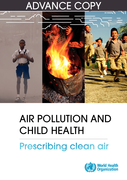
This report summarizes the latest scientific knowledge on the links between exposure to air pollution and adverse health effects in children. It is intended to inform and motivate individual and collective action by health care professionals to prevent damage to children’s health from exposure to
...
air pollution. Air pollution is a major environmental health threat. Exposure to fine particles in both the ambient environment and in the household causes about seven million premature deaths each year. Ambient air pollution (AAP) alone imposes enormous costs on the global economy, amounting to more than US$ 5 trillion in total welfare losses in 2013.
more
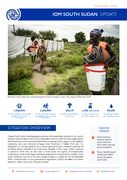
September Highlights
Ebola prevention measures began in South Sudan with three border screening points established
Nearly 160,000 people reached with WASH services throughout South Sudan

