
Filter
2103
Text search:
origin
Featured
176
503
Language
1980
78
70
46
36
34
22
15
9
8
8
8
6
6
6
5
5
5
4
4
4
4
3
3
3
3
3
3
3
3
3
3
2
2
2
2
2
2
2
2
2
2
1
1
1
1
1
1
1
1
1
1
1
1
1
1
1
1
Document type
1087
434
271
116
67
42
34
30
9
6
3
2
1
Countries
82
74
64
45
43
41
40
40
39
38
34
34
33
31
30
29
25
25
24
23
22
21
20
17
17
16
15
15
15
14
13
13
13
13
12
12
11
10
10
10
9
9
9
9
8
8
8
8
8
8
7
7
7
7
6
6
6
6
5
5
5
5
5
5
4
4
4
4
4
4
4
4
4
4
3
3
3
3
3
3
2
2
2
2
2
2
2
2
2
2
2
2
2
1
1
1
1
1
1
1
1
1
1
1
1
1
1
1
1
1
1
1
1
1
1
1
1
1
1
1
1
1
1
1
1
1
Authors & Publishers
238
91
66
44
33
32
25
24
21
20
19
18
17
15
15
15
14
13
13
13
12
10
10
10
10
10
9
9
9
9
8
8
8
8
8
7
7
7
7
7
7
7
6
6
6
6
6
6
6
6
6
6
6
5
5
5
5
5
5
5
5
5
5
5
5
5
4
4
4
4
4
4
4
4
4
4
4
4
4
4
4
4
4
4
4
4
4
4
4
4
3
3
3
3
3
3
3
3
3
3
3
3
3
3
3
3
3
3
3
3
3
3
3
3
3
3
3
3
3
3
3
3
3
3
3
3
3
3
2
2
2
2
2
2
2
2
2
2
2
2
2
2
2
2
2
2
2
2
2
2
2
2
2
2
2
2
2
2
2
2
2
2
2
2
2
2
2
2
2
2
2
2
2
2
2
2
2
2
2
2
2
2
2
2
2
2
2
2
2
2
2
2
2
2
2
2
2
2
2
2
2
2
2
2
2
2
2
2
2
2
2
2
2
2
2
2
2
2
2
2
2
2
2
2
2
2
2
2
2
2
2
2
2
2
2
2
2
2
2
2
2
2
2
2
2
2
2
2
2
2
2
2
1
1
1
1
1
1
1
1
1
1
1
1
1
1
1
1
1
1
1
1
1
1
1
1
1
1
1
1
1
1
1
1
1
1
1
1
1
1
1
1
1
1
1
1
1
1
1
1
1
1
1
1
1
1
1
1
1
1
1
1
1
1
1
1
1
1
1
1
1
1
1
1
1
1
1
1
1
1
1
1
1
1
1
1
1
1
1
1
1
1
1
1
1
1
1
1
1
1
1
1
1
1
1
1
1
1
1
1
1
1
1
1
1
1
1
1
1
1
1
1
1
1
1
1
1
1
1
1
1
1
1
1
1
1
1
1
1
1
1
1
1
1
1
1
1
1
1
1
1
1
1
1
1
1
1
1
1
1
1
1
1
1
1
1
1
1
1
1
1
1
1
1
1
1
1
1
1
1
1
1
1
1
1
1
1
1
1
1
1
1
1
1
1
1
1
1
1
1
1
1
1
1
1
1
1
1
1
1
1
1
1
1
1
1
1
1
1
1
1
1
1
1
1
1
1
1
1
1
1
1
1
1
1
1
1
1
1
1
1
1
1
1
1
1
1
1
1
1
1
1
1
1
1
1
1
1
1
1
1
1
1
1
1
1
1
1
1
1
1
1
1
1
1
1
1
1
1
1
1
1
1
1
1
1
1
1
1
1
1
1
1
1
1
1
1
1
1
1
1
1
1
1
1
1
1
1
1
1
1
1
1
1
1
1
1
1
1
1
1
1
1
1
1
1
1
1
1
1
1
1
1
1
1
1
1
1
1
1
1
1
1
1
1
1
1
1
1
1
1
1
1
1
1
1
1
1
1
1
1
1
1
1
1
1
1
1
1
1
1
1
1
1
1
1
1
1
1
1
1
1
1
1
1
1
1
1
1
1
1
1
1
1
1
1
1
1
1
1
1
1
1
1
1
1
1
1
1
1
1
1
1
1
1
1
1
1
1
1
1
1
1
1
1
1
1
1
1
1
1
1
1
1
1
1
1
1
1
1
1
1
1
1
1
1
1
1
1
1
1
1
1
1
1
1
1
1
1
1
1
1
1
1
1
1
1
1
1
1
1
1
1
1
1
1
1
1
1
1
1
1
1
1
1
1
1
1
1
1
1
1
1
1
1
1
1
1
1
1
1
1
1
1
1
1
1
1
1
1
1
1
1
1
1
1
1
1
1
1
1
1
1
1
1
1
1
1
1
1
1
1
1
1
1
1
1
1
1
1
1
1
1
1
1
1
1
1
1
1
1
1
1
1
1
1
1
1
1
1
1
1
1
1
1
1
1
1
1
1
1
1
1
1
1
1
1
1
1
1
1
1
1
1
1
1
1
1
1
1
1
1
1
1
1
1
1
1
1
1
1
1
1
1
1
1
1
1
1
1
1
1
1
1
1
1
1
1
1
1
1
1
1
1
1
1
1
1
1
1
1
1
1
1
1
1
1
1
1
1
1
1
1
1
1
1
1
1
1
1
1
1
1
1
1
1
1
1
1
1
1
1
1
1
1
1
1
1
1
1
1
1
1
1
1
1
1
1
1
1
1
1
1
1
1
1
1
1
1
1
1
1
1
1
1
1
1
1
1
1
1
1
1
1
1
1
1
1
1
1
1
1
1
1
1
1
1
1
1
1
1
1
1
1
1
1
1
1
1
1
1
1
1
1
1
1
1
1
1
1
1
1
1
1
1
1
1
1
1
1
1
1
1
1
1
1
1
1
1
1
1
1
1
1
1
1
1
1
1
1
1
1
1
1
1
1
1
1
1
1
1
1
1
1
1
1
1
1
1
1
1
1
1
1
1
1
1
1
1
1
1
1
1
1
1
1
1
1
1
1
1
1
1
1
1
1
1
1
1
1
1
1
1
1
1
1
1
1
1
1
1
1
1
1
1
1
1
1
1
1
1
1
1
1
1
1
1
1
1
1
1
1
1
1
1
1
1
1
1
1
1
1
1
1
1
1
1
1
1
1
1
1
1
1
1
1
1
1
1
1
1
1
1
1
1
1
1
1
1
1
1
1
1
1
1
1
1
1
1
1
1
1
1
1
1
1
1
1
1
1
1
1
1
1
1
1
1
1
1
1
1
1
1
1
1
1
1
1
1
1
1
1
1
1
1
1
1
1
1
1
1
1
1
1
1
1
1
1
1
1
1
1
1
1
1
1
1
1
1
1
1
1
1
1
1
1
1
1
1
1
1
1
1
1
1
1
1
1
1
1
1
1
1
1
1
1
1
1
1
1
1
1
1
1
1
1
1
1
1
1
1
1
1
1
1
1
1
1
1
1
1
1
1
1
1
1
1
1
1
1
1
1
1
1
1
1
1
1
1
1
1
1
1
1
1
1
1
1
1
1
1
1
1
1
1
1
1
1
1
1
1
1
1
1
1
1
1
1
1
1
1
1
1
1
1
1
1
1
1
1
1
1
1
1
1
1
1
1
1
1
1
1
1
1
1
1
1
1
1
1
1
1
1
1
1
1
1
1
1
1
1
1
1
1
1
1
1
1
1
1
1
1
1
1
1
1
1
1
1
1
1
1
1
1
1
1
1
1
1
1
1
1
1
1
1
1
1
1
1
1
1
1
1
1
1
1
1
1
1
1
1
1
1
1
1
1
1
1
1
1
1
1
1
1
1
1
1
1
1
1
1
1
1
1
1
1
1
1
1
1
1
1
1
1
1
1
1
1
1
1
1
1
1
1
1
1
1
1
1
1
1
1
1
1
1
1
1
1
1
1
1
1
1
1
1
1
1
1
1
1
1
1
1
1
1
1
1
1
1
1
1
1
1
1
1
1
1
1
1
1
1
1
1
1
1
1
1
1
1
1
1
1
1
1
1
1
1
1
1
1
1
1
1
1
1
1
1
1
1
1
1
1
1
1
1
1
1
1
1
1
1
1
1
1
1
1
1
1
1
1
1
1
1
1
1
1
1
1
1
1
1
1
1
1
1
1
1
1
1
1
1
1
1
1
1
1
1
1
1
1
1
1
1
1
1
1
1
1
1
1
1
1
1
1
1
1
1
1
1
1
1
1
1
1
1
1
1
1
1
1
1
1
1
1
1
1
1
1
1
1
1
1
1
1
1
1
1
1
1
1
1
1
1
1
1
1
1
1
1
1
1
1
1
1
1
1
1
1
1
1
1
1
1
1
1
1
1
1
1
1
1
1
1
1
1
1
1
1
1
1
1
1
1
1
1
1
1
1
1
1
1
1
1
1
1
1
1
1
1
1
1
1
1
1
1
1
1
1
1
1
1
1
1
1
1
1
1
1
1
1
1
1
1
1
1
1
1
1
1
1
1
1
1
1
1
1
1
1
1
1
1
1
1
1
1
1
1
1
1
1
1
1
1
1
1
1
1
1
1
1
1
1
1
1
1
1
1
1
1
1
1
1
1
1
1
1
1
1
1
1
1
1
1
1
1
1
1
1
1
1
1
1
1
1
1
1
1
1
1
1
1
1
1
1
1
1
1
1
1
1
1
1
1
1
1
1
1
1
1
1
1
1
1
1
1
1
1
1
1
1
1
1
1
1
1
1
1
1
1
1
1
1
1
1
1
1
1
1
1
1
1
1
1
1
1
1
1
1
1
1
1
1
1
1
1
1
1
1
1
1
1
1
1
1
1
1
1
1
1
1
1
1
1
1
1
1
1
1
1
1
1
1
1
1
1
1
1
1
1
1
1
1
1
1
1
1
1
1
1
1
1
1
1
1
1
1
1
1
1
1
1
1
1
1
1
1
1
1
1
1
1
1
1
1
1
1
1
1
1
1
1
1
1
1
1
1
1
1
1
1
1
1
1
1
1
1
1
1
1
1
1
1
1
1
1
1
1
1
1
1
1
1
1
1
1
1
1
1
1
1
1
1
1
1
1
1
1
1
1
1
1
1
1
1
1
1
1
1
1
1
1
1
1
1
1
1
1
1
1
1
1
1
1
Publication Years
1
619
1216
244
19
1
1
2
Category
662
132
96
93
90
30
21
3
1
1
Toolboxes
192
174
156
108
101
101
85
81
75
74
72
56
52
33
32
31
31
24
23
17
13
11
10
2
2
1
Little is known about foreign aid provided by private donors. This paper contributes to closing this research gap by comparing the allocation of private humanitarian aid to that of official humanitarian aid awarded to 140 recipient countries over the 2000-2016 period. We construct a new database tha
...
t offers information on the country in which the headquarters of private donors are located to test whether private donors follow the aid allocation pattern of their home country. Our empirical results confirm that private aid “follows the flag.” This finding is robust against the inclusion of various fixed effects, estimating instrumental variables models, and disaggregating private aid into corporate aid and NGO aid. Donor country-specific estimations reveal that private aid from China, Sweden, the United Kingdom, and the United States “follow the flag.”
more

The development of this draft Proposed programme budget 2022–2023 comes at a unique moment for WHO. The world is in the grip of the coronavirus disease (COVID-19) pandemic and faces health, social and economic consequences on an unprecedented scale. Although it is not known when the COVID-19 pande
...
mic will end, recent encouraging vaccine results, in addition to the examples of countries that have achieved good results through public health measures, hold out the prospect of better days ahead. The full impact of the pandemic cannot yet be determined. But whatever its implications, the Secretariat will rise to the challenge and is ready to adapt so that it is fully equipped to support Member States for any eventuality in the future – to make sure that the world will never again have to face this kind of crisis.
more
Strengthening resource tracking and monitorig health expanditure
The definition of Official Development Assistance (ODA) has for 40 years been the global standard for measuring donor efforts in supporting development co-operation objectives. It has provided the yardstick for documenting the volume and the terms of the concessional resources provided, assessing do
...
nor performance against their aid pledges and enabling partner countries, civil society and others to hold donors to account. Yet for all its value, the ODA definition has always reflected a compromise between political expediency and statistical reality. It is based on interpretation and consensus and therefore allows for flexibility. It has evolved over the decades, while preserving the original concepts of a definition based on principal developmental motivation, official character and a degree of concessionality. While agreement on the ODA concept was a major achievement, discussion of the appropriateness of this measure has never ended. The paper documents the evolution of the ODA concept and proposes a possible new approach to measuring aid effort.
more

Financing Global Health 2013: Transition in an Age of Austerity, IHME’s fifth annual report on global health expenditure, depicts financing trends that underline the resilience of development assistance for health. This year’s updated estimates show that despite lackluster economic growth and fi
...
scal cutbacks in many developed countries, total assistance remained steady, reaching an all-time high of $31.3 billion in 2013. While annual increases have leveled off since 2010, continued international funding is a sign of the international development community’s enduring support for global health.
The report also shows shifts in sources of financing. As funding from many bilateral donors and development banks has declined, growth in funding from the GAVI Alliance, the Global Fund to Fight AIDS, Tuberculosis and Malaria, non-governmental organizations, and the UK government is counteracting these cuts. Development assistance for different health issues is tracked up to 2011, revealing that the greatest increase in funding was for maternal, newborn, and child health.
more
Financing Global Health 2014 is the sixth edition of this annually produced report on global health financing. As in previous years, this report captures trends in development assistance for health (DAH) and government health expenditure (GHE). Health financing is one of IHME’s core research areas
...
, and the aim of the series is to provide much-needed information to global health stakeholders. Updated GHE and DAH estimates allow decision-makers to pinpoint funding gaps and investment opportunities vital to improving population health. This year, IHME made a number of improvements to the data collection and methods implemented to produce Financing Global Health estimates. Both government health expenditure and development assistance for health estimates were updated and enhanced in 2013.
more
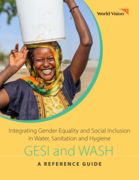
World Vision’s Gender Equality and Social Inclusion (GESI) approach actively strives to examine, question, and change harmful social norms and power imbalances as a means of reaching gender equality and social inclusion objectives in a programme area.
This reference guide is designed to help WASH
...
practitioners implement GESI-transformative WASH programmes by supporting change across all five GESI domains – access, decision-making, participation, systems, and well-being. It provides information on how to design, implement, monitor and evaluate a WASH project or programme to address GESI.
more
WHO-OHCHR launch new guidance to improve laws addressing human rights abuses in mental health care
Ahead of World Mental Health Day, the World Health Organization (WHO) and the Office of the High Commissioner on Human Rights (OHCHR) are jointly launching a new guidance, entitled "Mental health, h
...
uman rights and legislation: guidance and practice", to support countries to reform legislation in order to end human rights abuses and increase access to quality mental health care.
Human rights abuses and coercive practices in mental health care, supported by existing legislation and policies, are still far too common. Involuntary hospitalization and treatment, unsanitary living conditions and physical, psychological, and emotional abuse characterize many mental health services across the world.
more
World Humanitarian Data and Trends presents global- and country-level data-and-trend analysis about humanitarian
crises and assistance. Its purpose is to consolidate this information and present it in an accessible way, providing policymakers, researchers and humanitarian practitioners with an evid
...
ence base to support humanitarian policy decisions and provide context for operational decisions.
more
This article analyzes the impact of the COVID-19 pandemic on foreign aid. Using examples from Canadian foreign aid, it argues that, despite the terrible toll it is exacting, the crisis has accelerated some significant positive pre-existing trends, both by destabilizing the perception of aid as flowi
...
ng essentially from the Global North to Global South and by reinforcing awareness of the importance of joint efforts for global public goods and humanitarian assistance, as well as debt relief. However, it has also reinforced potentially harmful self-interested justifications for aid, which could align assistance more with donors’ priorities than the needs of the poor
more
Asia-Pacific Consensus Statement on the Management of Peripheral Artery Disease
Abola, M. T. B.; Golledge, J.; Miyata, T. et al.
Journal of Atherosclerosis and Thrombosis
(2020)
CC
Peripheral artery disease (PAD) is the most underdiagnosed, underestimated and undertreated of the atherosclerotic vascular diseases despite its poor prognosis. There may be racial or contextual differences in the Asia-Pacific region as to epidemiology, availability of diagnostic and therapeutic mod
...
alities, and even patient treatment response. The Asian Pacific Society of Atherosclerosis and Vascular Diseases (APSAVD) thus coordinated the development of an Asia-Pacific Consensus Statement (APCS) on the Management of PAD.
more
Many features of the environment have been found to exert an important influence on cardiovascular disease (CVD) risk, progression, and severity. Changes in the environment due to migration to different geographic locations, modifications in lifestyle choices, and shifts in social policies and cultu
...
ral practices alter CVD risk, even in the absence of genetic changes. Nevertheless, the cumulative impact of the environment on CVD risk has been difficult to assess
and the mechanisms by which some environment factors influence CVD remain obscure. Human environments are complex; and their natural, social and personal domains are highly variable due to diversity in human ecosystems, evolutionary histories, social structures, and individual choices. Accumulating evidence supports the notion that ecological features such as the diurnal cycles of
light and day, sunlight exposure, seasons, and geographic characteristics of the natural environment such altitude, latitude and greenspaces are important determinants of cardiovascular health and CVD risk. In highly developed societies, the influence of the natural environment is moderated by the physical characteristics of the social environments such as the built environment
and pollution, as well as by socioeconomic status and social networks. These attributes of the
social environment shape lifestyle choices that significantly modify CVD risk. An understanding
of how different domains of the environment, individually and collectively, affect CVD risk could
lead to a better appraisal of CVD, and aid in the development of new preventive and therapeutic
strategies to limit the increasingly high global burden of heart disease and stroke.
more
In 2014, the World Heart Federation (WHF) launched
an initiative to develop a series of Roadmaps [1e6]. Their
aim is to identify potential roadblocks on the pathway to
effective prevention, detection, and management of cardiovascular disease (CVD), along with evidence-based
solutions to overcome
...
them. The resulting documents
provide a framework to translate strategic intent into action
on integrating epidemiology, population, and cardiovascular outcome trial data into national plans for optimal
CVD management.
more
Prevention of stroke and transient ischemic attack includes both conventional approaches to vascular risk factor management (blood pressure lowering, cholesterol reduction with statins, smoking cessation and antiplatelet therapy)
and more specific interventions, such as carotid revascularization or
...
anticoagulation for atrial fibrillation. The objective of this review is to discuss effective interventions for optimal primary and secondary stroke prevention.
more
In 2015, the United Nations set important targets to reduce premature
cardiovascular disease (CVD) deaths by 33% by 2030. Africa disproportionately
bears the brunt of CVD burden and has one of the highest risks of dying
from non-communicable diseases (NCDs) worldwide. There is currently
an epide
...
miological transition on the continent, where NCDs is projected
to outpace communicable diseases within the current decade. Unchecked
increases in CVD risk factors have contributed to the growing burden of three
major CVDs—hypertension, cardiomyopathies, and atherosclerotic diseasesleading to devastating rates of stroke and heart failure. The highest age
standardized disability-adjusted life years (DALYs) due to hypertensive heart
disease (HHD) were recorded in Africa. The contributory causes of heart failure
are changing—whilst HHD and cardiomyopathies still dominate, ischemic
heart disease is rapidly becoming a significant contributor, whilst rheumatic
heart disease (RHD) has shown a gradual decline. In a continent where health
systems are traditionally geared toward addressing communicable diseases,
several gaps exist to adequately meet the growing demand imposed by CVDs.
Among these, high-quality research to inform interventions, underfunded
health systems with high out-of-pocket costs, limited accessibility and
affordability of essential medicines, CVD preventive services, and skill
shortages. Overall, the African continent progress toward a third reduction
in premature mortality come 2030 is lagging behind. More can be done in
the arena of effective policy implementation for risk factor reduction and
CVD prevention, increasing health financing and focusing on strengthening
primary health care services for prevention and treatment of CVDs, whilst
ensuring availability and affordability of quality medicines. Further, investing
in systematic country data collection and research outputs will improve the accuracy of the burden of disease data and inform policy adoption on
interventions. This review summarizes the current CVD burden, important
gaps in cardiovascular medicine in Africa, and further highlights priority
areas where efforts could be intensified in the next decade with potential
to improve the current rate of progress toward achieving a 33% reduction
in CVD mortality.
more
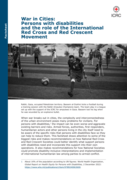
When war breaks out in cities, the complexity and interconnectedness of the urban environment poses many problems for civilians. For persons with disabilities, the impact can be even worse and aggravate existing barriers and risks. Armed forces, authorities, first responders, humanitarian actors and
...
other persons living in the city itself need to be aware of the specific risks that persons with disabilities face so they can help to reduce them. This factsheet draws attention to some of the biggest risks and makes recommendations on how National Red Cross and Red Crescent Societies could better identify what support persons with disabilities need and incorporate this support into their own operations. It also makes recommendations for how National Societies could promote disability-inclusive interpretations and implementation of international humanitarian law among parties to armed conflict.
more

Cholera is a transmissible diarrhoeal infection caused by Vibrio cholerae. Endemic and/or epidemic in over 40 countries (mainly in Africa and Asia), cholera continues to be a major global public health issue.
The World Health Organization (WHO) estimates that the number of cases reported worldwid
...
e represents in reality only 5 to 10% of actual cases.
This guide is intended for medical and non-medical staff responding to a cholera outbreak. It attempts to provide concrete answers to the questions and problems faced by staff, based on the recommendations of reference organisations, such as WHO and UNICEF, as well as Médecins Sans Frontières’ experience in the field.
It is divided into 8 chapters. Chapter 1, Cholera overview, outlines the epidemiological and clinical features of cholera. Chapter 2, Outbreak investigation, explains the method and stages of a field investigation, from the alert to implementation of initial activities. Chapter 3, Cholera control measures, details measures and tools to prevent and/or control cholera transmission and mortality in populations affected, or at risk of being affected, by an epidemic (curative care, prevention means and health promotion activities). Chapter 4, Strategies for epidemic response, addresses the roll-out strategies of the measures described in Chapter 3 which depend on context (e.g. urban, rural, endemic, non-endemic setting, etc.), resources and particular constraints. Chapter 5, Cholera case management, details the different stages of cholera treatment, from diagnosis through to cure.
Chapter 6, Setting up cholera treatment facilities, focuses on the installation of treatment facilities that vary in size and complexity according to operational requirements (treatment centres and units and oral rehydration points). Chapter 7, Organisation of cholera treatment facilities, describes the organisation of these specialized facilities in terms of human resources, supply, water, hygiene and sanitation, etc. Chapter 8, Monitoring and evaluation, presents the key data to be collected and analysed during an epidemic to facilitate a tailored response and evaluate its quality and effectiveness.
The guide includes various practical tools in the appendices to facilitate activities (e.g. water quality tests, job descriptions, documents, etc.). Moreover, the toolbox also contains additional tools in editable formats (individual patient file, cholera case register, pictograms).
Despite all efforts, it is possible that certain errors may have been overlooked in this guide. Please inform the authors of any errors detected.
To ensure that this guide continues to evolve while remaining adapted to field realities, please send any comments or suggestions.
more

Non-communicable diseases (NCDs) are the second common cause of death in sub-Saharan Africa (SSA) accounting for about 35% of all deaths, after a composite of communicable, maternal, neonatal, and nutritional diseases. Despite prior perception of low NCDs mortality rates, current evidence suggests t
...
hat SSA is now at the dawn of the epidemiological transition with contemporary double burden of disease from NCDs and communicable diseases. In SSA, cardiovascular diseases (CVDs) are the most frequent causes of NCDs deaths, responsible for approximately 13% of all deaths and 37% of all NCDs deaths. Although ischemic heart disease (IHD) has been identified as the leading cause of CVDs mortality in SSA followed by stroke and hypertensive heart disease from statistical models, real field data suggest IHD rates are still relatively low. The neglected endemic CVDs of SSA such as endomyocardial fibrosis and rheumatic heart disease as well as congenital heart diseases remain unconquered. While the underlying aetiology of heart failure among adults in high-income countries (HIC) is IHD, in SSA the leading causes are hypertensive heart disease, cardiomyopathy, rheumatic heart disease, and congenital heart diseases. Of concern is the tendency of CVDs to occur at younger ages in SSA populations, approximately two decades earlier compared to HIC. Obstacles hampering primary and secondary prevention of CVDs in SSA include insufficient health care systems and infrastructure, scarcity of cardiac professionals, skewed budget allocation and disproportionate prioritization away from NCDs, high cost of cardiac treatments and interventions coupled with rarity of health insurance systems. This review gives an overview of the descriptive epidemiology of CVDs in SSA, while contrasting with the HIC and highlighting impediments to their management and making recommendations.
more
This document contains guidance for strengthening the disability inclusiveness of MHPSS responses and programmes in emergency settings. It is intended to supplement the IASC Guidelines on Mental Health and Psychosocial Support in Emergency Settings (2007).
Overall Objective
To consider and add
...
ress the mental health and psychosocial support (MHPSS) requirements of persons living in emergency settings with all types of disabilities on an equal basis to the MHPSS requirements of all persons, using a human rights-based approach and implementing social-ecological frameworks.
more
The ERF provides WHO staff with essential guidance on how the Organization manages the assessment, grading and response to public health events and emergencies with health consequences, in support of Member States and affected communities. The ERF adopts an all-hazards approach and it is therefore a
...
pplicable in all acute public health events and emergencies.
This version (2024) of the WHO ERF has been developed following extensive consultation across the three levels of the Organization and response experiences over the last five years of emergency response. Key areas have been updated to improve the accountability, predictability, timeliness and effectiveness of WHO’s response to emergencies.
more
