
Filter
2062
Text search:
antibiotics
Featured
242
553
Language
Document type
1002
351
304
106
90
66
54
20
17
17
14
10
10
1
Countries
146
61
56
51
50
50
45
36
35
35
30
26
26
26
24
24
23
21
19
19
18
18
14
14
13
13
11
10
9
7
7
7
7
7
7
7
7
6
6
6
6
5
5
5
5
5
5
5
5
4
4
4
4
4
4
3
3
3
3
3
3
3
3
3
2
2
2
2
2
2
2
2
2
2
2
1
1
1
1
1
1
1
1
1
1
1
1
1
1
1
1
1
1
1
1
1
1
1
1
1
1
1
1
1
1
1
1
1
1
1
1
1
1
1
1
Authors & Publishers
Publication Years
Category
756
275
170
82
52
51
27
1
1
Toolboxes
424
99
91
86
84
80
71
52
45
42
41
37
32
29
23
18
17
15
14
11
3
2
1
L’antibiorésistance constitue aujourd’hui l’un des grands défis à relever à l’échelle mondiale. Il s’agit d’une menace de santé publique majeure qui impose une mobilisation déterminée et durable de l’ensemble des acteurs impliqués dans le cycle de vie des antibiotiques, afin d
...
China is one of the major countries for the production and use of antibacterial agents. Antibacterial agents are widely used in healthcare and animal husbandry. It plays a significant role in treating infections and saving patient lives, preventing and treating animal diseases, improving farming ef
...
Η ανακάλυψη πριν από 80 περίπου χρόνια ότι ουσίες που παράγονται από μύκητες ή βακτήρια μπορούν να χρησιμοποιηθούν θεραπευτικά για την ίαση διαφόρων λοιμώξεων, έφεÏ
...
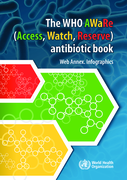
web annex: infographics
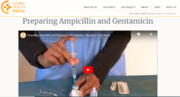
This video shows how to prepare and draw up ampicillin and gentamicin for injection for a young baby.
Manuel de mise en œuvre initiale

Designed for healthcare professionals, this six-week course will inform you about – and empower you to provide – safe, high-quality antibiotic use. You’ll interact with colleagues globally, to understand what antibiotic resistance means – and why the World Economic Forum has placed it alongs
...
Accessed 6 March 2019.
BMJ Global Health, Vol. 4 (2019) no.2
Antibiotic resistance is threatening global health, development and food security; however, measures for assessing and communicating the threat of resistance are lacking. The Drug Resistance Index (DRI) allows for global assessment of the relative efficacy of
...
The second ECDC/EFSA/EMA joint report on the integrated analysis of antimicrobial consumption (AMC) and antimicrobial resistance (AMR) in bacteria from humans and food-producing animals addressed data obtained by the Agencies’ EU-wide surveillance networks for 2013–2015. AMC in both sectors, exp
...
Given an increase in outbreaks caused by resistant microorganisms associated with medical tourism, the Pan American Health Organization / World Health Organization (PAHO/WHO) encourages Member States to strengthen their capacity to detect and manage infections caused by resis
...

This document provides additional guidance for the responsible and prudent use of antimicrobials in food-producing animals, and should be read in conjunction with the Recommended International Code of Practice for Control of the Use of Veterinary Drugs CAC/RCP 38-1993. Its obj
...
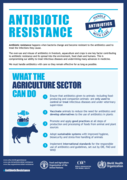
Poster - Handle Antibiotica with care
The microbiology laboratory database software.
WHONET is a desktop Windows application for the management and analysis of microbiology laboratory data with a particular focus on antimicrobial resistance surveillance. WHONET, available in 28 languages, supports local, national, regional, and global
...

The spread of antimicrobial-resistant microorganisms poses anincreasing threat to affordable modern health care. In the Netherlands, efforts to control the dispersal of known and novel antimicrobial-resistant organisms have been mostly implemented at the hospital level. However, recent studies have
...
Since the World Health Organization (WHO) launched the Global Antimicrobial Resistance Surveillance System (GLASS) in 2015, there has been rapidly growing awareness among many African countries that they need to be doing more to combat antimicrobial resistance (AMR). The Africa Centres fo
...
The ECDC, the EFSA and the EMA have for the first time jointly explored associations between consumption of antimicrobials in humans and food-producing animals, and antimicrobial resistance in bacteria from humans and food-producing animals, using 2011 and 2012 data currently available from their re
...
Improve your knowledge of the spread of antimicrobial resistance in Africa and how to reduce it - Online Course
