Filter
421
Text search:
school
closures
Featured
29
54
Language
Document type
173
73
73
30
23
19
18
7
3
2
Countries / Regions
43
19
16
15
14
13
11
11
10
9
9
9
8
8
8
8
7
7
7
6
6
6
6
5
5
5
5
5
5
4
4
4
4
4
4
4
3
3
3
3
3
3
3
3
3
2
2
2
2
2
2
2
2
2
2
2
2
2
2
1
1
1
1
1
1
1
1
1
1
1
1
1
1
1
1
1
1
1
1
1
1
1
1
1
Authors & Publishers
Publication Years
Category
164
21
9
7
4
3
1
Toolboxes
228
34
29
21
21
20
13
10
6
5
5
4
3
3
2
2
1
1
This document, produced by IFRC, UNICEF and WHO, suggests key actions on how people and communities can stay safe and slow down the spread of COVID-19, particularly for contexts where you might have been asked by your local authorities to maintain physical distance or stay home.
Available in: Arabi
...
PERC produces regional and member state situation analyses, updated regularly.
Germany’s overall response to COVID-19 has been evaluated as reasoned and sound. Nonetheless, it has exposed weaknesses and blindspots in the German healthcare system regarding the inclusion of migrant groups. For instance, marginalised groups such as labour migrants and asylum-seekers are not con
...
2020 is a critical year for our Joint Programme as we collectively define the path to getting back on track to ending the AIDS epidemic by 2030. Our revised timelines for adoption of the next strategy are highly ambitious. We need the full support of all the tremendously dedicated people in UNAIDS-w
...
The Russian Federation continues to be a major destination country for Central Asianlabour migrants. There were nearly million Central Asians living in the Russian Federation in 2019, mainly coming from Kyrgyzstan, Tajikistan, and Uzbekistan in order to seek employment opportunities. Men continue to
...
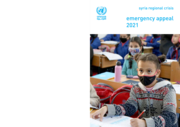
2 March 2021
Protracted displacement, socio-economic crises aggravated by the COVID-19 pandemic, dire humanitarian needs and protection threats continue to affect the Palestine refugees in Syria, Lebanon and Jordan.
In Syria, the protracted conflict has left 91 per cent of the 438,000 Palestine re
...
In the last quarter of 2019 Southern African Regional Interagency Standing Committee Africa (RIASCO) reported that more than 11 million people were experiencing crisis or emergency levels of food insecurity in nine Southern African countries1 due to deepening drought and climate related crisis. The
...
The framework sets out a response to current mental health challenges arising from the negative impact that the COVID-19 pandemic has had on population mental health and well-being. The EFAMH provides a coherent basis for intensified efforts to mainstream, promote and safeguard mental well-being as
...

RESULTS: Between 76 and 97% of the PHCS offered RMCAH services before the lockdown. Except in antenatal, delivery and adolescent care, there was a decline of between 2 and 6% in all the services during the lockdown and up to 10% decline after the lockdown with variation across and within States. Dur
...
Almost eight years of active fighting have had profound consequences on the lives of millions of people in the conflict-affected Donetska and Luhanska oblasts of eastern Ukraine. An estimated 2.9 million people are projected to need humanitarian assistance in 2022, with some 55 per cent living in th
...
Wet markets have been implicated in multiple zoonotic outbreaks, including COVID-19. They are also a conduit for legal and illegal trade in wildlife, which threatens thousands of species. Yet wet markets supply food to millions of people around the world, and differ drastically in their physical com
...
Global asymmetries influence policies for recovery in Latin America and the Caribbean. Nearly 30 years after the Earth Summit and the global adoption of an international development agenda, in practical terms the environmental pillar of the 2030 Agenda for Sustainable Development has not been taken
...
This Commission report aims to contribute to a new era of multilateral cooperation based on strong UN institutions to reduce the dangers of COVID-19, forestall the next pandemic, and enable the world to achieve the agreed goals of sustainable development, human rights, and peace that governments are
...
The world faces grave consequences from the lack of available mental health services and treatment. Mental illness impacts every country, culture and community, with the World Health Organization (WHO) stating that 10% of the global burden of disease is related to mental, neurological and substance
...
Myanmar continues to experience a severe - and worsening - humanitarian and human rights crisis. Conflict and violence have escalated across the country, impacting children and their families and displacing more than 1.5 million people. Access of conflict-affected populations to services and deliver
...
BMC Medicine 2014, 12:196
http://www.biomedcentral.com/1741-7015/12/196