
Filter
955
Text search:
online
courses
Featured
124
180
Language
Document type
357
185
162
69
51
37
33
27
13
11
6
4
Countries
45
41
38
22
22
21
17
16
15
14
14
12
12
12
11
11
11
10
10
9
9
9
8
8
8
8
7
7
7
7
7
7
7
6
6
6
6
5
5
5
4
4
4
4
4
4
4
4
3
3
3
3
3
3
2
2
2
2
2
2
2
2
2
2
2
2
2
2
1
1
1
1
1
1
1
1
1
1
1
1
1
1
1
1
1
1
1
1
1
1
1
1
1
1
1
1
1
1
Authors & Publishers
Publication Years
Category
196
124
70
57
50
50
7
3
1
1
Toolboxes
133
65
55
52
51
45
44
43
37
36
33
26
24
22
20
19
14
9
8
6
3
2
2
his course is intended for decision-makers and programme managers who want to learn more about neglected tropical diseases (NTDs) in the context of the COVID-19 pandemic. Its 5 modules introduce NTDs, outline the impact of COVID-19 on NTD programmes and WHO’s response to mitigate its consequences,
...
A range of learning resources for primary health care of the newborn are available
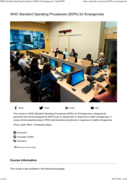
The objective of this course is to provide high-level information and contextual understanding of WHO Standard Operating Procedures (SOPs) for Emergencies.
We will explore a range of topics, ranging from the Emergency Response Framework (ERF), to planning, grants and finance, procurement, risk mana
...
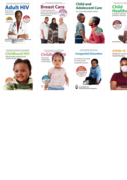
Better Care Learning Programmes
recommended
Bettercare learning programmes make it easy to train healthcare staff and teach students.
WCEA is a social impact technology company that provides sustainable & innovative e-health & m-health technology solutions for CPD and lifelong learning, enabling capacity building. This is achieved by partnering with NGOs, local and international providers.
Our stakeholders include Ministries of
...
Become familiar with One Health, a promising concept, and the effective solutions it provides for urgent health problems.
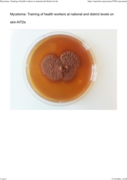
Mycetoma is a chronic, progressively destructive infectious disease of the subcutaneous tissues, affecting skin, muscle and bone. Mycetoma occurs in tropical and subtropical environments characterized by short rainy seasons and prolonged dry seasons that favour the growth of thorny bushes. Global bu
...
Occupational hazards in the health sector
recommended
This e-tool is intended for use by people in charge of occupational health and safety for health workers at the national, subnational and facility levels and for health workers who want to know what WHO and ILO recommend for the protection of their health and safety
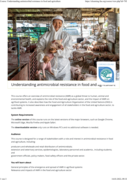
This course offers an overview of antimicrobial resistance (AMR) as a global threat to human, animal and environmental health, and explains the role of the food and agriculture sector, and the impact of AMR on agrifood systems. It also describes how the Food and Agriculture Organization of the Unite
...
This e-learning course will provide the knowledge and skills necessary to support staff in countries in scaling-up targeted TB preventive treatment in their national TB strategy or supporting staff who seek guidance on implementation.
The main focus of this e-course is programmatic; clini
...
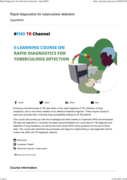
This course will provide you with the knowledge and skills needed to implement WHO-recommended TB tests and algorithms. It includes the latest recommendations for novel tests for TB diagnosis and detection of drug resistance, as well as the most recent WHO policy guidance for the use of those tests.
...
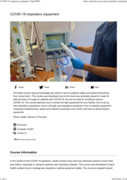
COVID-19 respiratory equipment
recommended
All health workers require knowledge and skills to care for patients safely and protect themselves from undue harm. This course was developed due to the enormous emphasis placed on need for safe provision of oxygen to patients with COVID-19, but can be used for conditions beyond COVID-19. This cours
...
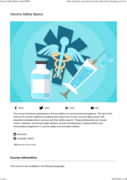
This course introduces participants to the foundations of vaccine pharmacovigilance. The aim of this course is to provide healthcare professionals whose work involve vaccine safety issues, with essential knowledge about vaccines and their safety aspects. These professionals can include nurses, midwi
...
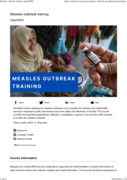
All health workers deployed to measles outbreaks must complete the measles and rubella (MR) training to implement quality interventions and work safely and effectively in the field. This course provides the essential preparedness, detection, investigation, response, and recovery skills required to c
...
Весь персонал, проводящий экспресс-диагностику антигена SARS-CoV-2 (Ag-RDT), должен понимать, как безопасно проводить тестирование, обеспечивать качество тестирования и и
...
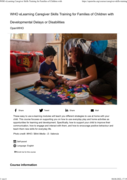
WHO eLearning Caregiver Skills Training for Families of Children with Developmental Delays or Disabilities
recommended
These easy to use e-learning modules will teach you different strategies to use at home with your child. This course focuses on supporting you on how to use everyday play and home activities as opportunities for learning and development. Specifically, how to support your child to improve their commu
...
Monkeypox is a viral zoonotic disease, caused by monkeypox virus, recognized as the most important orthopoxvirus infection after the eradication of smallpox.
This course offers public health officers and health workers in-depth information to understand the epidemiology, modes of transmission, clin
...
Risk communications
recommended
For public health emergencies, risk communication includes the range of communication capacities required through the preparedness, response and recovery phases of a serious public health event to encourage informed decision making, positive behaviour change and the maintenance of trust.
Risk commu
...
MAGIC authoring and publication platform (MAGICapp) - for guidelines and evidence summaries - is developed through our research and innovation program.
The platform allows authors to write and publish their guidelines and evidence summaries in a highly structured fashion, using the GRADE methodol
...
Noma (cancrum oris) is a serious gangrenous disease of the mouth and face, mainly affecting children aged 2 to 6 years in sub-Saharan Africa.
Despite substantial knowledge gaps, it is reported to be linked with malnutrition, poor oral hygiene, immunosuppression, and living in extreme poverty situ
...
