
Filter
365
Text search:
US
Aid,
UK
Aid,
UNICEF
Featured
Recommendations
36
New Publications
114
Language
Document type
No document type
264
Studies & Reports
59
Guidelines
20
Manuals
8
Strategic & Response Plan
5
Situation Updates
4
Training Material
2
Resource Platforms
2
Infographics
1
Countries / Regions
Sierra Leone
24
Global
19
Syria
14
Liberia
13
Uganda
10
Nepal
9
Kenya
9
Guinea
7
Ethiopia
7
Bangladesh
6
Ukraine
6
Myanmar / Burma
6
Yemen
6
Congo, Democratic Republic of
5
India
5
South Sudan
5
Zambia
5
Nigeria
4
Rwanda
4
Mozambique
4
Sudan
4
Asia
4
Ghana
3
Jordan
3
Malawi
3
Eastern Europe
3
Zimbabwe
2
Somalia
2
Pakistan
2
Afghanistan
2
Lebanon
2
Cambodia
2
China
2
Lesotho
2
South–East Asia Region
2
Western and Central Europe
2
Moldova
2
Vietnam
2
Mali
1
Niger
1
Haiti
1
Iraq
1
Germany
1
Egypt
1
Tanzania
1
South Africa
1
Papua New Guinea
1
Central African Republic
1
Namibia
1
Peru
1
Brazil
1
Serbia
1
Botswana
1
Greece
1
Guatemala
1
Sri Lanka
1
East and Southern Africa
1
West and Central Africa
1
Middle East and North Africa
1
Africa
1
Albania
1
Laos
1
Russia
1
Kyrgyzstan
1
Authors & Publishers
Publication Years
Category
Countries
107
Key Resources
37
Women & Child Health
24
Public Health
14
Clinical Guidelines
11
Capacity Building
6
Pharmacy & Technologies
2
Toolboxes
Disability
39
Conflict
34
COVID-19
32
Mental Health
24
Ebola
22
Health Financing Toolbox
16
HIV
14
Refugee
10
Global Health Education
10
Planetary Health
8
Natural Hazards
6
AMR
4
Caregiver
4
Rapid Response
3
Specific Hazards
3
NTDs
3
Cholera
2
Polio
2
TB
2
Pharmacy
2
Zika
1
NCDs
1
Making education more inclusive requires schools and education authorities to remove the barriers to education experienced by the most excluded children - often the poorest, children with disabilities, children without family care, girls, or children from minority groups. Also included in the text a
...

Myanmar has made significant progress in its disaster management policies, plans, and procedures since 2008, when Cyclone Nargis impacted the country leaving devastation in its aftermath. The Government of Myanmar (GoM) has modified the government structure and created new authorities and plans to i
...
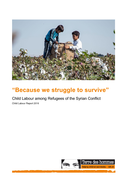
“Because we struggle to survive” Child Labour among Refugees of the Syrian Conflict | This study provides pertinent first-hand information on the reality facing Syrian children who are working either in their homeland, the neighbouring countries or elsewhere in Europe. Syria's civil war is the w
...
The objective of this study is to analyze the strengths, weaknesses, sustainability, and impact of the tsunami response in Sri Lanka and Indonesia 10 years later. A cross cutting theme of this study is the assessment of whether communities are now better prepared to respond to and cope with disaster
...
Germany has become a visible actor in global health in the past 10 years. In this Series paper, we describe how this development complements a broad change in perspective in German foreign policy.

European Scientific Journal, November edition vol. 8, No.26 ISSN: 1857 – 7881 (Print) e - ISSN 1857- 7431
Accessed: 29.09.2019
Healthcare-associated infections (HAI) are a significant burden globally, with millions of patients affected each year. These infections affect both high- and limited-resource healthcare settings, but in limited-resource settings, rates are approximately twice as high as high-resource settings (15 o
...
It will be updated continuously.
Details of COVID-19 availability in all ten ASEAN countries and another 30 Asian nations.
Due to the developing situation in China and Asia concerning the Coronavirus, we will be operating this article as a running live update service to keep businesses involved in
...
Cascading risks from rising prices and supply disruptions, April 2022.
Global resource markets are still reeling from the impacts of Russia’s invasion of Ukraine; the two countries are major suppliers of energy, food and fertilizers. Supply disruption and the sudden imposition, in response to the
...
Climate change is already having severe impacts across our planet, bringing new and previously unimaginable challenges to the people least responsible for greenhouse gas emissions.
This report, the first we’ve released jointly in the history of our organizations, provides a sobering review of h
...
Since the first edition of the CDAC snapshot of communication, community engagement and accountability (CCEA) across the Ukraine response was published in May 2022, a conscious effort has been made by international, national and local responders to ramp up CCEA action. Progress has been made in esta
...
