
Filter
1853
Text search:
Rehabilitation
programmes
Featured
160
506
Language
Document type
1311
182
123
92
86
22
15
14
4
2
1
1
Countries
98
61
53
49
46
42
41
38
38
37
35
33
30
27
27
26
26
26
25
23
22
22
21
20
20
20
19
19
18
17
17
15
12
11
11
10
9
9
9
9
8
8
8
8
8
8
8
7
7
7
7
7
7
6
6
6
5
5
5
5
5
5
4
4
4
4
4
4
3
3
3
3
3
3
3
3
2
2
2
2
2
2
2
2
2
2
2
2
2
2
2
2
1
1
1
1
1
1
1
1
1
1
1
1
1
1
1
1
1
1
1
1
1
1
1
1
1
1
1
1
1
1
1
1
1
1
1
1
Authors & Publishers
Publication Years
Category
730
119
89
72
66
28
5
3
1
Toolboxes
303
245
115
78
76
70
58
57
34
28
27
26
25
23
21
10
9
7
6
6
5
3
3
1
The Disability inclusion guide for action supports ministries of health and their partners in both advancing health equity for persons with disabilities by identifying entry points, and planning appropriate actions that strengthen the health system through disability inclusion. It focuses on address
...
Gait Training
Improving access to assistive technology for everyone, everywhere.
The first WHO Priority Assistive Products List was launched in May 2016. The List includes hearing aids, wheelchairs, communication aids, spectacles, artificial limbs, pill organizers, memory aids and other essential items for many
...
Entraînement à la marche. Un excellent exercice pour les personnes amputées des membres inférieurs
Guidelines for training personnel in developing countries for prosthetics and orthotics services
recommended
1.Orthopedics - education 2.Prostheses and implants - utilization 3. Orthotic devices - utilization 4.Developing countries 5.Guidelines 6.Teaching materials I.World Health Organization II.International Society for Prosthetics and Orthotics
A step towards implementation of the Convention on the Rights of Persons with Disabilities (CRPD) related to personal mobility.
WSTP-I is the second part of the WHO wheelchair service training package series and focusses more on addressing the needs of people who have severe difficulties in walking and moving around and also having poor postural control .
Following the release of the Wheelchair Service Training Package – Basic level (WSTP-B), WHO in partnership with United States Agency for International Development (USAID) has developed the Wheelchair Service Training Package – Intermediate Level (WSTP-I). WSTP-I is the second part of the WHO w
...
Detailed adapted physical activities are provided with practical guides, group sport guides and assessment tools in order to promote a more inclusive society through sports
The WHO Guidelines on physical activity and sedentary behaviour provide evidence-based public health recommendations for children, adolescents, adults and older adults on the amount of physical activity (frequency, intensity and duration) required to offer significant health benefits and mitigate he
...
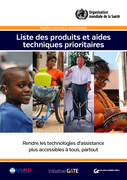
Rendre les technologies d’assistance plus accessibles à tous, partout
Le Cadre de compétences en réadaptation (CCR) est un modèle qui présente les
performances attendues ou souhaitées pour les effectifs de réadaptation dans les
différentes professions, spécialisations et les différents contextes afin d’offrir des soins
et une prestation de services de qu
...

Manual for Training in Cancer Control

This study, although not generalizable, builds up the literature on worker training needs in developing countries, and would be of benefit for speech-language pathologists and worker trainers. This paper aimed to investigate the training needs of Malaysian workers in relation to people with communic
...
