
Filter
1879
Filtered Results: 1879
Text search:
National
Tuberculosis
Centre,
Global
Fund
Featured
Recommendations
165
New Publications
554
Language
Document type
No document type
1251
Studies & Reports
284
Guidelines
162
Manuals
76
Strategic & Response Plan
64
Situation Updates
16
Training Material
11
Fact sheets
8
Resource Platforms
4
Infographics
3
Countries / Regions
India
85
Western and Central Europe
63
Kenya
55
Uganda
49
Global
48
Nigeria
45
Zambia
42
Nepal
40
Tanzania
40
South Africa
39
Malawi
39
Ethiopia
38
Eastern Europe
35
Rwanda
34
Bangladesh
33
Myanmar / Burma
33
Ghana
31
Africa
31
Namibia
29
Ukraine
29
Sierra Leone
27
Asia
22
Liberia
21
Lesotho
20
Cambodia
19
Latin America and the Carribbean
17
South–East Asia Region
16
Mozambique
14
Zimbabwe
13
Indonesia
13
Russia
12
South Sudan
10
Botswana
10
Senegal
9
East and Southern Africa
9
Albania
9
Congo, Democratic Republic of
8
Cameroon
8
Haiti
8
Moldova
8
Syria
7
Argentina
7
West and Central Africa
7
Tajikistan
7
Burkina Faso
6
Philippines
6
Pakistan
6
Eastern Europe and Central Asia
6
Georgia
6
Thailand
5
North Macedonia
5
Guinea
4
Sudan
4
Central African Republic
4
Eswatini/ Swaziland
4
Middle East and North Africa
4
Somalia
3
Jordan
3
Germany
3
Lebanon
3
Papua New Guinea
3
Benin
3
Colombia
3
Yemen
3
Western Pacific Region
3
Laos
3
Timor Leste/ East Timor
3
Mali
2
Morocco
2
Saudi Arabia
2
Chad
2
Brazil
2
Hungary
2
El Salvador
2
Madagascar
2
Armenia
2
Southern Africa
2
Romania
2
Vietnam
2
Turkmenistan
2
Iraq
1
Afghanistan
1
Gambia
1
China
1
Peru
1
Serbia
1
Burundi
1
Ecuador
1
Greece
1
Angola
1
Mexico
1
Sri Lanka
1
Paraguay
1
Bhutan
1
Poland
1
Mongolia
1
Bulgaria
1
Slovakia
1
Iran
1
Uzbekistan
1
Kyrgyzstan
1
North America
1
Uruguay
1
Jamaica
1
Denmark
1
Maldives
1
Tunisia
1
Norway
1
Portugal
1
Authors & Publishers
Publication Years
Category
Countries
781
Clinical Guidelines
143
Public Health
93
Women & Child Health
63
Key Resources
53
Pharmacy & Technologies
21
Capacity Building
19
Toolboxes
HIV
307
TB
289
AMR
88
COVID-19
75
Mental Health
53
Global Health Education
38
Conflict
34
Rapid Response
34
Caregiver
34
Planetary Health
33
Pharmacy
29
Health Financing Toolbox
27
Disability
25
Refugee
23
NTDs
22
Ebola
20
NCDs
16
Polio
13
Natural Hazards
11
Cholera
2
Specific Hazards
2
South Sudan
1
Social Ethics
1
2nd edition - Published in 2003, the first WHO/HAI medicine prices manual Medicine Prices – A
New Approach to Measurement Draft for field-testing provides a draft methodology and tools to conduct national medicine prices and availability surveys...
The main objective of this guidance is to provide scientific advice, based on an evidence-based assessment of targeted public health interventions, to facilitate effective screening and vaccination for priority infectious diseases among newly arrived migrant populations to the EU/EEA. It is intended...
This document updates the 2009 ECDC guidance on chlamydia control in Europe. It was developed by a technical expert group which conducted a critical review of the scientific evidence on the epidemiology of chlamydia and the effectiveness of screening programmes.
The aim of this guidance is to suppo...
he global architecture for providing development assistance for health (DAH)
has become increasing complex in the last decade, with many new funding agencies entering the health sector.
This study...
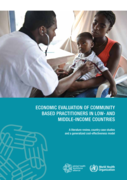
Community-based strategies play a significant role in many health systems in low- and middle-income countries, especially in light of critical shortages in the health workforce. The term community health worker has been used to refer to volunteers and salaried, professional or lay health workers wit...
NATIONAL TUBERCULOSIS AND LEPROSY PROGRAMME
Revised National Tuberculosis Control Programme
The One Health approach can help achieve progress and promotes synergies on national and global priorities by generating synergies at the human-animal-environmental interface. While evidence is stil...
The International Pharmaceutical Federation (FIP) is a global federation of national associations of pharmacists and
pharmaceutical scientists. In order to support these associations in their fight...
This manual was developed based on the recommendations of a global technical consultation on child health in humanitarian emergencies co-organized by WHO and UNICEF at the end of 2003. WHO in collaboration with the ... for Refugee and Disaster Response, Bloomberg School of Public Health, Johns Hopkins University undertook a systematic review in 2004. It demonstrated that existing guidelines, including The Integrated Management of Childhood Illness (IMCI), do not cover all priority conditions in emergencies. The objective of this manual is to provide comprehensive guidance on child care in emergencies.
Notable progress has also been made on other key health indicators such as reducing maternal, infant and child deaths and malnutrition, increasing immunization coverage, eliminating infectious diseases such as polio and reducing the incidence of malaria, t... and diarrhoeal diseases.
But despite such substantial progress, the country now faces new and emerging new challenges such as the rising burden of noncommunicable diseases, increased risks associated with disasters, environmental threats and health emergencies during disease outbreaks including the COVID-19 pandemic that is a serious public health threat to Bangladesh. To establish a resilience system for future potential pandemics, the national capacity for emergency preparedness and early response to health emergencies needs to be bolstered considerably.

The Millennium Development Goals (MDGs) showed
that global commitment and collective action
could significantly reduce the disease burdens of
three deadly communicable diseases: HIV/AIDS,
tuberculosis<...
This document contains a series of desk reviews for the eight ENGAGE-TB priority countries supported by the Global Fund (DRC, Kenya, Indonesia, Mozambique, Myanmar, Nigeria, Pakistan and Tanzania). ...

The WHO South-East Asia (SEA) Region bears a high burden of tuberculosis (TB) and MDR-TB. In 2015, the Region accounted for nearly 200 000 or 35% of the global estimated new RR/MDR-TB c...

In Control: A Practical Handbook for Professionals Working in Health Emergencies Internationally RKI
The greatest risk to persons engaging in international medical emergency response is poor preparation.
The In Control handbook hopes to provide a remedy.
At the time of writing, we are living through the Coronavirus (COVID-19) pandemic, a health emergency that disregards physical borders, brin...
Improving the quality of hospital antibiotic use is a major goal of WHO’s global action plan to combat antimicrobial resistance. The WHO Essential Medicines List Access, Watch, and Reserve (AWaRe) classification could facilitate simple stewardship...
A manual for developing national action plans.This manual for developing national action plans to address antimicrobial resistance has been developed at the request of the World Health Assembly to a...
Epilepsy: a public health imperative
recommended
This is the first global report on epilepsy summarizing the available evidence on the burden of epilepsy and the public health response required at global, regional and ... levels.
The reports highlights major gaps in awareness, diagnosis, treatment, and health policies through a series of appalling numbers. With around 50 million people affected worldwide, epilepsy is one of the most common and serious brain disorders. Nearly 80% of people with epilepsy live in low-income and middle-income countries
Countries are making progress toward the global goal of 95% of people living with HIV knowing their status by 2025. However, considerable gaps remain in achieving these goals globally. Men in high HIV burden settings and men from key populations in ...
The State of the world’s nursing 2020 report provides the latest, most up-to-date evidence on and policy options for the global nursing workforce. It also presents a compelling case for considerable – yet feasible – investment in nursing educa...
