
Filter
478
Text search:
Ebola
must
Go
Featured
Recommendations
43
New Publications
157
Language
Document type
No document type
257
Studies & Reports
91
Guidelines
56
Manuals
36
Strategic & Response Plan
21
Fact sheets
9
Training Material
5
Situation Updates
2
Infographics
1
Countries / Regions
Sierra Leone
73
Liberia
71
Global
30
Guinea
26
Nigeria
16
Congo, Democratic Republic of
16
Uganda
11
Rwanda
10
Kenya
9
West and Central Africa
9
Ghana
8
Bangladesh
6
Western and Central Europe
6
Myanmar / Burma
5
East and Southern Africa
5
Latin America and the Carribbean
5
Ethiopia
4
Nepal
4
Syria
4
South Africa
4
Middle East and North Africa
4
Senegal
3
India
3
South Sudan
3
Tanzania
3
Malawi
3
Ukraine
3
Africa
3
Mali
2
Côte d’Ivoire / Ivory Coast
2
Niger
2
Zimbabwe
2
Haiti
2
Zambia
2
Cambodia
2
Mozambique
2
Central African Republic
2
Angola
2
South–East Asia Region
2
Eastern Europe and Central Asia
2
Vietnam
2
Burkina Faso
1
USA
1
Saudi Arabia
1
Cameroon
1
Pakistan
1
Jordan
1
Afghanistan
1
Germany
1
Lebanon
1
Chad
1
China
1
Sudan
1
Namibia
1
Colombia
1
Botswana
1
Yemen
1
Western Pacific Region
1
Asia
1
Venezuela
1
Eastern Europe
1
Laos
1
Moldova
1
Authors & Publishers
Publication Years
Category
Countries
107
Key Resources
23
Public Health
20
Clinical Guidelines
19
Women & Child Health
19
Capacity Building
7
Pharmacy & Technologies
6
Annual Report MEDBOX
1
General Guidelines
1
Toolboxes
Ebola
140
COVID-19
96
Rapid Response
28
Mental Health
20
Global Health Education
18
Conflict
15
Planetary Health
14
HIV
12
Health Financing Toolbox
10
AMR
9
Caregiver
9
Refugee
7
Disability
6
Natural Hazards
6
Specific Hazards
5
Pharmacy
4
TB
3
Polio
2
Social Ethics
2
NTDs
2
Cholera
1
Zika
1
Mission report: June 11-20, 2017
Guidance | Preparedness - Response and early recovery - Recovery and reconstruction
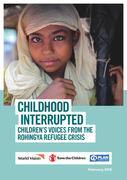
Wild elephants and snakes, violent men lurking in the forest and human traffickers on the prowl during the night. These are among the most pressing fears identified by Rohingya children who fled fighting in Myanmar to Bangladesh, according to a new report launched today by Save the Children, World V
...
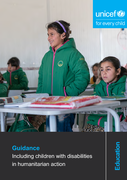
Guidance | Preparedness - Response and early recovery - Recovery and reconstruction
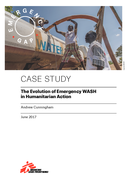
Case study
An emergency WASH gap exists – there is little disagreement on this point within the humanitarian sector. There is a paucity of emergency WASH capacity, but a surplus of complacency. This report provides an overview of both historical trends and current challenges in emergency WASH pro
...

Cerebrum. 2016 Jul-Aug; 2016: cer-10-16.
Published online 2016 Jul 1.
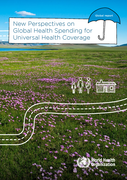
The report summarizes key global health expenditure patterns and trends, and illustrates the potential of the new database to inform thinking about financing reforms to progress towards UHC, and also raises issues for further research. It analyses the following areas:
Germany has become a visible actor in global health in the past 10 years. In this Series paper, we describe how this development complements a broad change in perspective in German foreign policy.
Updated 8 June 2021. The document has two sections:
A. The first section covers fundamental principles which are crucial to a successful, holistic intervention.
B. The second covers relevant standards and guidance in the handbook’s Water Supply, Sanitation and Hygiene Promotion (WASH) and Health
...
The Coronavirus is spreading globally. How can individuals, communities and humanitarian actors best respond to the COVID-19 outbreak? How can the Sphere Handbook guide our response?
These guidelines are available in different languages
The Internews Humanitarian Information Services Learning Collection communicates key lessons, best practices, and programmatic methodologies used by Internews’ humanitarian teams around the world.
Each module within the Learning Collection includes three parts: Context, Case Studies, and a How-To
...
As of 21 May 2020, 4.8 million confirmed cases of Coronavirus disease 2019 (COVID-19) have been reported globally. In South America, COVID-19 was first detected on 26 February 2020, when Brazil confirmed a case in São Paulo.
WHO technical advisory group on behavioural insights and sciences for health, meeting report, 15 October 2020
On 9 February 2021, a first webinar entitled “Expanding our understanding of Post COVID-19 condition” was held under the auspices of WHO and in consultation with the International Severe Acute Respiratory and Emerging Infection Consortium(ISARIC), Global Research Collaboration for Infectious Dis
...
The report shows that older people are not getting the healthcare treatments they desperately need. The COVID-19 response has disrupted services for non-communicable diseases such as cancer and diabetes, communicable diseases such as malaria, and much-needed services for mental health. Combined with
...
Healthy people, healthy animals and a healthy environment worldwide with the One Health approach.
The COVID-19 pandemic has drastically demonstrated just how close the link is between humans, animals, and the environment, and has highlighted and aggravated existing challenges. The destruction of na
...
The report identifies major global gaps in WASH services: one third of health care facilities do not have what is needed to clean hands where care is provided; one in four facilities have no water services, and 10% have no sanitation services. This means that 1.8 billion people use facilities that l
...
The brief concludes that sustaining the continuity of EHS requires policies that ensure a whole-society and systems strengthening approach. This involves increased health care investment, community engagement, disease control regulations, and multisector approaches to improve resilience, EHS quality
...
