
Filter
765
Text search:
vascular
Featured
89
187
Language
Document type
419
168
97
37
16
13
12
2
1
Countries
78
34
24
23
20
18
17
16
14
12
12
11
11
11
8
7
7
7
7
6
6
6
6
6
6
6
5
5
5
5
5
5
5
5
5
5
4
4
3
3
3
3
3
3
3
3
3
2
2
2
2
2
2
2
2
1
1
1
1
1
1
1
1
1
1
1
1
1
1
1
1
1
1
1
1
1
1
Authors & Publishers
Publication Years
Category
348
132
75
28
18
12
2
Toolboxes
84
74
63
26
25
23
19
18
17
16
14
13
12
11
6
4
3
2
2
2
1
Peripheral artery disease (PAD) is the most underdiagnosed, underestimated and undertreated of the atherosclerotic vascular diseases despite its poor prognosis. There may be racial or contextual differences in the Asia-Pacific region as to epidemiol
...

The South African (SA) guidelines for cardiac patients for non-cardiac surgery were developed to address the need for cardiac risk assessment and risk stratification for elective non-cardiac surgical patients in SA, and more broadly in Africa.
The guidelines were developed by updating the Canadian
...
Prevention of stroke and transient ischemic attack includes both conventional approaches to vascular risk factor management (blood pressure lowering, cholesterol reduction with statins, smoking cessation and antiplatelet therapy)
and more specific
...
Cardiovascular disease is a major cause of disability and premature death throughout the world, and contributes substantially to the escalating costs of health care. The underlying pathology is atherosclerosis, which develops over many years and is usually advanced by the time symptoms occur, genera
...

Post Graduate programme is essential to prepare nurses to improve the
quality of nursing education and practice in India. .
Post graduate programme in nursing builds upon and extends competence
acquired at the graduate levels, emphasizes application of relevant theories
into nursing practice, ed
...
Standard Treatment Guideline

accessed Febr. 6, 2020
Prevention Of Cardiovascular Disease: Guidelines For Assessment And Management Or Cardiocascular Risk
recommended
This publication provides guidance on reducing disability and premature deaths from coronary heart disease, cerebrovascular disease and peripheral vascular disease in people at high risk, who have not yet experienced a cardiovascular event.
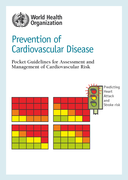
Prevention of Cardiovascular Disease. Pocket Guidelines for Assessment and Management of Cardiovascular Risk
recommended
These pocket guidelines provide evidence-based guidance on how to reduce the incidence of first and recurrent clinical events due to coronary heart disease (CHD), cerebrovascular disease (CeVD) and peripheral vascular disease in two categories of pe
...
It is now well known that there is a pandemic of Type 2 Diabetes in the world particularly in developing countries. This fact has several implications for the health care system in the developing countries because this condition is associated with metabolic and
...
The cardiovascular disease continuum begins with risk factors such as diabetes mellitus (DM), progresses to vasculopathy and myocardial dysfunction, and finally ends with cardiovascular death. Diabetes is associated with a 2- to 4-fold increased risk for heart failure (HF). Moreover, HF patients wit
...
Las infecciones del sitio quirúrgico (ISQ) constituyen una de las Infecciones Asociadas al Cuidado de la Salud (IACS) más frecuentes que ponen en riesgo a los pacientes llevando muchas veces al fracaso del procedimiento quirúrgico. Con una incidencia mucho mayor en países de medianos y bajos ing
...
The clinical guidelines and protocols for the practice of emergency medicine presented in this document are designed to be a useful resource not only for those wishing to become emergency medicine specialists, but also for general practitioners and other healthcare providers tasked with caring for p
...

These guidelines have been extracted from the WHO manual Surgical Care at the District
Hospital (SCDH), which is a part of the WHO Integrated Management Package on Emergency
and Essential Surgical Care (IMPEESC).
Refer for details on anaesthesia, head, gunshot and landmine injuries in chapters

Handout presentations in PDF for illustrating lectures
Accessed May 2014
Atherosclerotic lower-extremity peripheral artery disease (PAD) is increasingly recognized as an important cause of cardiovascular morbidity and mortality that affects more than 230 million people worldwide. Traditional cardiovascular risk factors, including advanced age, smoking, and diabetes, are
...
Cardiovascular disease (CVD) is often thought to be a problem of wealthy, industrialized nations. The term “cardiovascular disease” is used throughout the report to refer to cardiac disease, vascular diseases of the brain and kidney, and periphe
...

Two decades of epidemiological research shows that silent cerebrovascular disease is common and is associated with future risk for stroke and dementia. It is the most common incidental finding on brain scans. To summarize evidence on the diagnosis and management of silent cerebrovascular disease to
...

Q2: For people with dementia, does memantine, when compared to placebo/comparator, produce benefits/harm in the specified outcomes in non-specialist health settings?
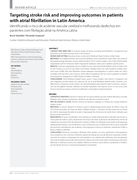
Identificando o risco de acidente vascular cerebral e melhorando desfechos em pacientes com fibrilação atrial na América Latina
DOI: 10.1590/1516-3180.2015.0222110716
Sao Paulo Med J. 2016; 134(6):534-42
