
Filter
583
Text search:
scoring
Featured
59
159
Language
Document type
334
102
86
34
12
11
1
1
1
1
Countries
43
21
20
14
14
13
12
11
11
10
10
9
9
9
8
7
7
7
7
7
6
6
5
5
5
4
4
4
3
3
3
3
3
3
3
3
3
3
3
3
2
2
2
2
2
2
2
2
2
2
2
1
1
1
1
1
1
1
1
1
1
1
1
1
1
1
1
1
1
1
1
1
1
1
1
1
Authors & Publishers
Publication Years
Category
210
54
47
35
35
15
8
Toolboxes
63
37
31
28
27
25
25
20
20
18
17
15
15
11
8
6
5
3
2
2
2
1
DHS Methodological Report No. 20
This study used Service Provision Assessment (SPA) and Demographic and Health Survey (DHS) data from Haiti, Malawi, and Tanzania to compare traditionally used additive methods with a data reduction method—principal component analysis (PCA).
We scored ...
This study used Service Provision Assessment (SPA) and Demographic and Health Survey (DHS) data from Haiti, Malawi, and Tanzania to compare traditionally used additive methods with a data reduction method—principal component analysis (PCA).
We scored ...

Hilfe und Information in der Ulmer Onlineklinik | Accessed Online January 2019. | The CATS questionnaire is a short freely accessible screening instrument directly based on the DSM-5 criteria for Posttraumatic Stress Disorder (PTSD). It is a measure of potentially traumatic events and of posttraumat
...
Adapted from NTCSD - The National Child Traumatic Stress Network | Hilfe und Information in der Ulmer Onlineklinik | Accessed Online January 2019. | The CATS questionnaire is a short freely accessible screening instrument directly based on the DSM-5 criteria for Posttraumatic Stress Disorder (PTSD).
...
Accessed: 06.04.2020
Accessed: 06.04.2020
A tool for measuring alcohol policy implementation

Infection Control Assessment Tool
recommended
Strengthening Parmaceutical Systems. 2nd edition
The World Health Organization Disability Assessment Schedule (WHODAS 2.0) is a generic assessment instrument developed by WHO to provide a standardized method for measuring health and disability across cultures. It was developed from a comprehensive set of International Classification of Functioning
...
This manual summarizes the methodology used to develop WHODAS 2.0 and the findings obtained when the schedule was applied to certain areas of general health, including mental and neurological disorders.
The manual will be useful to any researcher or clinician wishing to use WHODAS 2.0 in their prac
...
PLoS Negl Trop Dis 11(2): e0005356 -Published: February 23, 2017 21 pp
The ICAT is a simple and practical approach for assessing the adequacy of existing infection prevention and control practices and provides specific recommendations for improving practices and monitoring their effectiveness over time
Revided Version
September 2013
The CHS is a voluntary and measurable standard, which means its application can be objectively assessed. The CHS Verification Scheme allows organisations to measure the extent to which they have successfully applied the CHS requirements, and allows them, to demonstrate that they have done so. The Sc
...
The National Health Plan (NHP) aims to strengthen the country’s health system and pave the way towards Universal Health Coverage (UHC),choosing a path that is explicitly pro-poor. The main goal of NHP 2017-2021 is to extend access to a Basic Essential Package of Health Services (EPHS) to the entir
...
Lymphatic filariasis: managing morbidity and preventing disability: an aide-mémoire for national programme managers, second edition: web annex A: protocol for evaluating minimum package of care of morbidity management and disability prevention for lymphoedema management in designated health facilit
...
Manual for use in primary care.
There is substantial evidence for the benefits of screening and brief intervention in primary health care for alcohol problems. However, there is a need for screening and brief interventions with cross-cultural relevance for substances other than alcohol or tobacco,
...

Identification of Priority Areas for Multisectoral Interventions (PAMIs) for cholera control
recommended
The identification of Priority Areas for Multisectoral Interventions (PAMIs, sometimes referred to as ‘hotspots’) for cholera control is among the first steps for a cholera-affected country to develop or revise a National Cholera Plan (NCP) for cholera control. PAMI identification is critical to
...
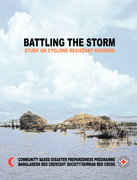
The coastal regions of Bangladesh are hit by cyclones regularly. The country has evolved, in the face of repetitious calamities, a disaster preparedness programme. The major response to cyclones has been the building of cyclone shelters, which also double as community centers and schools. While thes
...
