Filter
258
Text search:
cardiac
rehabilitation
Featured
31
75
Language
Document type
150
48
29
16
7
4
3
1
Countries
29
11
9
7
7
6
6
6
6
5
4
4
4
3
3
3
3
2
2
2
2
2
2
2
2
2
2
2
2
1
1
1
1
1
1
1
1
1
1
1
1
1
1
1
Authors & Publishers
Publication Years
Category
117
39
19
9
3
1
1
1
Toolboxes
34
24
17
14
14
13
8
6
4
4
3
2
2
1
1
1
1
1
Rehabilitation in health systems provides recommendations for Member States and other relevant stakeholders to strengthen and expand the availability of quality rehabilitation services. Currently, t
...
There is a substantial and ever-increasing unmet need for rehabilitation worldwide, which is particularly profound in low- and middle
-income countries. The availability of accessible and affordable rehab
...
This Cardiac Rehabilitation Change Package was completed by the Centers for Disease Control and Prevention (CDC) in collaboration with the American Association of Cardiovascular and Pulmonary
...

This is an update (third edition) of the BACPR Standards & Core Components and represents current evidence-based best practice and a pragmatic overview of the structure and function of Cardiovascular Prevention and Rehabilitation Programmes (CPRPs)
...

Severe cases of COVID-19 are associated with rehabilitation needs related to the consequences of ventilatory support, and prolonged immobilization and bed rest. These may include: − Impaired lung function; − Physical deconditioning and muscle we
...
The European Resuscitation Council Guidelines for Resuscitation provide specific instructions for how resuscitation should be practiced and take into account ease of teaching and learning, as well as the science. They were developed by Europeans and have been specifically written with European pract
...
In this document, the Inter-American Committee of Cardiovascular Prevention and Rehabilitation, together with the South
American Society of Cardiology, aimed to formulate strategies, measures, and actions for cardiovascular disease prevention
and
...
Severe acute respiratory syndrome coronavirus 2 (SARS-CoV‑2) causing coronavirus disease 2019 (COVID-19) has reached pandemic levels;
Patients with cardiovascular (CV) risk factors and established cardiovascular disease (CVD) represent a vulnerable population when suffering from COVID-19;
Patien
...
The WHO COVID-19 Clinical management: living guidance contains the Organization’s most up-to-date recommendations for the clinical management of people with COVID-19. Providing guidance that is comprehensive and holistic for the optimal care of COVID-19 patients throughout their entire illness is
...
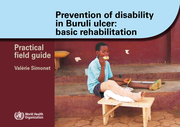
The guide contains valuable tools for wound care and the rehabilitation of people affected by Buruli ulcer. It is also helpful for peripheral health centres in areas where Buruli ulcer is endemic and to people and their families affected by the dise
...

This manual provides practical guidelines for the management of children with severe malnutrition. It seeks to promote the best available therapy so as to reduce the risk of death, shorten the length of time spent in hospital, and facilitate rehabilitation
...
Coronary heart disease (CHD) is the single most common cause of death globally. However, with falling CHD mortality rates, an increasingnumber of people live with CHD and may need support to manage their symptoms and improve prognosis. Cardiac
...
tep 1 Competencies have been designed to provide staff with the core skills required to care for a critically ill patient safely, whilst under supervision. It is expected that Step 1 competencies will be completed prior to commencing an academic critical care programme.
Steps 2 & 3 Competencies hav
...
Cardiovascular diseases, principally ischemic heart disease (IHD), are the most important cause of death and disability in the majority of low- and lower-middle-income countries (LLMICs). In these countries, IHD mortality rates are significantly greater in individuals of a low socioeconomic status (
...