
Filter
757
Text search:
Public
Health
Institute
of
Malawi
Featured
51
156
Language
Document type
442
182
66
37
17
5
4
2
2
Countries
66
42
41
29
24
22
19
19
13
13
13
12
11
11
11
10
10
10
8
8
8
7
7
7
6
6
5
5
5
4
4
4
4
3
3
3
3
3
3
3
2
2
2
2
2
2
2
2
2
2
1
1
1
1
1
1
1
1
1
1
1
1
1
1
1
1
1
1
1
1
1
1
1
1
1
Authors & Publishers
Publication Years
Category
248
87
56
52
31
8
4
Toolboxes
144
61
49
43
36
32
28
27
19
16
16
15
11
9
9
7
5
4
4
3
1
1
Malawi Health Sector Strategic Plan 2011 - 2016
recommended
Moving towards equity and quality
The standards of care cover the routine care and management of complications occurring for women and their babies during labour, childbirth and the early postnatal period, including those
...
The Government of Malawi is committed to improving health and livelihoods in Malawi through comm
...
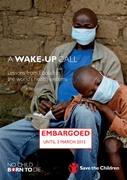
Almost 30 countries vulnerable to a new Ebola-style Epidemic, jeopardising the future of millions of Children. The report ranks the world’s poorest countries on the state
...

Regional Network for Equity in Health in east and southern Africa (EQUINET): Disussion Paper 113
This report synthesises the learning across the full programme of work. It presents the method ...
This report synthesises the learning across the full programme of work. It presents the method ...
Towards universal access
The revision of the SRHR Policy is based on the results of the analysis of the implementation process o
...
This report explores the reasons why global health is critical to medicine and what this means for medical education. It argues that an understanding of global
...
As our world changes, so too does the burden of disease. Globalisation, evolving trade and consumption patterns, and increased access to life-saving medical care are just some of the factors that ha
...
The NDMS&IP focuses on mainstreaming disability to promote equitable access to services in the six thematic areas of health, education, livelihoods, empowerment, and social inclusion and cross-cutti
...

Participant Manual
February 2011
Edition 3.0
WHO‘s Global Strategy to Accelerate the Elimination of Cervical Cancer, launched today, outlines three key steps: vaccination, screening and treatment. Successful implementation of all three could
...
