
Filter
145
Text search:
Japan
international
cooperation
agency
JICA
Featured
Recommendations
10
New Publications
71
Language
Document type
No document type
119
Studies & Reports
15
Guidelines
7
Manuals
3
Strategic & Response Plan
1
Countries / Regions
Cambodia
15
Zambia
14
Kenya
12
Myanmar / Burma
11
Tanzania
7
Philippines
6
Nepal
5
Bangladesh
5
Sierra Leone
3
Uganda
3
Guinea
2
Nigeria
2
Senegal
2
Ghana
2
Syria
2
Madagascar
2
Asia
2
Global
2
Liberia
1
Congo, Democratic Republic of
1
Haiti
1
India
1
Pakistan
1
Jordan
1
Thailand
1
Rwanda
1
Indonesia
1
South Africa
1
Malawi
1
Sudan
1
Namibia
1
Eswatini/ Swaziland
1
Honduras
1
Botswana
1
Sri Lanka
1
Middle East and North Africa
1
Laos
1
Timor Leste/ East Timor
1
Japan
1
Authors & Publishers
Publication Years
Category
Countries
101
Key Resources
11
Women & Child Health
9
Public Health
6
Clinical Guidelines
6
Pharmacy & Technologies
1
Toolboxes
Disability
15
NTDs
6
AMR
3
Ebola
2
Conflict
2
Natural Hazards
2
Rapid Response
2
HIV
2
TB
2
Caregiver
2
Health Financing Toolbox
2
COVID-19
1

The guide is designed to help disaster managers in national Governments gain basic knowledge of how to use international tools and services. It aims to support the growing disaster response and disaster response preparedness capabilities that exist
...
The Guide has been developed to enhance the knowledge capabilities of NDMAs and their local partners. This is accomplished by exposing them to the existing tools and services developed by the international community to facilitate effective disaster
...
: Development assistance for health (DAH) is one of the most important means for Japan to promote
diplomacy with developing countries and contribute to the international community. This study, for
...

The strategic priorities of the CCS 2014–2018 are:
(1) Strengthening the health system.
(2) Enhancing the achievement of communicable disease control targets.
(3) Controlling the growth of the noncommunicable disease burden.
(4) Promoting health throughout the life course.
...
(1) Strengthening the health system.
(2) Enhancing the achievement of communicable disease control targets.
(3) Controlling the growth of the noncommunicable disease burden.
(4) Promoting health throughout the life course.
...
This project aimed to reduce the risk of vector-borne infection with Chagas disease by
controlling triatomine bugs, the vectors transmitting the parasite of Chagas disease, and
establishing an epidemiological surveillance system with community participation.
The World Health Organization's fourth Country Cooperation Strategy 2022-2026 is an outcome of a consultative process with inputs from the Ministry of Health, various agencies in the health sector, and other relevant stakeholders. It has been develo
...
Torrential rains and the onset of Cyclone Komen triggered severe and widespread floods and landslides in July and August 2015 across 12 out of 14 states and regions in Myanmar. An estimated 1.6 million individuals were recorded as having been temporarily displaced from their homes by the disaster, a
...
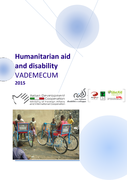
VADEMECUM | This Vademecum is intended to provide a benchmark for aid workers—whether working in the field or at a strategic level—in particular concerning the formulation and implementation of programmes of prevention or response to humanitarian crises. It is not solely a theoretical document b
...
As the Group of Eight (G8) world leaders meet in Saint Petersburg, Russia for this year’s G8 Summit, it is important to take stock of international efforts to finance the response to the global HIV/AIDS epidemic. Financing a sufficient and sustain
...
Recommended actions and international and national level
Recommended actions at international and national levels
This study aims to analyze national and international stakeholders and their initiatives in Early Warning Systems in Myanmar, to identify priority gaps that need to be addressed by all stakeholders. It is presented as a first step towards supporting
...

Cambodia drafted and adopted the National Action Plan for Disaster Risk Reduction 2014-2018 in 2014. This plan finalized the required policies and legal processes to strengthen DRM in Cambodia. It also focused on capacity building at national and sub-national levels and provided dedicated resources
...
The Indonesian government has reformed its laws, policies, and institutions to better manage disaster risk since the significant 2004 Indian Ocean Tsunami. The Government of Indonesia now has contingency plans for every disaster-prone city which identifies its vulnerabilities, outlines the relief re
...
n Autumn 2013, HHI Executive Director, Vincenzo Bollettino, traveled to the Philippines to participate in an assessment of civil-military engagement in the humanitarian response to Typhoon Haiyan. The report was sponsored by the Center for Excellence in Disaster Management and Humanitarian Assistanc
...
Second Generation, WHO Country Cooperation Strategy, 2010–2015, Namibia
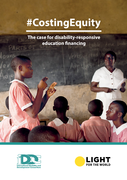
The report surveyed 9 leading bilateral and multilateral education donors in respect of their approach to disability-inclusive education.
