
Filter
66
Text search:
Forbes
J.
Featured
Recommendations
1
New Publications
5
Language
Document type
No document type
39
Studies & Reports
16
Guidelines
4
Manuals
2
Strategic & Response Plan
2
Fact sheets
2
Training Material
1
Countries / Regions
Indonesia
3
Chile
3
Africa
3
India
2
Global
2
Burkina Faso
1
Liberia
1
Nigeria
1
Mali
1
Côte d’Ivoire / Ivory Coast
1
Ghana
1
Zimbabwe
1
Germany
1
Egypt
1
Kenya
1
Rwanda
1
Malawi
1
Mozambique
1
Benin
1
Argentina
1
Western and Central Europe
1
Asia
1
Congo-Brazzaville
1
Authors & Publishers
Publication Years
Category
Countries
12
Public Health
3
Clinical Guidelines
1
Women & Child Health
1
Key Resources
1
Toolboxes
Mental Health
22
Planetary Health
6
COVID-19
5
HIV
4
TB
3
Health Financing Toolbox
3
Conflict
2
Refugee
2
Social Ethics
2
NCDs
2
Ebola
1
Rapid Response
1
Global Health Education
1
AMR
1
Caregiver
1
Health Financing
1
Las infecciones del sitio quirúrgico (ISQ) constituyen una de las Infecciones Asociadas al Cuidado de la Salud (IACS) más frecuentes que ponen en riesgo a los pacientes llevando muchas veces al fracaso del procedimiento quirúrgico. Con una incidencia mucho mayor en países de medianos y bajos ing
...
This article provides an overview of the current and projected climate change risks and impacts to mental health and provides recommendations for priority actions to address the mental health consequences of climate change.
November 3, 2009https://doi.org/10.1371/journal.pmed.1000176
PLoS Med 6(11): e1000176. https://doi.org/10.1371/journal.pmed.1000176
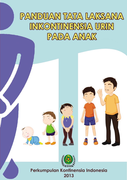
Guidelines for the Management and Therapy of Urine Incontinence in Children in Indonesia

Accessed Febr. 6, 2020

Review Article:
The American Journal of the Medical Sciences 2011;341(6):493–498.]
Prevention of stroke and transient ischemic attack includes both conventional approaches to vascular risk factor management (blood pressure lowering, cholesterol reduction with statins, smoking cessation and antiplatelet therapy)
and more specific interventions, such as carotid revascularization or
...
BMC Medicine 2014, 12:196
http://www.biomedcentral.com/1741-7015/12/196
3 March 2022
The WHO Therapeutics and COVID-19: living guideline contains the Organization’s most up-to-date recommendations for the use of therapeutics in the treatment of COVID-19. The latest version of this living guideline is available in pdf format (via the ‘Download’ button) and via an
...
Prepared as an outcome of ICMR Subcommittee on Breast Cancer |.This consensus document on management of breast cancers summarizes the
modalities of treatment including the site-specific anti-cancer therapies, supportive and palliative care and molecular markers and research questions. It also inter
...

In the course of implementing a recently funded network of hubs for building capacities in mental health service development, training, and research (RedeAmericas), the peer support workers are being introduced into the mental health workforce in three Latin American countries for the very first tim
...
NSW Disaster Mental Health Handbook 5
The Disaster Mental Health Manual and associated handbooks are intended as a resource for mental health staff who are seeking background information and practical guidance and resources to assist in a disaster mental health response.
Pathak et al. (2016), PeerJ, DOI 10.7717/peerj.1738; 1-14
Comprehensive public health action on population ageing is urgently needed. This will require fundamental shifts, not just in the things we do, but in how we think about ageing itself. The World report on ageing and health outlines a framework for action to foster Healthy Ageing built around the new
...
The articles in this compendium elaborate on some of the ideas shared at the symposium. Together, they provide a broad view of the dynamic interactions among physical, sexual and brain development that take place during adolescence. They highlight some of the risks to optimal development – includi
...
Journal of Child Psychology and Psychiatry60:5 (2019), pp 500–515
Other disorders Chapter H.1
Otros Trastornos
Capítulo H.1
Edición 2016
Edición: Matías Irarrázaval & Andres Martin
Revisión: Fernanda Prieto-Tagle & Jasna Raventós
Introducción
Capítulo A.1

In 2018, the Intergovernmental Panel on Climate Change announced that to restrict global temperature rise to 1·5°C, greenhouse gas emissions must decrease 45% by 2030 compared with 2010, and reach net zero by 2050.1
