
Filter
116
Featured
18
3
Language
Document type
44
20
15
9
7
4
4
3
3
2
2
1
1
1
Countries / Regions
16
5
1
1
1
1
1
1
1
1
1
1
1
1
1
1
1
1
1
Authors & Publishers
Publication Years
Category
5
5
3
3
2
2
2
2
2
1
1
1
1
1
1
1
1
1
Toolboxes
25
14
13
12
10
9
9
7
6
5
5
5
4
3
3
3
2
2
2
2
2
2
2
2
1
1
1
1
1
1
1
1
1
1
1
1
1
1
1
1
1
1
1
1
1
1
1
1
1

This document is the second in a series of global reports describing progress towards the 2030 targets set in Ending the neglect to attain the Sustainable Development Goals: a road map for neglected tropical diseases 2021–2030. It describes a wide range of activities, accomplishments and challenge
...
The World Health Organization (WHO) organized the first global meeting on skin-related neglected tropical diseases (skin NTDs) at its headquarters in Geneva, Switzerland on 27–31 March 2023. This 5-day hybrid meeting brought together more than 800 global experts, stakeholders and partners from 86
...
WEEKLY EPIDEMIOLOGICAL RECORD, NO 23, 7 JUNE 2024, pp.307-318
The most recent estimate of the global number of deaths from dog-mediatedrabies is 59 000 per year.1 Rabies is associated with a 99.9% fatality rate and severe trauma in families in which a rabies death
occurs, and remains a major publ
...
Han transcurrido tres años completos desde la puesta en marcha de la Hoja de Ruta para las Enfermedades Tropicales
Desatendidas 2021-2030. Los datos sobre los progresos realizados comienzan a proporcionar información sobre las perspectivas de que se cumplan las metas fijadas para 2030.
During the Programme Managers’ Review Meeting of Central and East Africa and South-East Asia (online meeting, June 2022), experts proposed additional regional and national subtargets related to VL incidence, as defined below. These targets can be revisited as progress is reviewed and access to dia
...
This toolkit is a comprehensive set of practical tools and resources designed to support country-level risk communication and community engagement (RCCE) practitioners, decision-makers, and partners to plan and implement readiness and response activities for dengue fever outbreaks. The toolkit conta
...
WHO guideline on preventive chemotherapy for public health control of strongyloidiasis
recommended
Human strongyloidiasis is a chronic parasitic disease caused by infection with Strongyloides stercoralis, a soil-transmitted helminth that is estimated to infect 300–600 million people worldwide. This neglected tropical disease (NTD) is endemic globally, predominately in the South-East Asia, Afric
...
In 2007, the Sixtieth World Health Assembly adopted resolution WHA60.13 on control of leishmaniasis, urging Member States, among other actions: to strengthen prevention, active detection and treatment of cases of both cutaneous and visceral leishmaniasis in order to decrease the disease burden; and
...
This report on global leishmaniasis surveillance follows those published in 2016–2023.2–6 Six indicators of leishmaniasis are publicly available from the Global Health Observatory (GHO).7 In addition to the GHO, country profiles with up to 30 indicators are published, with detailed data received
...
The World Health Organization (WHO) met with Kenya’s Ministry of Health on 25 November 2024 to discuss preliminary results from the first-ever real-world assessment of the WHO Skin NTDs App, powered by two artificial intelligence (AI)-based algorithms.
You can download the App for Android and IOS
...
Skin NTDs App
recommended
Recognizing neglected tropical diseseases through changes on the skin.
App for Android and IOS, free of charge. The App is available in English and French, with plans to explore translations into other languages, such as Portuguese and Spanish, to better serve diverse communities.
A patient's skin
...
Progrès dans la notification des données sur l’envenimation par morsure de serpent: défis et opportunités. Englisch/Francais. WEEKLY EPIDEMIOLOGICAL RECORD, NOS. 51/52, 20 DECEMBER 2024, pp. 770-775
Three full years have passed since the launch of the road
map for neglected tropical diseases 2021–2030. Data on
progress begin to provide insights into the prospects of
attaining the 2030 targets.
Trois années se sont écoulées depuis le lancement de la feuille
de route pour les maladies tropicales négligées 2021-2030. Les
données sur les progrès commencent à fournir des indication
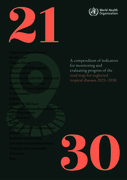
The road map 2030 was developed by WHO through an extensive global consultation, with indicators set for measuring progress against targets and milestones. This compendium of indicators provides a comprehensive and standardized listing of recommended indicators, including the 70 core indicators pres
...

The World Health Organization (WHO) and the global community of countries, partners, donors, technical experts, scientists and field implementation teams continue to work towards the ultimate goal of a world free of the burden of neglected tropical diseases (NTDs).
Website last accessed on 18.03.2023
Early detection of cases is critical to complete cure with combined antibiotics. In its late stages, Buruli ulcer causes severe destruction of the skin, leading to permanent disability. #BeatNTDs
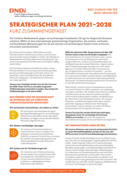
Die Initiative Medikamente gegen vernachlässigte Krankheiten (Drugs for Neglected Diseases initiative, DNDi) ist eine internationale gemeinnützige Organisation, die sichere, wirksame und bezahlbare Behandlungen für die am meisten vernachlässigten Patient:innen erforscht, entwickelt und bereitste
...
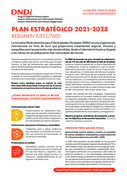
La Iniciativa Medicamentos para Enfermedades Olvidadas (DNDi) es una organización internacional sin fines de lucro que proporciona tratamientos seguros, eficaces y asequibles para los pacientes más desatendidos, desde el laboratorio hasta su llegada a las manos de las poblaciones más vulnerables
...
