
Filter
617
Featured
42
77
Language
Document type
184
145
76
42
33
30
18
17
17
16
14
13
11
1
Countries
22
20
19
10
10
9
8
5
5
5
4
4
4
3
3
3
3
3
3
3
3
3
3
3
3
3
3
3
3
3
2
2
2
2
2
2
2
2
2
2
2
2
2
2
2
1
1
1
1
1
1
1
1
1
1
1
1
1
1
1
1
1
1
1
1
1
1
1
1
1
1
1
1
1
1
1
1
1
1
1
1
1
1
1
1
1
1
1
1
1
1
1
1
1
1
1
1
1
1
Authors & Publishers
Publication Years
Category
79
32
8
5
2
2
1
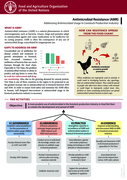
Uncontrolled use of antibiotics for disease control and treatment or growth stimulation in livestock, have increased resistance to antibiotics of bacteria that can reach humans through the food chain.
Antimicrobial Resistance and our Food Systems - Challenges and Solutions
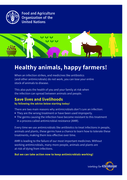
When an infection strikes, and medicines like antibiotics (and other antimicrobials) do not work, you can lose your entire stock of animals to disease. This also puts the health of you and your family at risk when the infection can spread between animals and people. Save lives and livelihoods by fol
...
Antimicrobials are widely used in food animal production, and use is rapidly increasing.
In an era of growing demand for animal products, there is an increasing trend towards the industrial production of food animals, especially in lower- and middle-income countries (LMICs). One hallmark of this me
...
Antimicrobial resistance (AMR) both in human and veterinary medicine has reached alarming levels in
most parts of the world and has now been recognized as a significant emerging threat to global public
health and food security. In June 2015, the Food and Agriculture Organization of the United Nati
...
Antimicrobial resistance (AMR) is a threat to human and animal health and refers to the ability of microorganisms to defy the medicines prescribed. For instance when antibiotics are used improperly, such as an incorrect dose, insufficient duration or wrong frequency, resistance is heightened. The mi
...
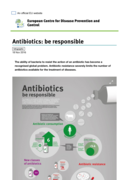
The ability of bacteria to resist the action of an antibiotic has become a recognised global problem. Antibiotic resistance severely limits the number of antibiotics available for the treatment of diseases.
Antibiotic resistance concerns us all – everyone can take action to address this pressing issue. There are many ways to contribute in the work to limit antibiotic resistance development and spread of antibiotic resistant bacteria. See overview below for inspiration and flip the page for more detai
...
Antimicrobial resistance (AMR) is a complex issue of global concern. AMR is not simply a problem of medical science being beaten by nature; human action and perverse incentives play a major role in its development. The misuse of antibiotics in the medical, veterinary and agricultural sectors, which
...
Antimicrobial resistance is a global threat as it is present in all parts of the world and it means that there is a shortage of effective antibiotics to treat simple infections and diseases, also statistics reveal that because of antimicrobial resistance patients’ morbidity and mortality is increa
...
This manual for developing national action plans to address antimicrobial resistance has been developed at the request of the World Health Assembly to assist countries in the initial phase of developing new, or refining existing national action plans in line with the
strategic objectives of the Glo
...

Antibiotics have been a critical public health tool since the discovery of Penicillin in 1928, saving the lives of millions of people around the world. In developing country like ours, where the burden of treatable disease is very high and access to health facilities and laboratories is difficult, a
...
Supporting the food and agriculture sectors in implementing the Global Action Plan on Antimicrobial Resistance to minimize the impact of antimicrobial resistance
Guide to enrolment for antimicrobial resistance national focal points
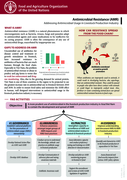
Antimicrobial resistance (AMR) is a natural phenomenon in which microorganisms such as bacteria, viruses, fungi and parasites adapt to antimicrobial agents and cause medications to be ineffective for its curing purpose. AMR is often the consequence of any use o
...
Since the introduction of penicillin in the early twentieth century, antimicrobial treatments have been utilized not only in human medicine but also in veterinary care – initially to ward off diseases, prevent post-surgery infections, and treat sick farm animals.Global food production
...
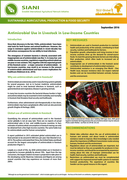
This policy brief identifies and explains the main reasons behind the rise of antimicrobial resistance (AMR) associated with improper use of antibiotics in the livestock sector. Focusing on the low- and middle- income country setting, this brief provides recommendations for a deliberated policy stra
...

Antimicrobial resistance(AMR) poses a serious threat to human, animal and environmental health. Implementing ethical practice guidelines on how to use antimicrobials effectively and responsibly within the pig industry will contribute in reducing and preventing antimicro
...
L’Assemblée mondiale de la Santé, tenue en mai 2015, a adopté un Plan d’action mondial pour combattre la résistance aux antimicrobiens, qui définit 5 objectifs:
mieux faire connaître et comprendre le problème de la résistance aux antimicrobiens grâce à une communication, une éduc
...
An essential participant in antimicrobial stewardship who has been unrecognized and underutilized is the“staff nurse.”Although the role of staff nurses has not formally been recognized in guidelines for implementing and operating antimicrobial stewardship programs (ASPs) or defined in the medica
...
