
Filter
63
Featured
7
7
Language
Document type
40
7
5
3
2
2
1
1
1
1
Countries
8
4
3
2
1
Authors & Publishers
Publication Years
Category
10
5
“Effective Altruism” — What it is, how philanthropic foundations use it and what are its risks and side-effects
Reporting on Climate Change and Sustainable Development in Asia and the Pacific: A Handbook for Journalists.
UNESCO Series on Journalism education.
It explores the essential aspects of climate change, including its injustices to vulnerable communities, especially women and girls and least develope
...
Don’t Panic” is a one-hour long documentary produced by Wingspan Productions and broadcasted on BBC on the 7th of November 2013.
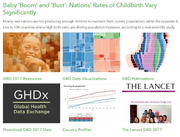
Global Burden of Disease (GBD)
recommended
Everyone, all over the world, deserves to live a long life in full health. In order to achieve this goal, we need a comprehensive picture of what disables and kills people across countries, time, age, and sex. The Global Burden of Disease (GBD) provides a tool to quantify health loss from hundreds o
...
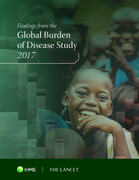
This booklet provides an overview of all findings from the Global Burden of Disease 2017 study. Published in The Lancet in November 2018, GBD 2017 provides for the first time an independent estimation of population, for each of 195 countries and territories and the globe, using a standardized, repli
...
The Global Burden of Disease Study (GBD) is the most comprehensive worldwide observational epidemiological study to date. It describes mortality and morbidity from major diseases, injuries and risk factors to health at global, national and regional levels. Examining trends from 1990 to the present a
...
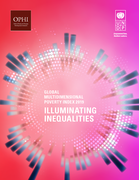
This year’s MPI results show that more than two-thirds of the multidimensionally poor—886 millionpeople—live in middle-income countries. A further 440 million live in low-income countries. In both groups, data show, simple national averagescan hide enormous inequality inpatterns of povertywith
...
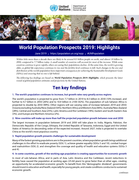
The world’s population is projected to grow from 7.7 billion in 2019 to 8.5 billion in 2030 (10% increase), and further to 9.7 billion in 2050 (26%) and to 10.9 billion in 2100 (42%). The population of sub-Saharan Africa is projected to double by 2050 (99%). Other region
...
By 2100, new UN figures show that 4 of today’s 10 most populous nations will be replaced by African countries.
Brazil, Bangladesh, Russia and Mexico—where populations are projected to stagnate or decline—will drop out. In their place: Democratic Republic of the Congo, Ethiopia, Tanzania and E
...
Mortality and global health estimates.
Accessed August 6, 2019
At least half of the world’s population does not have full coverage of essential health services. Health expenses push more than 100 million people into extreme poverty each and every year, forcing them into terrible choices that no one should ever have to make: Buy medicine or food? Education or
...
Germany's efforts to build diplomatic and scientific bridges in global health are especially important amid rising nationalism in the US, UK, Brazil, India, and elsewhere.
“With its growing economic power and increasing political inflünce, outside expectations are rising, but so is the skeptici
...
Analysis of survey data looking at 25 years of progress in and the future challenges for tropical medicine and global health
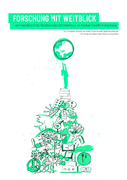
Forschung mit Weitblick - Ein Handbuch für Studierende mit Interesse an Global-Health-Forschung
recommended
Eine wachsende Anzahl von Studierenden interessiert sich für Global Health. Bisher mangelt es jedoch an ausreichenden Angeboten zur Verwirklichung von studentischen Global-Health-Forschungsprojekten. Um vor diesem Hintergrund interessierte Studierende auf ihrem Weg zum eigenen Global-Health-Forschu
...
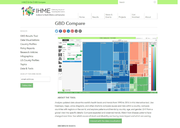
Global Burden of Disease (GBD) Compare
recommended
Analyze updated data about the world’s health levels and trends from 1990 to 2016 in this interactive tool. Use treemaps, maps, arrow diagrams, and other charts to compare causes and risks within a country, compare countries with regions or the world, and explore patterns and trends by country, ag
...
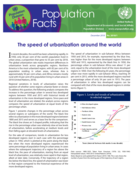
Globally, more people live in urban areas than in rural areas, with 55 % of the world’s population residing in urban areas in 2018. In 1950, 30 % of the world’s population was urban, and by 2050, 68 % of the world’s population is projected to be urban.
www.plattformglobalegesundheit.deDie Deutsche Plattform für Globale Gesundheit (DPGG), ein Zusammenschluss von Gewerk-schaften, Nichtregierungsorganisationen und Wissenschaftler*innen, verfolgt das Ziel, die Bedeutung der gesellschaftlichen Bedingungen von Gesundheit und Krankheit stärker
...
Healthy Settings, a key component of Malawi’s Health Sector Strategic Plan (HSSP) 2011–2016, is the World Health Organization’s (WHO) holistic community-led approach to achieving health improvement by addressing social determinants of health, an approach which is central to the current WHO fra
...
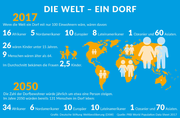
Wenn die Welt nur ein Dorf mit 100 Einwohnern wäre....
