
Filter
131
Featured
1
Language
Document type
68
20
20
9
4
4
3
3
Countries
36
1
1
1
Authors & Publishers
Publication Years
Category
4
2
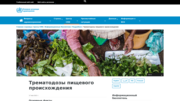
Website last accessed on 14.04.2023
Трематодозы пищевого происхождения являются зоонозами, и их возбудители могут передаваться человеку только после завершения сложного жизне
...
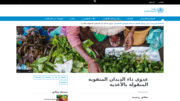
Website last accessed on 14.04.2023
Food-borne trematode infections are zoonotic, and their pathogens can be transmitted to humans only after the completion of a complex life cycle, some stages of which take place in the body of an intermediate animal host. The first intermediate hosts of all tr
...
Website last accessed in 23.04.2023
Website last accessed on 23.04.2023
La leptospirosis es una enfermedad infecciosa causada por bacterias que pueden producir infecciones potencialmente mortales de los riñones, el hígado, el cerebro, los pulmones o el corazón.
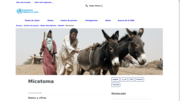
Website last accessed on 23.06.2023
El micetoma es una enfermedad inflamatoria crónica y progresivamente destructiva que afecta a la piel, el tejido subcutáneo, el músculo y el hueso.
This publication describes the first WHO public-benefit Target Product Profiles (TPPs) for snakebite antivenoms. It focuses on antivenoms for treatment of snakebite envenoming in sub-Saharan Africa. Four TPPs are described in the document:
Broad spectrum Pan-African polyvalent antivenoms: products
...
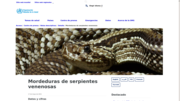
Website last accessed on 01.07.2023
Snakebite envenoming - WHO official website
Website last accessed ob 01.07.2023
Snakebite envenoming - WHO official website
Website last accessed ob 01.07.2023
Snakebite envenoming - WHO official website
Website last accessed on 01.07.2023
Snakebite envenoming - WHO official website
Website last accessed on 01.07.2023
Snakebite envenoming - WHO official website
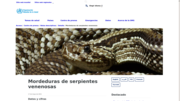
Website last accessed on 01.07.2023
Snakebite envenoming - WHO official website
Halving snakebite morbidity and mortality by 2030 requires countries to develop both prevention and treatment strategies. The paucity of data on the global incidence and severity of snakebite envenoming causes challenges in prioritizing and mobilising resources for snakebite prevention and treatment
...
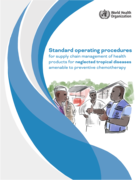
Tis first edition describes the standard operating procedures for health products for NTDs amenable to preventive chemotherapy and the medicines donated to treat them. These include albendazole for lymphatic filariasis and soil-transmitted helminthiases; azithromycin for trachoma and yaws; diethylca
...
Noma (cancrum oris) is a serious gangrenous disease of the mouth and face, mainly affecting children aged 2 to 6 years in sub-Saharan Africa.
Despite substantial knowledge gaps, it is reported to be linked with malnutrition, poor oral hygiene, immunosuppression, and living in extreme poverty situ
...
Onchocerca volvulus transmitted by repeated bites of infected blackflies (Simulium spp.). These blackflies breed along fast-flowing rivers and streams, close to remote villages located near fertile land where people rely on agriculture.
There is a need to reinforce skills of national and district
...
Dracunculiasis, also known as Guinea-worm disease is a parasitic disease caused by the nematode Dracunculus medinensis. The infection is transmitted to humans by drinking water contaminated with the small crustacean copepods (Cyclops) which contain the larvae of D. medinensis. Humans are the princip
...
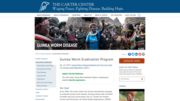
Considered a neglected tropical disease, Guinea worm disease (dracunculiasis) is a parasitic infection caused by the nematode roundworm parasite Dracunculus medinensis. It is contracted when people consume water from stagnant sources contaminated with Guinea worm larvae. Inside a human's abdomen, Gu
...
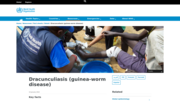
About a year after infection, a painful blister forms – 90% of the time on the lower leg – and one or more worms emerge accompanied by a burning sensation. To soothe the burning pain, patients often immerse the infected part of the body in water. The worm(s) then releases thousands of larvae (ba
...
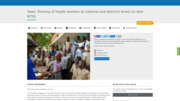
Course information
Yaws is targeted for eradication by WHO in the 2021-2030 NTD Roadmap. It is therefore crucial to know how to identify cases, design and implement activities to eradicate the disease at the community level.
In the context of integration of skin NTDs it is vital to learn to recogn
...
