
Filter
38
Featured
6
Language
Document type
7
6
5
5
4
3
3
3
2
Countries
1
Authors & Publishers
Publication Years
Category
13
3

Surveillance, case investigation and contact tracing for monkeypox: interim guidance 24 June 2022
recommended
The overall goal of surveillance, case investigation and contact tracing in this context is to stop human-to-human transmission to control the outbreak. The key objectives of surveillance and case investigation are to rapidly identify cases and clusters in order to provide optimal clinical care; to
...
Cases of monkeypox (MPX) acquired in the EU have recently been reported in nine EU Member States (Austria, Belgium, France, Germany, Italy, Portugal, Spain, Sweden, and the Netherlands).
Monkeypox (MPX) does not spread easily between people. Human-to-human transmission occurs through close contact
...
The purpose of this document is to provide public health advice to host governments, public health authorities, national or international organizers, and professional staff involved in the planning and delivery of gatherings, including people organizing smaller gatherings or attending gatherings of
...
ummer is here and there are a lot of great opportunities for people to gather and enjoy themselves. Public health authorities are working together with event organisers and civil society organisations to reach out to people attending events, including at-risk groups, about monkeypox in Europe. This
...

Key Priorities 27 June 2022
MEDBOX Issue Brief no.22, updated August 9, 2022
Protecting yourself in festivals and parties. Wath the video recording
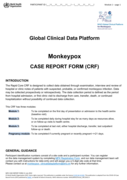
WHO invites Member States, health facilities and other entities to participate in the global effort to collect anonymized clinical data relating to suspected or confirmed cases of monkeypox and contribute data to the WHO Global Clinical Platform.
WHO has developed a clinical characterization case
...
Which communities are most at risk of Monkeypox in the current outbreak and why? WHO’s Andy Seale explains how we can support the communities at risk in Science in 5.
Monkeypox is a rare viral zoonotic disease caused by a double stranded DNA virus that belongs to the Orthopoxvirus genus of the Poxviridae family.
The advice on this page provides information for individuals and families on ways to prevent illness and stay healthy, based on WHO recommendations.
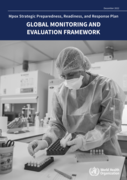
This Mpox SPRP Global Monitoring & Evaluation (M&E) Framework, also referred to as the Framework, aims to monitor and report on global progress towards these objectives, including information about country-level response efforts and WHO support to Member States. Regular collection and analysis of da
...
L’orthopoxvirus simien ou virus de la variole du singe (MPXV), est un virus à ADN double brin qui appartient au genre Orthopoxvirus de la famille
des Poxviridés. Les poxvirus causent des maladies chez l’espèce humaine et beaucoup d’autres animaux ; l’infection se manifeste généralement
...
Monkeypox: Caring for the skin
recommended
Fact Sheet
L’orthopoxvirose simienne est une zoonose due à un virus du genre Orthopoxvirus de la famille des Poxviridés. La forme humaine de
la maladie a été identifiée pour la première fois en 1970 chez un garçon de neuf mois en République démocratique du Congo.
Qu'est-ce que le Monkeypox, comment-se transmet-il et comment se protéger ? Cet outil imagé a été élaboré avec des professionnels intervenant auprès de personnes vulnérables.
Infographic
