Filter
223
Featured
16
9
Language
Document type
119
22
19
15
12
12
9
6
5
2
1
1
Countries
28
7
5
5
5
4
3
3
2
2
2
2
2
1
1
1
1
1
1
1
1
1
1
1
1
1
1
1
1
1
1
Authors & Publishers
Publication Years
Category
26
5
4
3
1
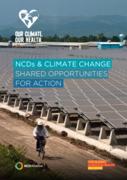
The policy brief focuses on four key areas for intervention - air pollution, energy, transport and food systems. Air pollution causes 7 million deaths annually, and is a leading cause of both NCDs and climate change, thus all interventions to reduce air pollution have a positive impact on both human
...
Environment International Volume 86, January 2016, Pages 14-23
Climate change refers to long-term shifts in weather conditions and patterns of extreme weather events. It may lead to changes in health threat to human beings, multiplying existing health problems. This review examines the scientific e
...
Who suffers Most from Extreme Weather Events? Weather-related Loss Events in 2019 and 2000 to 2019
The Global Climate Risk Index 2021 analyses and ranks to what extent countries and regions have been affected by impacts of climate related extreme weather events (storms, floods, heatwaves etc.). The
...

Kaum ein Jahr vergeht inzwischen, ohne dass von neuen Rekorden bei Extremwetterereignissen berichtet wird. Naturkatastrophen und Wetterextreme werden insgesamt immer häufiger und nehmen an Stärke zu – und der Klimawandel spielt dabei eine immer größere und zerstörerische Rolle. Wie schlimm di
...
Training Modules for climate change and Health - WHO
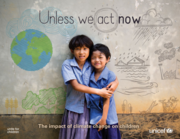
Today’s children, and their children, are the ones who will live with the consequences of climate change.

Today’s children, and their children, are the ones who will live with the consequences of climate change.
Los niños de hoy, y sus hijos, son los que vivirán las consecuencias del cambio climático.
This guidance document is designed to ensure that the process of iteratively managing the health risks of climate change is integrated into the overall National Adaptation Planning (NAP) process, including through assessing risks; identifying, prioritizing, and implementing adaptation options; and m
...

nt. J. Environ. Res. Public Health 2014, 11(12), 13097-13116; https://doi.org/10.3390/ijerph111213097
Climate change will increase the frequency and magnitude of extreme weather events and create risks that will impact health care facilities. Health care facilities will need to assess climate chang
...
Toward Resilience
recommended
A Guide to Disaster Risk Reduction and Climate Change Adaptation
Why a 4°C warmer world must be avoided
The threat climate change poses to health, equity, and development has been rigorously documented. However, in an era marked by economic crisis, regional conflicts, natural disasters and growing disparities between rich and poor, the joint global actions required to address climate change have been
...

CIPH Curriculum for Best Practices. Putting Principles to Work
New and updated information.
Adverse health effects of hot weather and heat-waves are largely preventable. Prevention requires a portfolio of actions at different levels:from health system preparedness, coordinated with meteorological early warning systems, to timely public
...
Climate change is a verified, global phenomenon, but its consequences will not be evenly distributed. Developing countries and small island nations will be the most affected. Countries will experience more frequent extreme weather events and resulting changes in water quality and availability, incre
...
There is a broad consensus nowadays that the Earth is warming up as a result of greenhouse gas emissions caused by anthropogenic activities. It is also clear that current trends in the fields of energy, development and population growth will lead to continuous and ever more dramatic climate change.
...
Training Workshop